
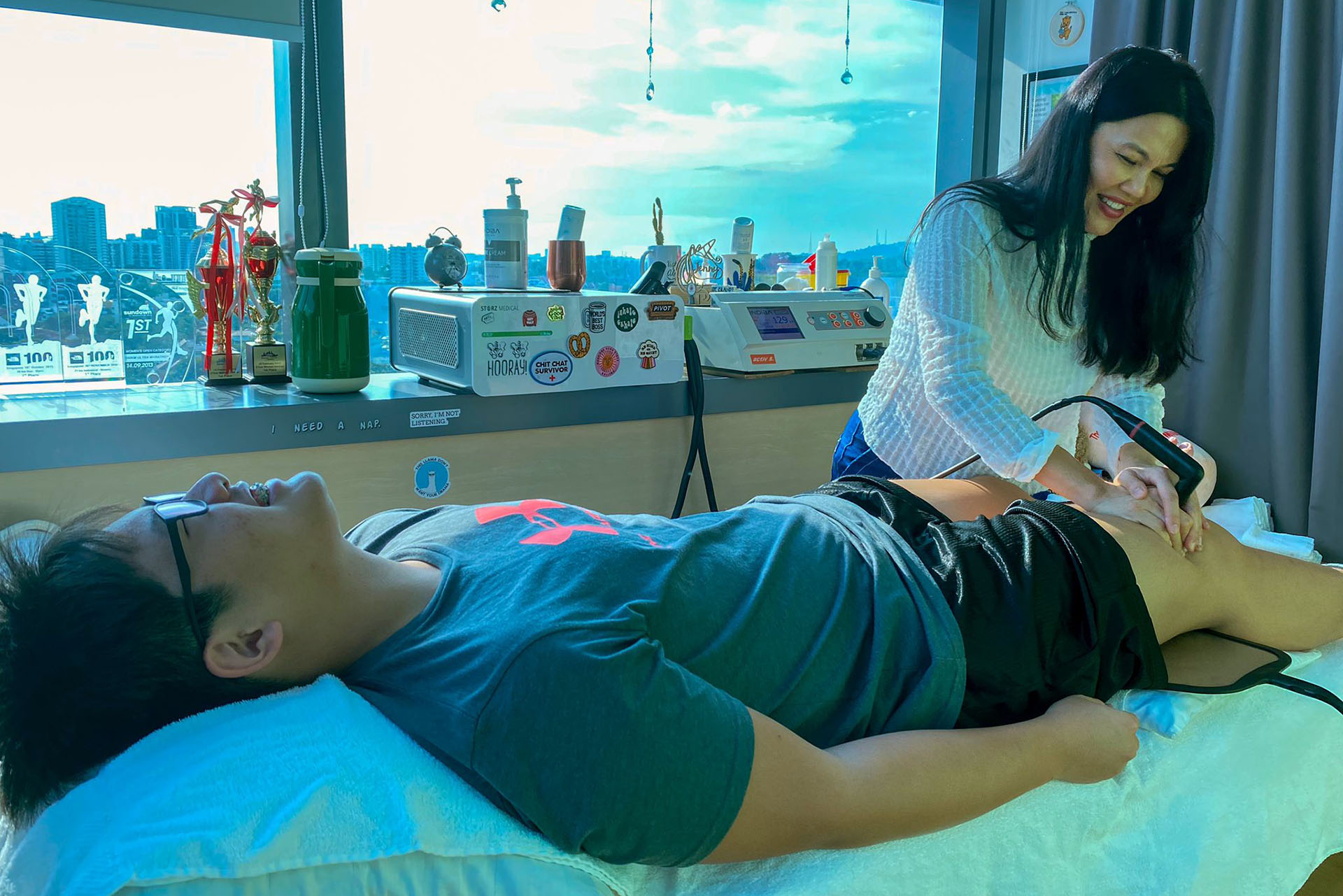
Patellofemoral Pain Syndrome (PFPS), also known as runner’s knee, causes knee pain during activities such as stair climbing, prolonged sitting, or, as expected, running. PFPS pain is typically felt at the front of the knee. Proper physiotherapy treatment, along with leading adjunctive modalities such as INDIBA® and Shockwave Therapy, can help manage symptoms and promote recovery.
Patellofemoral Pain Syndrome is a common condition that can affect anyone from all walks of life, regardless of age or fitness level. Don’t let the name fool you, though. You don’t have to be an avid runner to experience this knee pain. Weekend warriors, desk jockeys, or anyone who likes to stay active can find themselves dealing with the misery of climbing stairs or sitting for long stretches as real challenges.
If you’re already dealing with runner’s knee, the frustration and limitations it can cause can be a real drag. Taking those next few steps is crucial for managing your symptoms in your affected knee. With proper treatment and careful management, most can return to the active lifestyle they want.
A physiotherapist can give you a thorough rundown of your condition and come up with a customized treatment plan that’s tailored to your specific needs.
Anatomy of Your Knee
To get a handle on PFPS, it helps to understand how your knee works. Your knee is basically the largest joint in your body and is made up of three key parts: the patella, the femur, and the tibia. The patella sits in a groove on the femur called the trochlear groove. Every time you bend or straighten your knee, the patella slides up and down in that groove. When the patella doesn’t track properly, it can put excessive stress on the joint and contribute to the development of Patellofemoral Pain Syndrome.
There are a few key players who help this movement happen smoothly:
Quadriceps Tendon
Connects your thigh muscles to the patella, while the patellar tendon runs from the patella to the tibia.
Iliotibial Band
Another key player in lateral knee stability. If it is tight, it can contribute to lateral patellar maltracking and worsen PFPS symptoms.
Cartilage
Covers the underside of the patella and the trochlear groove that helps the bones glide smoothly as you move.
When any part of this system isn’t working right, it can lead to PFPS.
Physiotherapy and Adjunctive Treatments
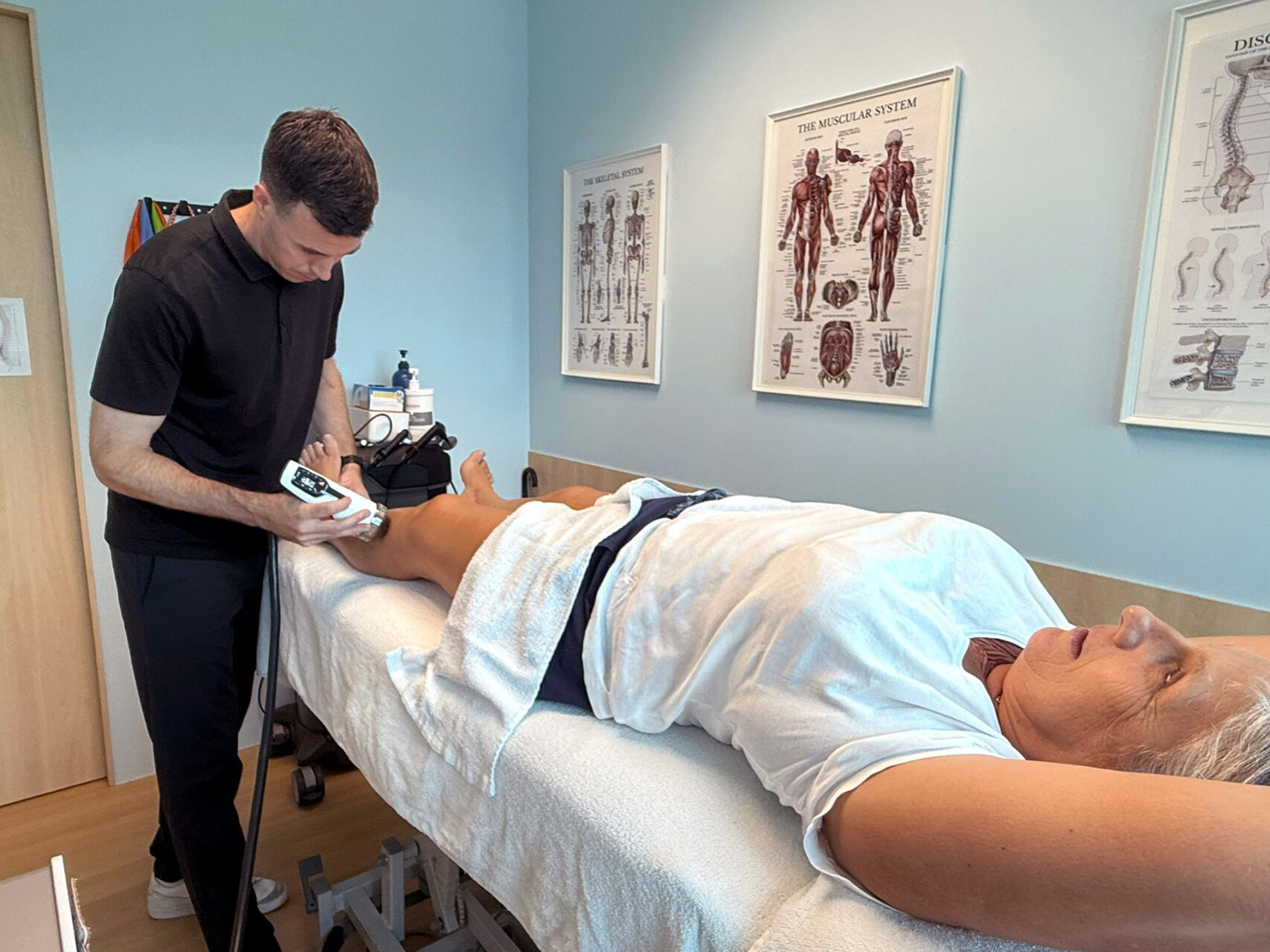
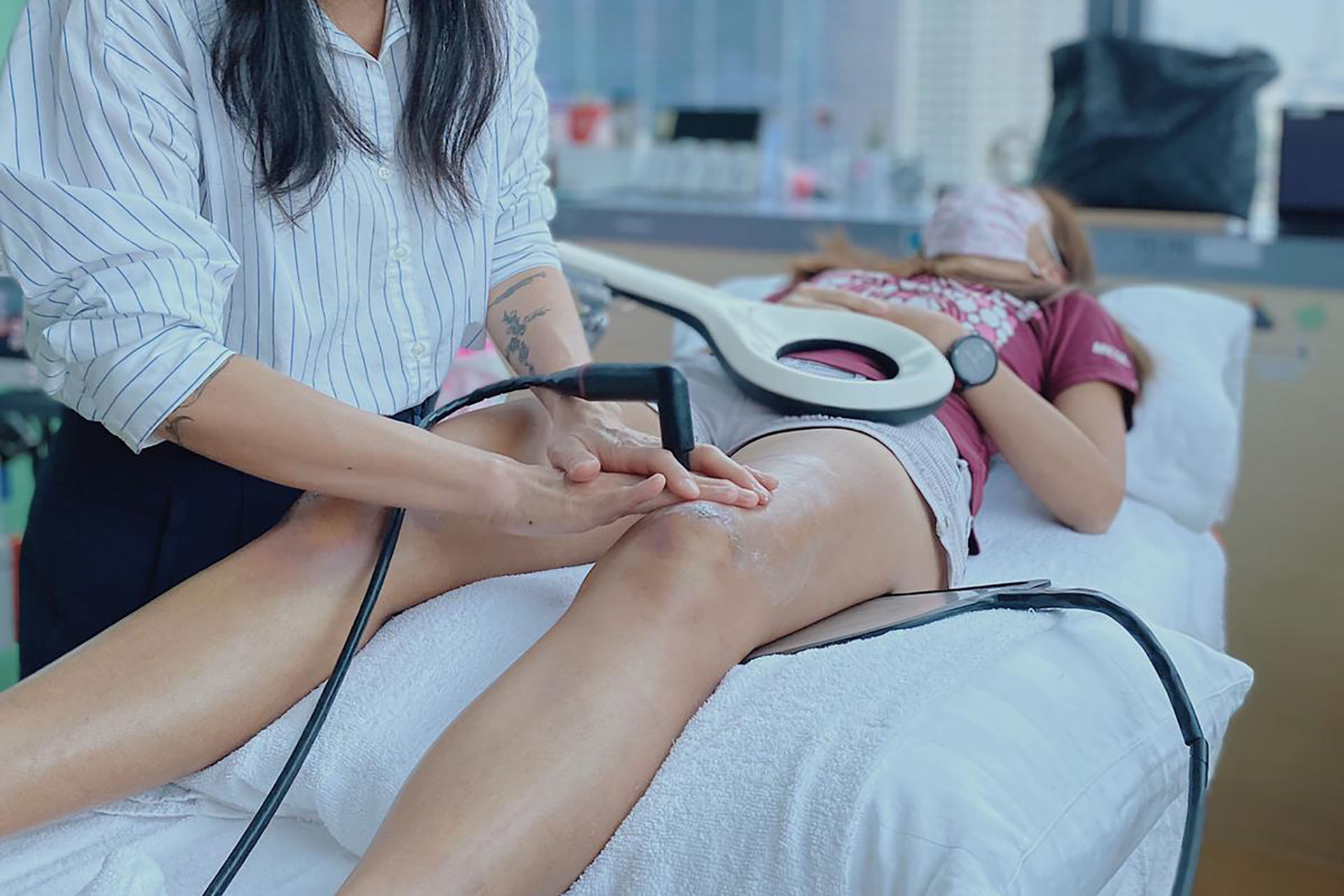
Physiotherapy is a significant part of treatment for Patellofemoral Pain Syndrome. A good physiotherapist will come up with a plan tailored to your specific needs and will work to reduce pain, improve strength and flexibility, get your movement patterns sorted out, and teach you how to use your body correctly. How to treat runner’s knee usually involves a mix of manual therapy and home exercises prescribed by your physiotherapist to address both symptoms and underlying causes.
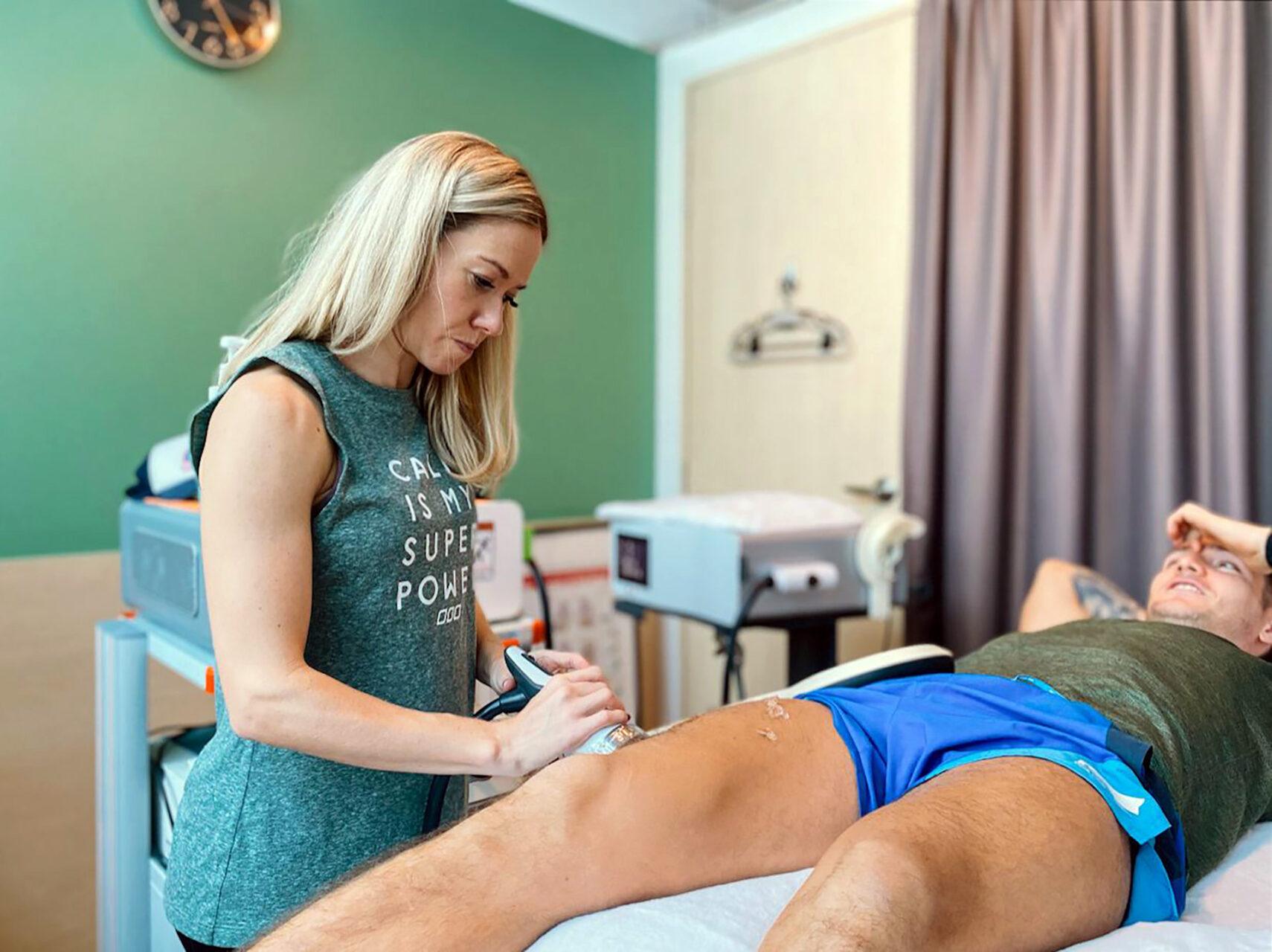
If you’re dealing with a particularly stubborn case, there are some other therapies that you might find helpful:
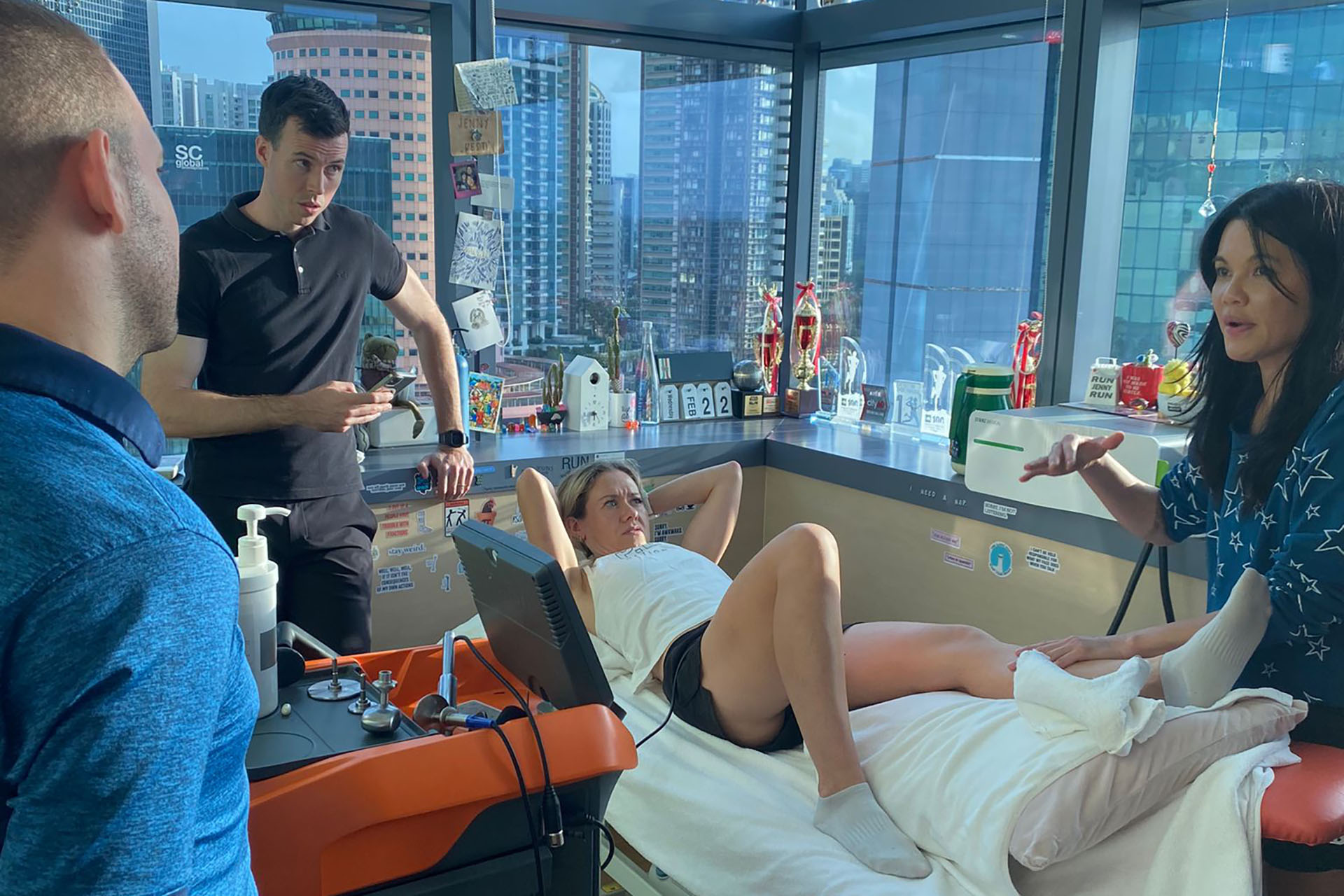
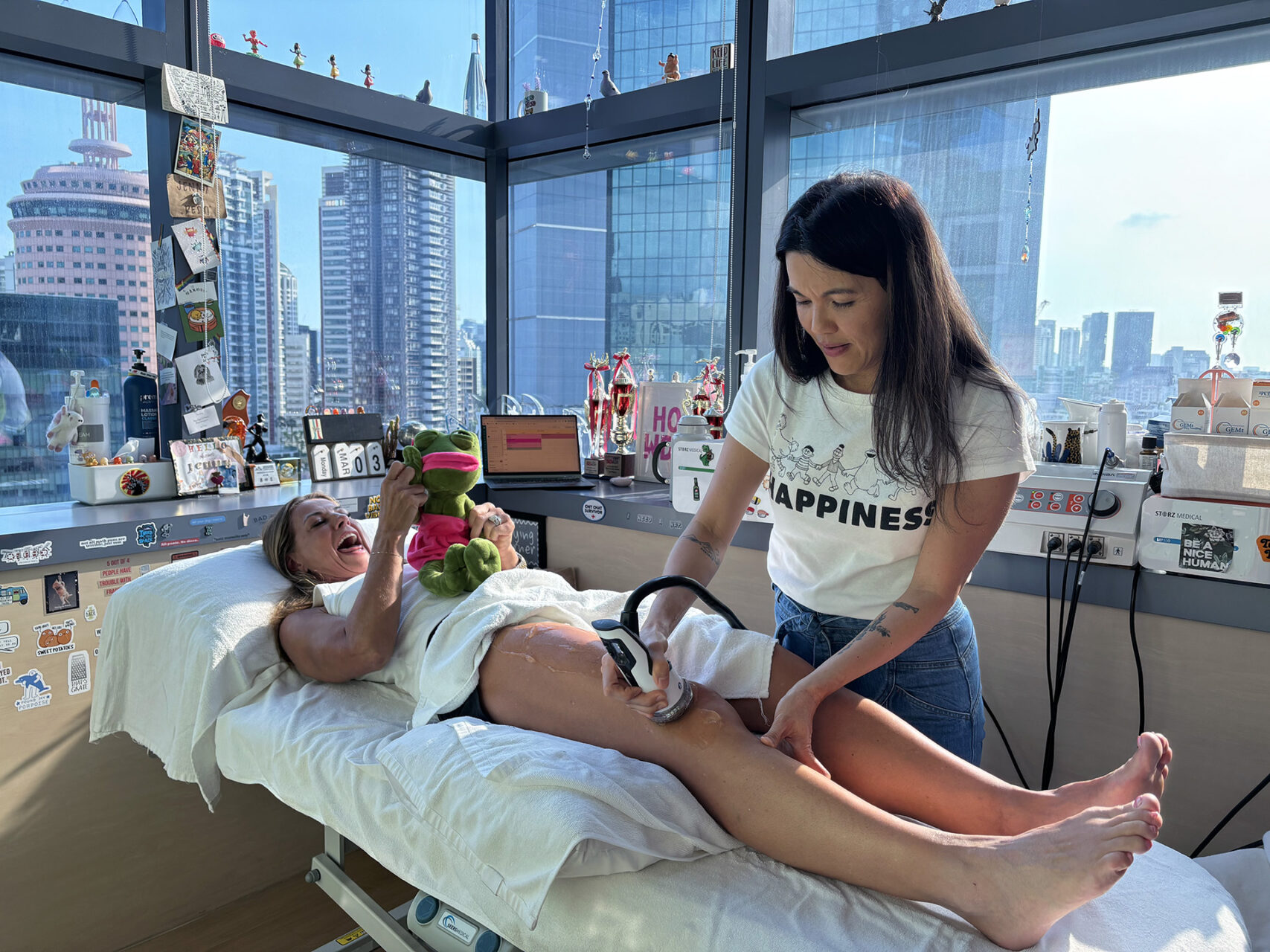
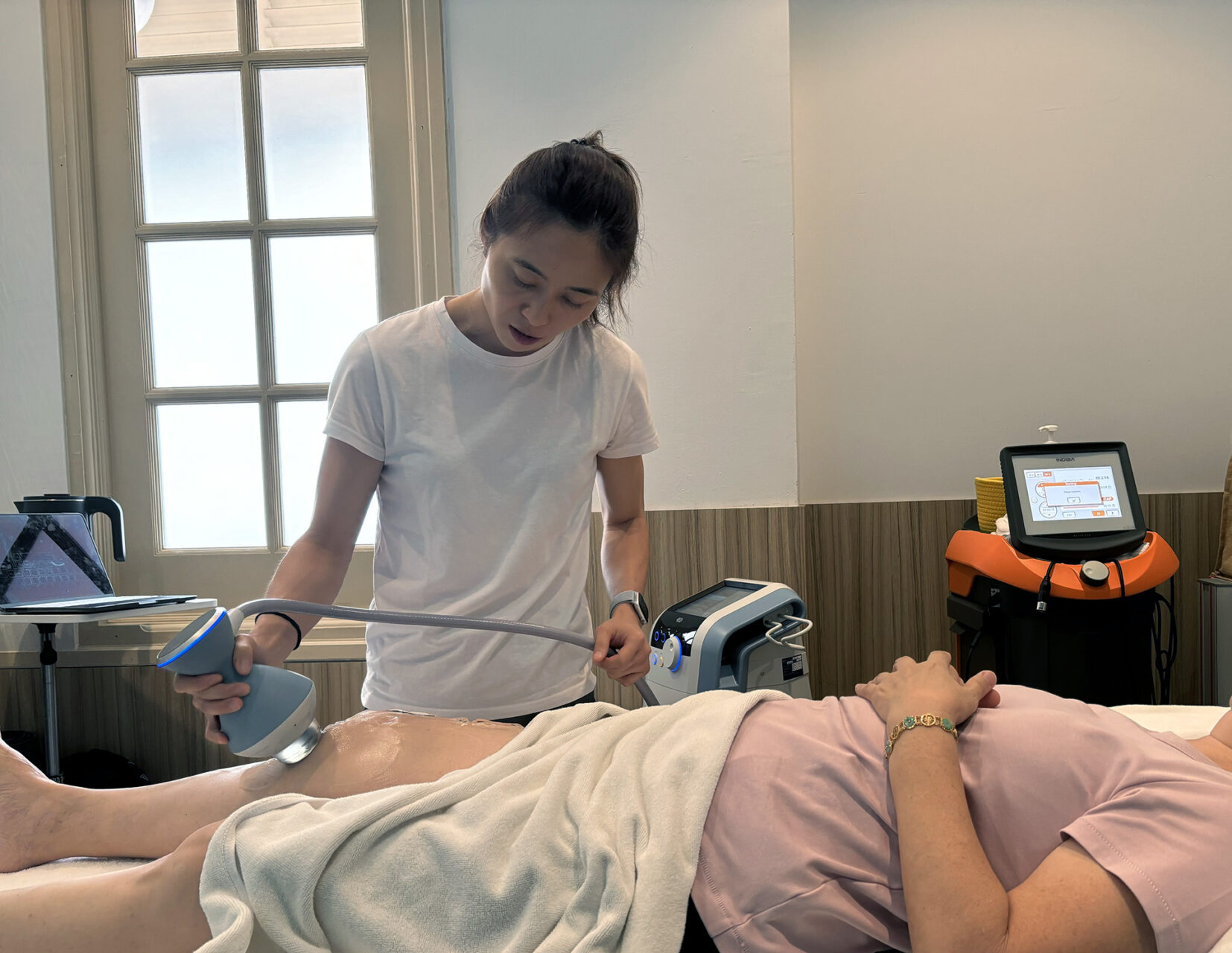
- INDIBA is a non-invasive radiofrequency therapy that stimulates cell metabolism and increases blood flow to damaged tissues, making a significant difference.
- Shockwave Therapy delivers acoustic waves to stimulate healing in soft tissues.
- Sports massage and Clinical Pilates can help your muscles and joints work correctly again.
These extra therapies work best when you’re following a clear plan that includes these modalities, and not exclusively.
Common Patellofemoral Pain Syndrome Causes
Many factors can contribute to Patellofemoral Pain Syndrome: training spikes, suddenly changing your running surface or shoes, not being strong in your hips, or moving in ways that allow your knee to drop inward. It can also result from muscle overuse or weakness, and in some cases, from the way your bones are put together. Knee problems can affect people of all ages, but they’re common among young adults and teens.
Women generally have wider pelvic angles, and this can put more strain on the knee joint, leading to a higher rate of Patellofemoral Pain Syndrome for females. Participating in high-impact sports or having a history of knee problems can also increase your risk of PFPS. Things like patella alta, where your kneecap is higher than it should be, or if one leg is longer than the other, can also increase your risk.
Symptoms of Patellofemoral Pain Syndrome
Typical symptoms include a dull ache around or behind the kneecap that gets worse when you go up stairs, or when you’re doing things like squatting or running. Some also notice a grinding or creaking sound when they move their knees – this is known as crepitus, and is common in PFPS.
You may also feel stiff after sitting for a while. It’s more of a dull ache than a sharp pain in a specific spot, making pinpointing hard. To make things even trickier, other conditions can mimic PFPS, so a proper diagnosis from a professional is key.
Diagnosis of Runner’s Knee
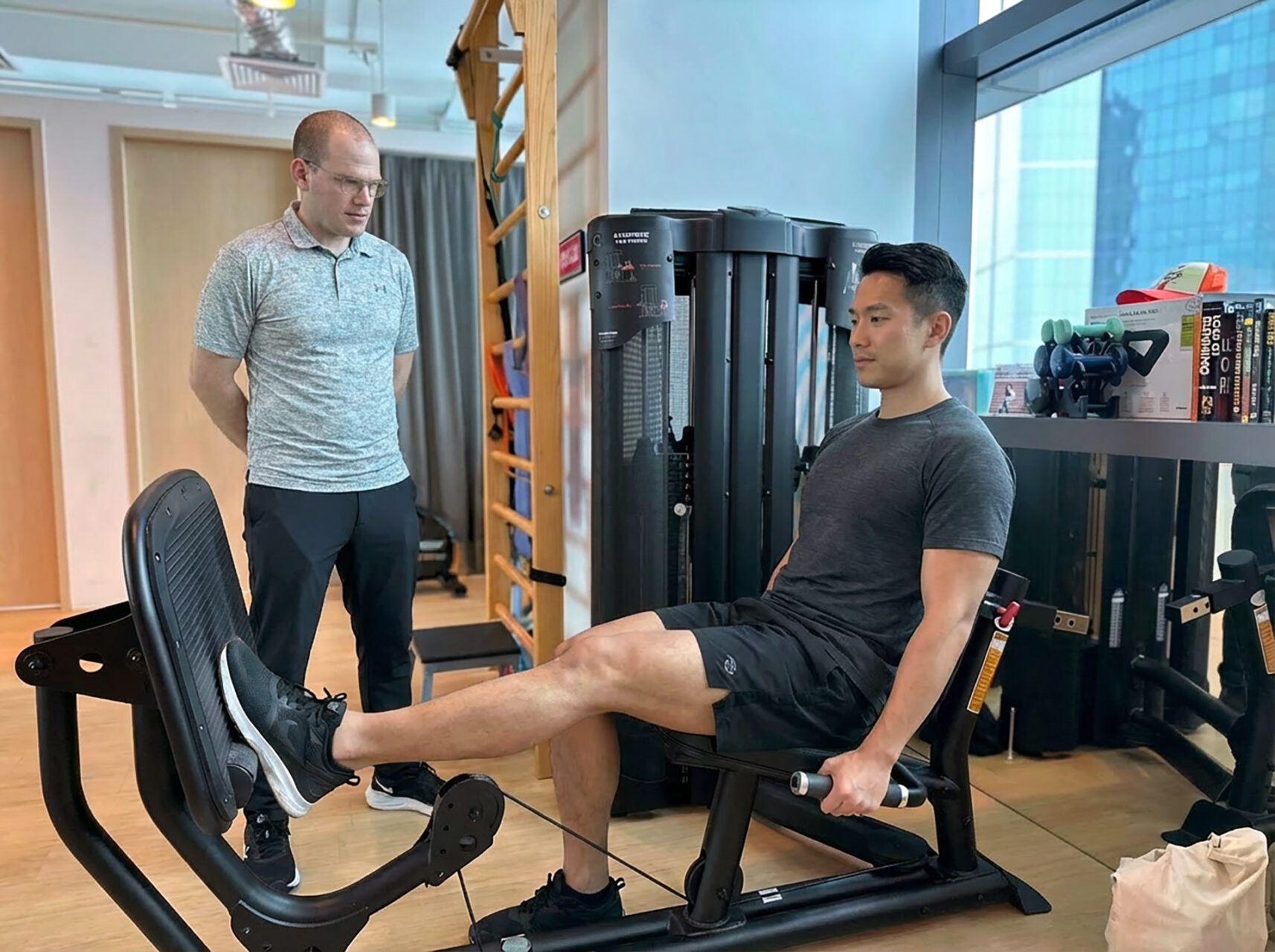
The diagnosis of PFPS is usually based on the physio’s subjective assessment during the exam. Your physio will review your medical history and assess the strength and flexibility of your hips and knees. They’ll also want to see you perform some functional tasks, such as a single-leg squat and a step-down.
They’ll gently press and pull on the front of your knee and kneecap to determine where the pain is coming from and to assess how well your knee bends and straightens. They may also want to see how you move your knee when squatting or jumping. Along the way, they’ll also check your lower leg alignment, knee tracking, knee stability, and the strength of your core and leg muscles.
They might check for the ‘J-sign where your kneecap moves out to the side when you straighten your leg. Or they might check your single-leg squat form and step-down control to see if you’re using poor movement patterns. All these assessments are meant to help them figure out what’s causing your pain and guide your treatment plan.
Imaging tests such as X-rays are not usually required to diagnose PFPS, but in some cases, further testing may be performed to rule out other problems. If you’re not improving with physical therapy, an MRI can help identify any soft-tissue injuries that need evaluation. X-rays may also be used to assess the knee during the diagnosis of PFPS.
Red flags that warrant prompt medical review include a large joint effusion, actual locking, inability to bear weight, fever, unexplained night pain, or progressive neurological symptoms. These are uncommon in PFPS but should be checked by a specialist.
Some other conditions look very similar to PFPS, such as patellar tendinopathy, plica-related irritation, meniscal pathology, fat pad irritation, patellofemoral arthritis and even growth plate issues if you happen to be a teenager. Your clinician will rule these in or out during your assessment and send you to see a specialist if the features don’t quite fit the PFPS pattern.
First Steps at Home
Short periods of relative rest reduce irritation. Follow the PEACE & LOVE method for initial management:
PEACE (first few days):
- Protection: Avoid activities that increase pain for the first few days
- Elevation: Rest with your knee raised higher than your heart as often as possible
- Avoid anti-inflammatories: They may reduce tissue healing
- Compression: Lightly wrap the knee with an elastic bandage, leaving a hole over the kneecap. Make sure the bandage fits snugly and does not cause additional pain
- Education: Your body knows best. Avoid unnecessary passive treatments and let nature play its role
LOVE (after first few days):
- Load: Return to normal activities as soon as symptoms allow. Let pain guide your gradual return
- Optimism: Condition your brain for optimal recovery by being confident and positive
- Vascularisation: Choose pain-free cardiovascular activities to increase blood flow to the injured area
- Exercise: Restore mobility, strength, and proprioception by adopting an active approach to recovery
Apply an Ice Pack for Symptom Relief
If an ice pack helps relieve symptoms after activity, apply it for 15-20 minutes at a time, wrapped in a towel. Try to avoid getting too comfortable on the couch & sitting with your knees bent for long periods. When starting with rehabilitation, pick activities that don’t push you too hard or make your knee act up. Patellar taping or a short-term Patellofemoral Pain Syndrome brace can make early exercises less painful, so give either a try.
If you find you need some pain relief, over-the-counter NSAIDs like ibuprofen or naproxen can come to the rescue for a short period. Don’t overdo it, and only take them for 10 days without talking to your doctor first. These types of medications can also help reduce swelling and pain associated with PFPS.
Rehabilitation That Works
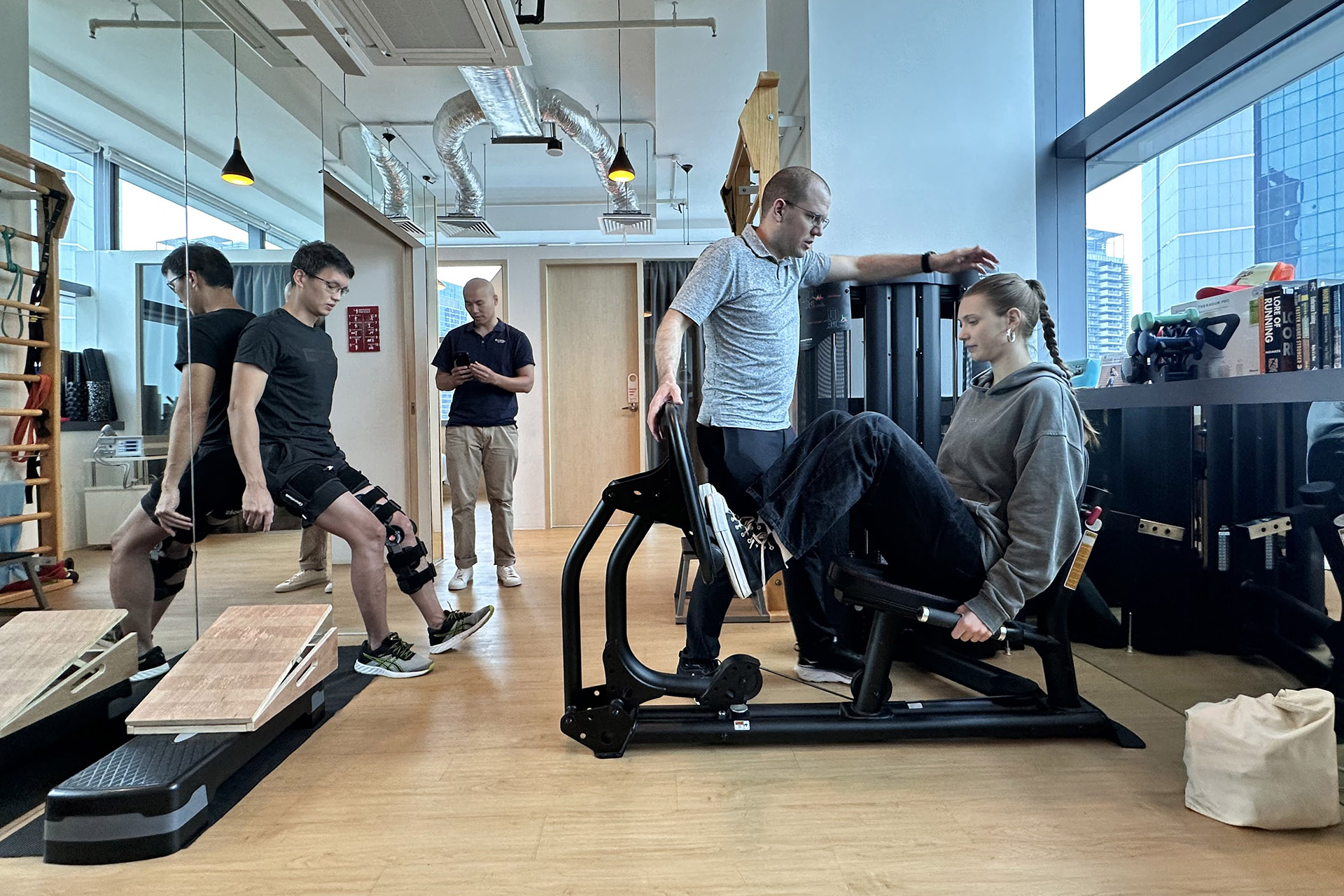
HelloPhysio’s physiotherapists will create a plan that balances symptom relief with targeted strengthening and control. First, we’ll focus on gentle Patellofemoral Pain Syndrome exercises to build strength in your quadriceps and hip muscles, so they can work together smoothly to keep your kneecap stable. It’s especially important to strengthen and stretch your quadriceps, as these muscles are often the first ones to save the day when you’re running or jumping.
Paying a bit of extra attention to strengthening your hip external rotators is also crucial, as their weakness can lead to a host of problems, including bad tracking and pain, particularly if you tend to move your hips inward or twist to one side when you’re exercising.
You’ll work our way up to more dynamic movements, such as running and changing direction. If it’s just one knee that’s affected, it helps to tailor your exercises to work on one leg at a time, so you can really focus on what your knee needs to recover.
For runners, even minor tweaks can make a big difference. For example, a change in cadence or a slightly wider step can help take some stress off your knee without slowing you down. If your foot mechanics are driving your symptoms, a temporary insole can be a lifesaver while you build strength and control in your leg. Listen to your physiotherapist. With their expertise, they will tailor a training and recovery plan for you.
Taping, Bracing, and Foot Orthoses
Taping your kneecap is a short-term fix to make exercises more manageable. A few patients find that a runner’s knee brace helps them out with higher-load activities by stabilizing and supporting the joint, so that walking and running are less painful. You’ll want to talk to your provider about which brace type might be best for you.
Foot orthoses can also help if your foot is a contributing factor to your knee problems. These are shoe inserts that can help keep your foot and ankle aligned and stable, so that you don’t put extra stress on your lower leg. Your senior physiotherapist will let you know which kind you need and how often to wear them.
Prevention
Once your symptoms start to fade, the next step is to prevent them from coming back by maintaining your hip and knee strength, being sensible about your training load, and taking careful steps when you change your routine. Some specific things to pay attention to include:
Training
Don’t just go out and do a ton more miles or run every day without giving your body a chance to adjust. Gradually increase your training volume. A 10% increase in weekly mileage is about right.
Equipment
Wear shoes that are comfy and supportive, and always replace them when they get too worn out. If you have flat feet or high arches, consider orthotics to help out.
Strength & Flexibility
Building up your leg and hip strength will help keep your knee stable during exercise. Be careful not to do too many deep squats in your weight training sessions. Pay a bit more attention to your outer hip muscles, as they help keep your knee from caving in when you move. Gentle stretching for your quadriceps and hamstrings will also help keep your knee moving freely.
Warm-Up & Cool-Down
Before any exercise, including running, take the time to warm up your blood and get your muscles ready to go. After your workout, be sure to stretch out for at least 5 minutes of easy movement to do the trick.
Other Factors
Rotate your shoes so they don’t wear out unevenly, plan recovery on the weeks when you’ve got hills, stairs, or track work, stay at a healthy weight to avoid putting extra stress on your knees, and generally pay attention to your running form.
These habits will help you live on the right side of knee pain. How long it’ll take to recover from pain largely depends on just how bad your symptoms are, how long you’ve been dealing with pain, how demanding your training regimen is and whether you can stick to our plan regularly.
Patellofemoral Pain Syndrome Recovery Time
Many patients notice a clear improvement within 6 to 12 weeks if they’re doing their exercises and keeping a handle on their load. For milder cases, a 4-6 week turnaround is often the norm. More moderate cases can take 2-3 months. For some folks, it just takes longer, especially if they can’t scale back right away. And for those with chronic conditions, physiotherapy may be needed for 4-6 months or more.
We use simple tools to track your progress that will actually show you and make you feel like you’re getting better. That might include questionnaires like the Kujala Anterior Knee Pain Scale or the VISA-P. There are also functional tests like timed stair climbing, how far you can hop on one leg and how low you can squat. These tools give a real sense of where you are and whether the plan needs adjusting.
Return to Sport
Getting back to your sport isn’t about hitting some magic date on the calendar. You’re good to go when you can squat and step down to about 60 degrees without any pain, and when you’re solid on a single leg. It’s also when you can get through jog-run-cut progressions without any symptoms popping up either during or after. We also keep an eye on things like hop symmetry, balance, and strength, and your knee will have to be ready to handle the kind of load you’ll get from hills or stairs in your sport, if that’s the case.
When Surgery Is Considered
Surgery is a rare occurrence for PFPS. It’s only considered for the really tough cases that aren’t responding to non-surgical treatment. Surgery for PFPS is regarded as a last resort after 6-12 months of conservative treatment without improvement. Other treatments, such as Patellofemoral Pain Syndrome physical therapy, bracing, and medication, should always be tried before considering knee surgery, as surgery is a last resort. Patellofemoral Pain Syndrome surgery options may include:
Arthroscopy
A small camera called an arthroscope is inserted into the knee joint. The camera displays pictures on a monitor to guide surgical instruments. Debridement (removal of damaged articular cartilage from the patellar surface) can provide pain relief in some cases. Lateral release (loosening tight lateral retinaculum tissue) may be performed if the tissue is pulling the patella out of the trochlear groove or tilting it. However, this is rarely done as an isolated procedure.
Tibial Tubercle Transfer
In some cases, it may be necessary to realign the kneecap to take stress off damaged cartilage by moving the patellar tendon along with a portion of the tibial tubercle (the bony bump on the shinbone). The doctor partially or totally detaches the tibial tubercle so the bone and tendon can be moved toward the inner side of the knee. The bone fragment is then reattached to the tibia with screws. In most cases, this transfer allows for better tracking of the kneecap in the trochlear groove.
If patellofemoral arthritis is the main problem, our team can refer you to an orthopedic surgeon to discuss surgical options.
Teens and Young Adults
PFPS is common around growth spurts when training volumes rise and schedules are busy. In adolescents, it’s essential to distinguish PFPS from other conditions that affect growing athletes, such as Osgood-Schlatter disease or Sinding-Larsen-Johansson syndrome, which involve the growth plates. The combination of rapid growth, increased training demands, and developing neuromuscular control creates a perfect storm for knee pain.
At HelloPhysio, we coach form and load management, and also check for conditions that affect growing athletes. School sports, CCA commitments, and commute time can all affect recovery. We help families plan a realistic timeline that supports study and sleep. Family involvement is key. Parents and coaches need to understand training modifications and enable the adolescent’s recovery process rather than pushing through pain.
HelloPhysio Can Help with Runner’s Knee
If you are experiencing PFPS symptoms, our senior physiotherapists at HelloPhysio can help. We will identify your main pain drivers, use Patellofemoral Pain Syndrome taping or bracing where helpful, build a realistic loading plan, and add adjunct therapies when they support faster progress. Most importantly, we will teach you what to do on your own so the results last. Book an appointment and take the next step toward effortless, strong movement.