
One of the core philosophies at HelloPhysio is empowering patients through education. We want to dispel common myths about biological differences and offer treatments for runner’s knee for both men and women at our sports physiotherapy clinic.
Women have been told that the female runner’s body is different to their male counterparts if you’ve read articles perpetuating the notion that these disparities are biological ‘flaws’ that lead to higher risks of injuries and pain, read on as we debunk some of these myths.
But first, let’s get into what causes runner’s knee.
Patellofemoral pain can be caused by a variety of circumstances, specifically overuse. Runner’s knee typically exhibits as anterior knee pain where the lower femur intersects with the patella bone.
The quadriceps and patellar tendon expand and contract during repetitive movements, creating friction and inflammation that can cause pain. This stiffness in the front and around the kneecap makes climbing stairs, squatting, kneeling, and doing other daily tasks difficult.
Medications and injections can help with inflammation and acute discomfort, but they are not a long-term treatment for knee pain. The symptoms will return if you don’t get trusted advice from a healthcare provider.
Being More Quad-Dominant Leads to Knee Pain
The belief that women are typically more “quad dominant” than men perpetuates the idea that women need to activate their quad muscles less by shifting strength training only to their glutes and hamstrings. This idea is contrary to research suggesting that weak quad muscles are a predictor of knee pain in runners.
Strong glutes and hamstrings are a bonus, but, as with all things in life, balance is key to avoiding running injuries. For female athletes, hip and knee strength training can help bring your lower limbs into a balanced state, which also helps strengthen your core.
By building strength all around, this reduces the risk of lower-limb injuries during training by fine-tuning overall neuromuscular control. By strengthening the ankles, calves, and lower limbs, women can reduce the risk of overuse injuries such as runner’s knee, shin splints, or plantar fasciitis.
Wider Pelvis Attributes to Knee Pain
Women tend to have wider hips than men. The belief that hip width causes knee pain and that structural anatomical differences increase the risk of chronic overuse injuries like runner’s knee is wrong.
There’s an idea that a woman’s wider hips increase the pelvic angle in relation to the knee, leading to an increased incidence of injuries in women athletes. Although a woman’s biomechanical function slightly differs from a man’s, the greater angle of the pelvis as related to the knee in men and women of similar sizes is minimal. It poses virtually no additional risk when it comes to the incidence of greater injuries in female runners.
Women’s Hormones Increase the Risk of Injury
Hormones make the female body more vulnerable to injuries, and set the wrong tone for women about natural hormones that proliferate in both females and males.
Estrogen receptors are present in all musculoskeletal tissues, including muscle. They are directly related to bone health and flexibility. In muscles, estrogen plays a role in improving muscle mass and strength by increasing collagen in connective tissues. As we grow older, both men and women begin to experience degenerative loss of muscle mass and strength, and that’s simply a condition of an ageing human body.
Staying consistent with training and muscle-strengthening programs, and allowing yourself enough time to recover (sleep is essential to recovery) will help reduce your risk of running injuries for both women and men.
How Can Sports Physiotherapy Help with Runner’s Knee Pain
Running and other physical activities are usually not the cause of knee pain and swelling; instead, they are the result of imbalances in the body. Educating patients with accurate information is the first step to empowering our sports therapy clients at HelloPhysio, without the disempowering messages that arise from differences in gender or anatomical body structure. Our bodies are made to move and adapt brilliantly to whatever challenges they face, but this doesn’t mean we have to stay in perpetual pain.
If you’re already suffering from knee pain, you might think your inflamed knee may be too sore to start physical therapy.
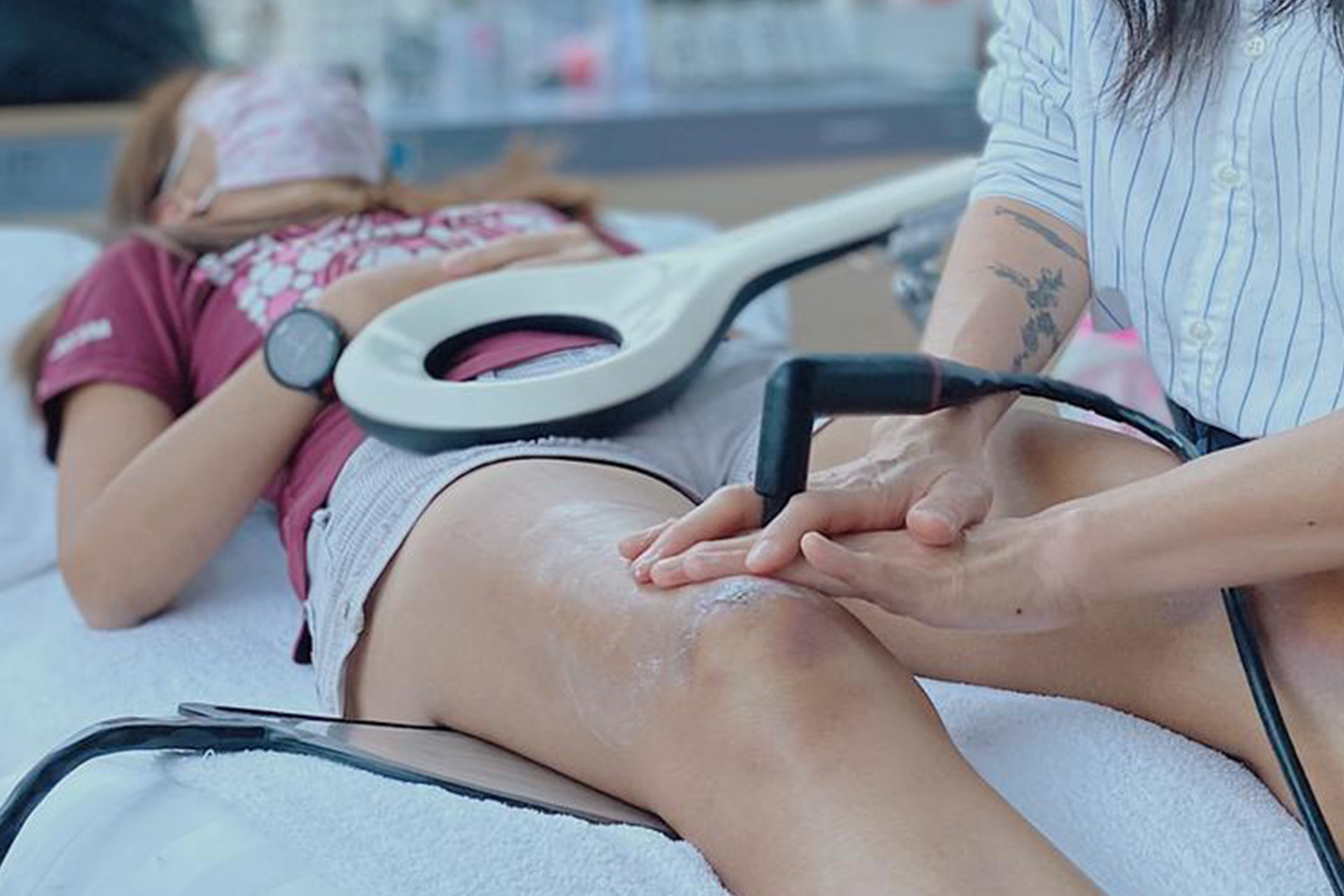
With adjunctive therapies like INDIBA Activ at HelloPhysio, our physiotherapists can help to significantly decrease pain, typically in the first session, by reducing the inflammation. Through biostimulation, vascularization, and hyperactivation, this radiofrequency therapy activates cells’ metabolic rates, improves blood flow, oxygenates tissues, and encourages collagen production by increasing nutrient uptake into connective tissues. This, in turn, helps joints move more fluidly, thus breaking the pain cycle.
Our sports injury clinic combines leading technology with strengthening programs, such as Pilates, as complementary treatments for runner’s knee. Our rehab team can tailor strategies to address underlying issues, such as muscle imbalances that can lead to chronic pain or acute soft-tissue injuries, to prevent future knee pain.
HelloPhysio provides comprehensive assessment and runner’s knee treatment of pain in females – and males! – athletes. If you are experiencing pain while running or participating in other activities, don’t hesitate to contact us today for a consultation on treating runner’s knee. With our team of physiotherapists and rehab specialists on your side, our sports physiotherapy clinic can help you return to optimal pain-free running.