

|
Getting your Trinity Audio player ready...
|
The ankle is a critical part of our daily movement. What’s in the ankle? Three major bones are supported by muscles, tendons, and, importantly, ligaments. When these ligaments are overstretched or torn, we call that an ankle sprain. But that’s still a wide umbrella term for a range of ankle injuries. Ankle sprains can put an athlete on the bench for a few days or, in bad cases, keep them out of commission for months. That’s why knowing the type of ankle sprain matters. If we don’t know the type of injury, we don’t know how best to treat it.
The most common form of ankle sprain is an inversion ankle sprain, in which the foot rolls inwards, placing pressure on the anterior talofibular ligament. But today, we’re talking about its cousin: the eversion ankle sprain. That’s when the foot rolls outwards. It may be rarer than inversion ankle sprains, but is no less deserving of our attention.
What causes an eversion ankle sprain?
An eversion ankle sprain pulls on the inner ankle ligament, the deltoid ligament. The deltoid ligament is typically more resilient to injury than the outside ligament. But like any other ligament, it can still be stretched, strained, or torn.
The causes of ankle sprains are similar, though the effects are different. Moving on uneven terrain, jumping and landing incorrectly, or impact during sports can all create inversion or eversion ankle sprains. In all of these scenarios, the foot can ‘cave’ outwards, leading to the sprain of the deltoid ligament. Another major risk factor is having previously sprained the deltoid ligament. Ligament sprains don’t heal; they scar. The chances of having an ankle injury again go up dramatically once you’ve had an injury before, making treatment essential to preventing future ankle injuries.
How are eversion ankle sprains treated?
We used to say RICE (Rest, Ice, Compress, Elevate) for ankle sprains. Now, we’ve split it into two acronyms, one for the moments immediately after the injury and one for sustained recovery. These acronyms are PEACE (Protection, Elevation, Avoid anti-inflammatories, Compression, Education) and LOVE (Load, Optimism, Vascularisation, Exercise). Most of these are self-evident, but some may seem less obvious.
For example, avoiding anti-inflammatories may seem counterintuitive, but swelling is a natural part of the body’s healing process. Attempting to stymie it with anti-inflammatories can stall the natural healing process. Load, Vascularisation, and Exercise, all located within LOVE, operate under a similar principle.
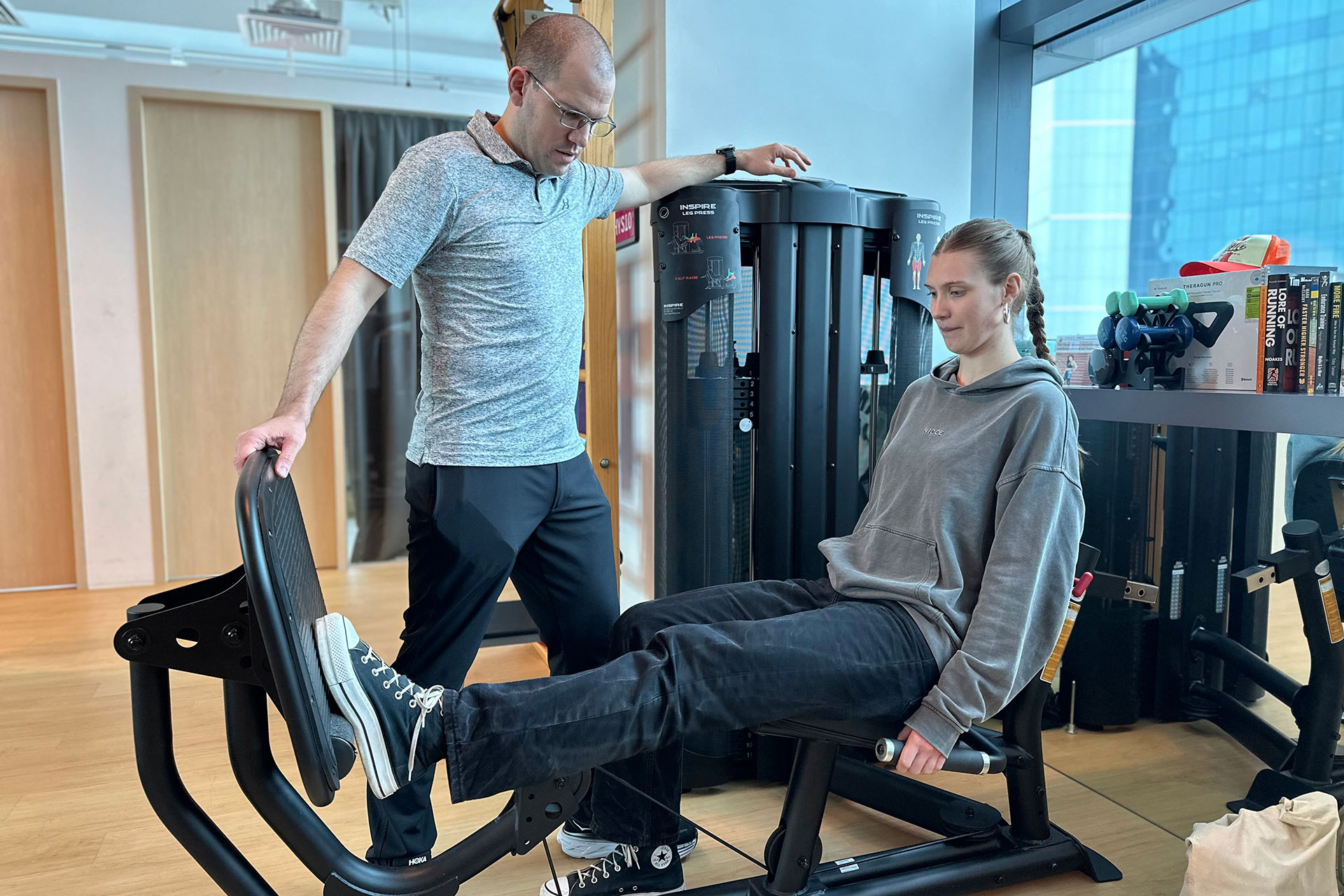
Abandoning movement during recovery is not helpful to the body. What’s best is doing manageable movements that keep the injured area limber without placing it under too much duress. That can help with flexibility, improve recovery outcomes, and prompt blood flow to the area, speeding up the healing process. This has to be done gradually and consistently, preferably under a physiotherapist’s supervision.
Two methods of treating an ankle sprain are wrapping and taping, which are often confused. Wrapping is used to compress the wound and is more common closer to the time of the injury. It’s the C of PEACE and can help speed recovery. Taping is a longer-term treatment where a physiotherapist applies adhesive tape to support the affected ligament. In the case of an eversion ankle sprain, the physiotherapist would apply tape to the inside of the ankle, where its tension can help ease strain during movement.
Kinesio® taping is another form of taping, though its effects differ. Kinesio© tape is much more elastic and is not designed to support the ligament, though it does ease healing. It cues the ankle to improve posture, activate muscles, and enhance overall biomechanics. It is a subtle cue for your body to know how to stand and move best, improving blood flow and stimulating lymphatic drainage. Both of these speed up the healing process considerably.
These are the more traditional methods of treating eversion ankle sprains. The ideal recovery plan combines traditional modalities and cutting-edge technology for the best results. Here are some of the treatment options available for eversion ankle sprains:
Shockwave Therapy
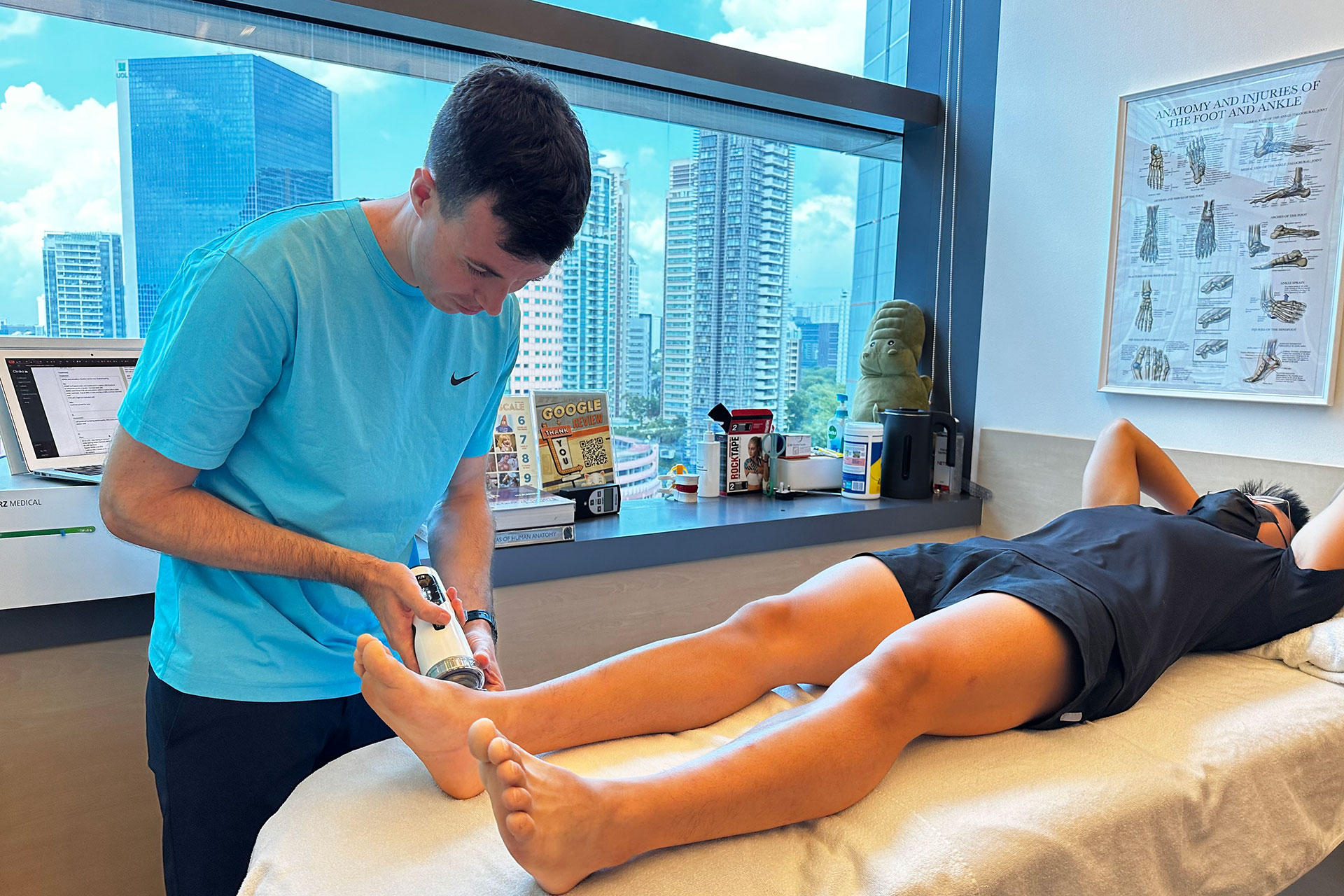
In Shockwave Therapy, a physiotherapist uses a device to send sonic pulses into the afflicted tissue. This creates a stress impact, but rather than doing damage, it breaks down scar tissue and stimulates tissue regeneration by increasing blood flow to the area. Shockwave Therapy is a great non-invasive treatment option for eversion ankle sprains as it stimulates long-term recovery and has outcomes that last far longer than the individual session.
INDIBA© Therapy
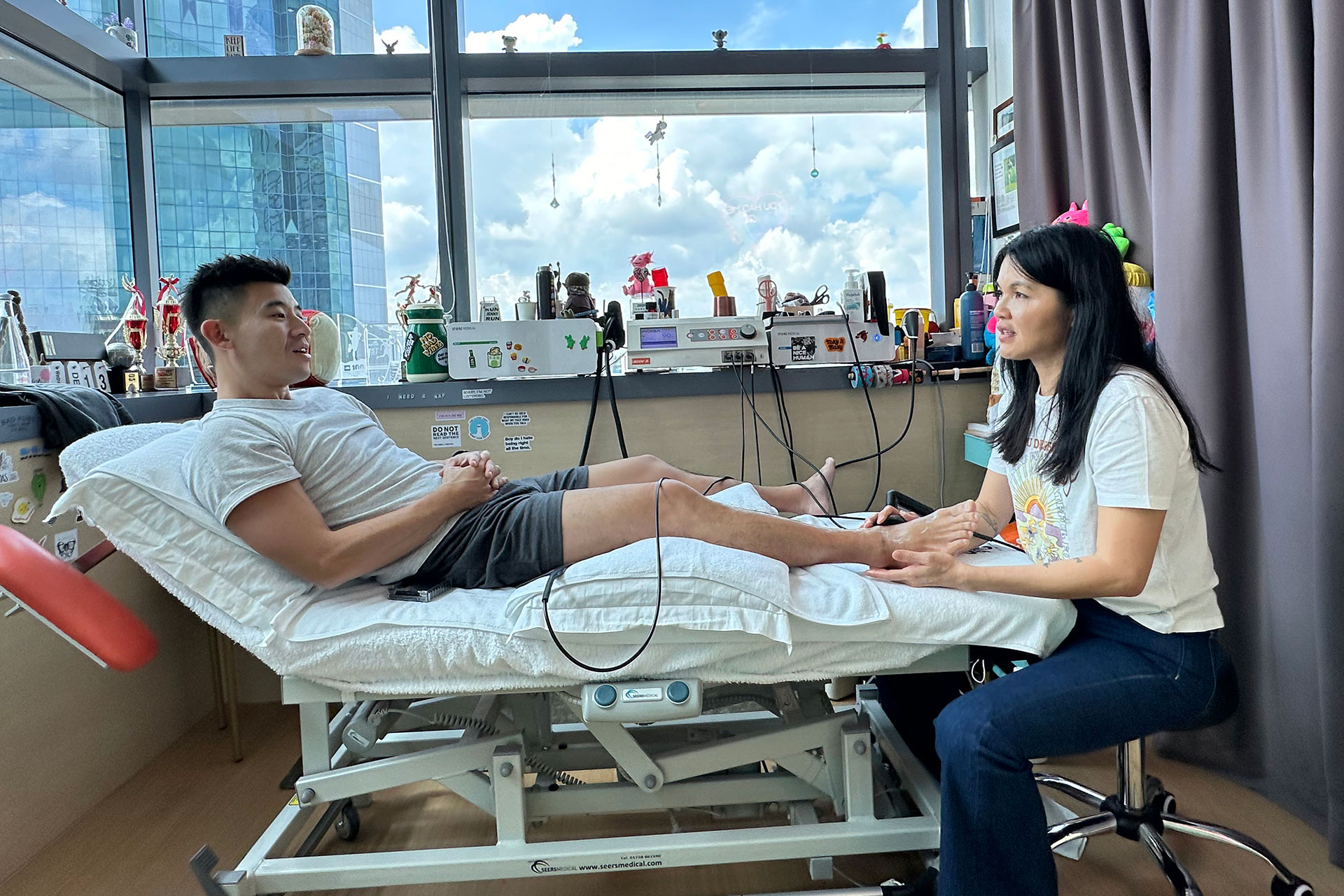
INDIBA Therapy is an advanced treatment that uses electromagnetic currents to deliver energy to the affected tissue. It heats the targeted area precisely by bombarding the tissue with this current at a safe frequency of 448kHz. This triggers the body’s natural healing, regeneration, and repair responses. Specifically, it enables the movement of ions through the cell membrane, increasing circulation. The accelerated healing from INDIBA Therapy can be very helpful for athletes eager to get back into play quickly and recover from their eversion ankle sprain. One specific effect of INDIBA Therapy is an increase in collagen, which also improves the area’s flexibility.
LightStim® Red Light Therapy
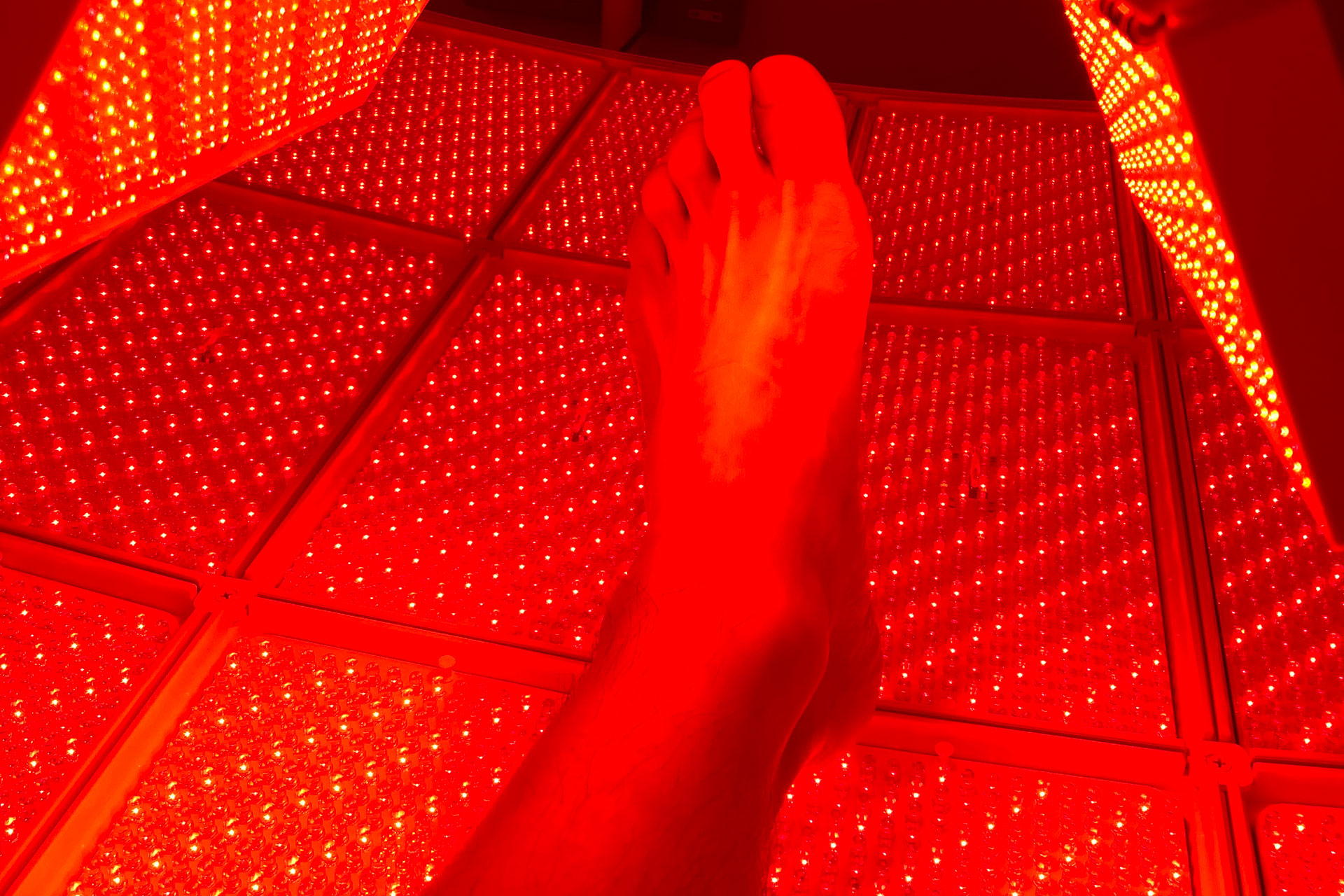
In Red Light Therapy, a physiotherapist applies a low-wavelength red light to the ankle. This red light is not simply a coloured light but operates at a specific wavelength that stimulates mitochondrial activity. This powers the cells and stimulates collagen production, increasing blood circulation and reducing inflammation. The effects of red light therapy include helping heal a sprained ankle naturally. Increased blood flow means better circulation, reduced inflammation means less discomfort, and increased collagen production means stronger, more elastic skin.
Clinical Pilates
Sometimes an injury requires more active rehabilitation to help the body stay strong. Clinical Pilates is perfect for this, where guided exercises with a physiotherapist can target and strengthen core stability, posture, and balance. Improving those body parts can be especially important when treating the root cause of the eversion ankle sprain. The sprain could result from an imbalance elsewhere in the body, so better biomechanics or a stronger mind-body connection can help prevent the problem from recurring. It can also fortify against future injuries by ensuring your ankle’s recovery is stable.
Holistic recovery approach
As is evident, there are a great deal of methods for treating an eversion ankle sprain. It may be hard to know which ones to use. That’s where a physiotherapist comes in, advising you on what makes the most sense for your injury. Importantly, they’ll know which combination of techniques best supports your condition.
Most often, the best recovery outcomes come from combining several approaches, both traditional and cutting-edge, to hasten recovery and prevent future injuries. A physiotherapist can help you build a plan with individual recovery goals that best match your ankle sprain. This is important because going too hard too fast can worsen outcomes. A physiotherapist can measure your recovery and make it sustainable.
Ready to get back on track after an eversion ankle sprain?
Even though eversion ankle sprains are not as common as other ankle sprains, they are still a significant injury. The good news is that this means people are constantly researching and developing new treatment methods. Combined modalities have shown the best outcomes, matching stellar hands-on treatment with advanced technology to help handle eversion ankle sprains. If you’re looking to treat an eversion ankle sprain, reach out to a physiotherapist today to receive holistic treatment that gets you back in the game faster and stronger.
Our team of experienced physiotherapists at HelloPhysio can help you recover quickly and effectively. Book an appointment today and take the first step towards a holistic recovery approach that combines traditional and cutting-edge technology.