

Upper back pain is discomfort between the base of the neck and the bottom of the rib cage. Common sources of this pain include soft tissues, the thoracic spine and the connections between the ribs and vertebrae. Many uncomplicated episodes of upper back pain improve with self-care, but some signs require urgent medical assessments.
The thoracic spine contains twelve vertebrae and supports the rib cage. It moves less than the cervical spine in the neck and the lumbar spine in the lower back. That means the issues that cause upper back pain are specific and require a different kind of attention than most common causes of lower back pain. If you are looking for information on pain that affects several regions, see back pain symptoms and causes.
What Are the Symptoms of Upper Back Pain?
Upper back pain may be mild or severe and can feel like a dull ache, general achiness, stiffness, tightness, burning, or sharp pains. The pain may affect one side, both sides or a specific area of the back. These symptoms will vary depending on the cause of the pain.
Pain symptoms can change with lifting, reaching, twisting, prolonged sitting or deep breathing. The pain may also limit your movement, daily activities or sleep. Upper back pain after waking up may relate to an overnight position or an activity from the previous day, and not necessarily your mattress.
Tingling, numbness or loss of strength in an arm may come from a neck or nerve condition. Other symptoms affecting the legs, walking or balance may indicate spinal cord involvement and need prompt a medical assessment.
| Symptom pattern | What it may suggest |
| Local aching, stiffness or tenderness that changes with movement | Muscle strain or thoracic joint irritation |
| Sharp pains between the shoulder blades or near a rib with twisting the torso or deep breathing | Rib muscle or rib-joint irritation |
| Pains near a shoulder blade that changes with neck or arm movement | Pain referred from the neck or shoulder |
| Burning, tingling or pains wrapping around one side of the chest | Thoracic nerve irritation |
| Upper back and chest pains with breathlessness, sweating or nausea | A possible heart, lung or other medical emergency |
Pain near the top of this region may be related to neck pain. Pain that changes mainly when raising or rotating the arm may require a clinical assessment as it may be a sign of an acute condition.

What Causes Upper Back Pain?
The most common causes of upper back pain usually involve soft tissues, thoracic or rib joints, or pain referred from the cervical spine or shoulder. Other causes of upper back pain include a fracture, nerve problem, inflammatory condition or pain referred from an internal organ.
Muscle strains and changes in physical load
A muscle strain can follow lifting, repetitive motions such as overhead work, rowing, throwing, forceful pulling or a rapid increase in training. Sudden injuries, such as sports injuries or a car accident, can also damage tissues in this region. Muscular irritation may develop when a repeated task exceeds the body’s current capacity.
Thoracic and rib-joint irritation
Small joints connect the vertebrae and ribs to the thoracic spine. These joints and the surrounding tissues can become sensitive after a sudden twist, impact, coughing or repeated loading. The pain may increase when you rotate or extend this part of the body. Upper back pains when breathing may be musculoskeletal, but it needs a medical assessment when accompanied by breathlessness, fever, cough, dizziness or coughing up blood.
Neck or shoulder conditions
Pain from the cervical spine can spread toward the upper back, sometimes with arm pain, tingling or altered sensation. Problems in the nearby joint may also cause pain, particularly when reaching or lifting the arm.
Work setup, prolonged positions and stress
Poor posture is often blamed for upper back pain, but no single position is perfect, and slouching does not automatically damage the spine.
A workstation that requires repeated reaching, an unsuitable screen position, or long periods without movement may contribute to upper back pain. Stress can increase muscle tension and pain sensitivity. Position changes and movement breaks are usually more helpful than holding a single rigid posture.
Spinal and medical conditions
Other causes of upper back pain include:
- Osteoarthritis or other age-related joint changes.
- A thoracic herniated disc or irritated nerve.
- Thoracic spinal stenosis, which can narrow the space around the spinal cord.
- Myofascial pain, which may involve sensitive soft tissue and muscle pain.
- Inflammatory arthritis.
- Infection involving the spine.
- Scoliosis or increased rounding of the thoracic spine.
- Shingles, which may cause burning upper back pain followed by a one-sided rash.
- Cancer affecting the spine.
Scan findings or imaging do not always explain pain. Age-related changes can occur without causing pain, so consider imaging results alongside the clinical examination.
Osteoporosis and compression fracture
Osteoporosis weakens bones and increases the risk of vertebral compression fractures. These fractures can cause sudden upper back pain, loss of height or a more rounded upper back. In people with osteoporosis, a fracture may follow a minor fall, lifting, bending or forceful coughing.
Pain referred from inside the chest or abdomen
Heart, lung, esophageal and abdominal conditions can sometimes cause pain felt in the upper back. This is called referred pain, as the pain is being “referred” from a different part of the body. You can’t safely identify these causes through stretches, massage, or position changes alone.
What Causes Upper Back Pain on the Left Side or Right?
Upper back pain on the right side or left often comes from a muscle, thoracic joint, rib joint, neck or nearby arm structures on that side. Location alone cannot identify the underlying cause.
Left upper back pain with chest pressure, breathlessness, sweating, or nausea may be heart-related. Right upper back pain with abdominal signs may be referred from an internal organ.
When Is Upper Back Pain an Emergency?
Seek urgent medical attention when upper back pain occurs with signs of a heart, lung or serious neurological problem.
Call 995 for life-threatening emergency medical help if upper back pain occurs with:
- Chest pressure, squeezing or pain.
- Sudden difficulty breathing.
- Fainting, severe dizziness, sweating or nausea.
- Pain spreading into an arm or to the neck or jaw.
- Coughing up blood.
- Sudden loss of strength or movement in an arm or leg.
- New difficulty walking or maintaining balance.
- Loss of bladder or bowel control.
Seek prompt medical assessment rather than routine physiotherapy if the pain:
- Began after a major fall or collision.
- Followed a minor injury and you have osteoporosis or use long-term steroid medicine.
- Occurs with fever, chills or feeling generally unwell.
- Is severe, constant, worsening or repeatedly disrupts sleep.
- Occurs with unexplained weight loss or a history of cancer.
- Causes spreading tingling, loss of strength or altered sensation.
- Is not beginning to improve after one to two weeks.
How is Upper Back Pain Assessed?
Upper back pain diagnosis usually begins with a medical history and physical examination. Uncomplicated pain without warning signs does not usually require immediate imaging.
A physiotherapist may ask:
- When and where the pain starts.
- Whether it followed trauma, illness or a change in activity.
- Which movements or positions affect it.
- Whether breathing, coughing or eating changes the pain.
- Whether you have chest, arm, or other nerve-related symptoms.
- For your medical history, and if you had or have osteoporosis, inflammatory disease or cancer.
The examination may assess thoracic and rib movement, breathing, neck and arm function, strength and sensation. The examiner may also check balance, reflexes, and leg strength if spinal cord or nerve involvement is possible.
An X-ray may be used when a fracture or structural change is suspected. MRI can show discs, spinal nerves, the spinal cord and narrowing caused by spinal stenosis. Blood tests, chest imaging or heart tests may be required when findings suggest a medical cause.

How is Upper Back Pain Treated?
Upper back pain treatment depends on the underlying cause. Musculoskeletal pain usually begins with education, continued activity, temporary changes to aggravating tasks, and gradual rehabilitation. Many uncomplicated episodes improve within days or a few weeks.
Complete bed rest is generally not recommended. Short walks and comfortable daily movement help maintain mobility. Temporarily reduce aggravating activities such as running, then gradually reintroduce them.
After a recent strain or injury, an ice pack may reduce pain and swelling during the first 24 to 48 hours. Heat may provide targeted relief for muscle stiffness or spasm. For safe pain relief, wrap either pack in a towel to protect the skin.
An anti-inflammatory medication such as ibuprofen may alleviate pain and inflammation, but it is not suitable for everyone. Ask a healthcare provider or pharmacist whether it is safe with your health conditions and regular medicines.
Epidural steroid injections are not a routine treatment for nonspecific upper back pain. A specialist may consider an injection for selected thoracic nerve-root pain after a diagnostic assessment. Fractures, infections, inflammatory conditions and referred pain require the appropriate medical management.
How Can Physiotherapy Help?
Physiotherapy is a common management option for upper back pain related to movement, joints, ribs or physical load. The physiotherapist will screen for warning signs, assess your movement and function, explain the findings and provide a home plan.
Exercise programs may improve your range of motion and strengthen weak muscles, as well as other large muscles that support the upper spine. Rehabilitation may include thoracic mobility, trunk control and gradual practice of difficult activities. The selection depends on the cause and response to movement.
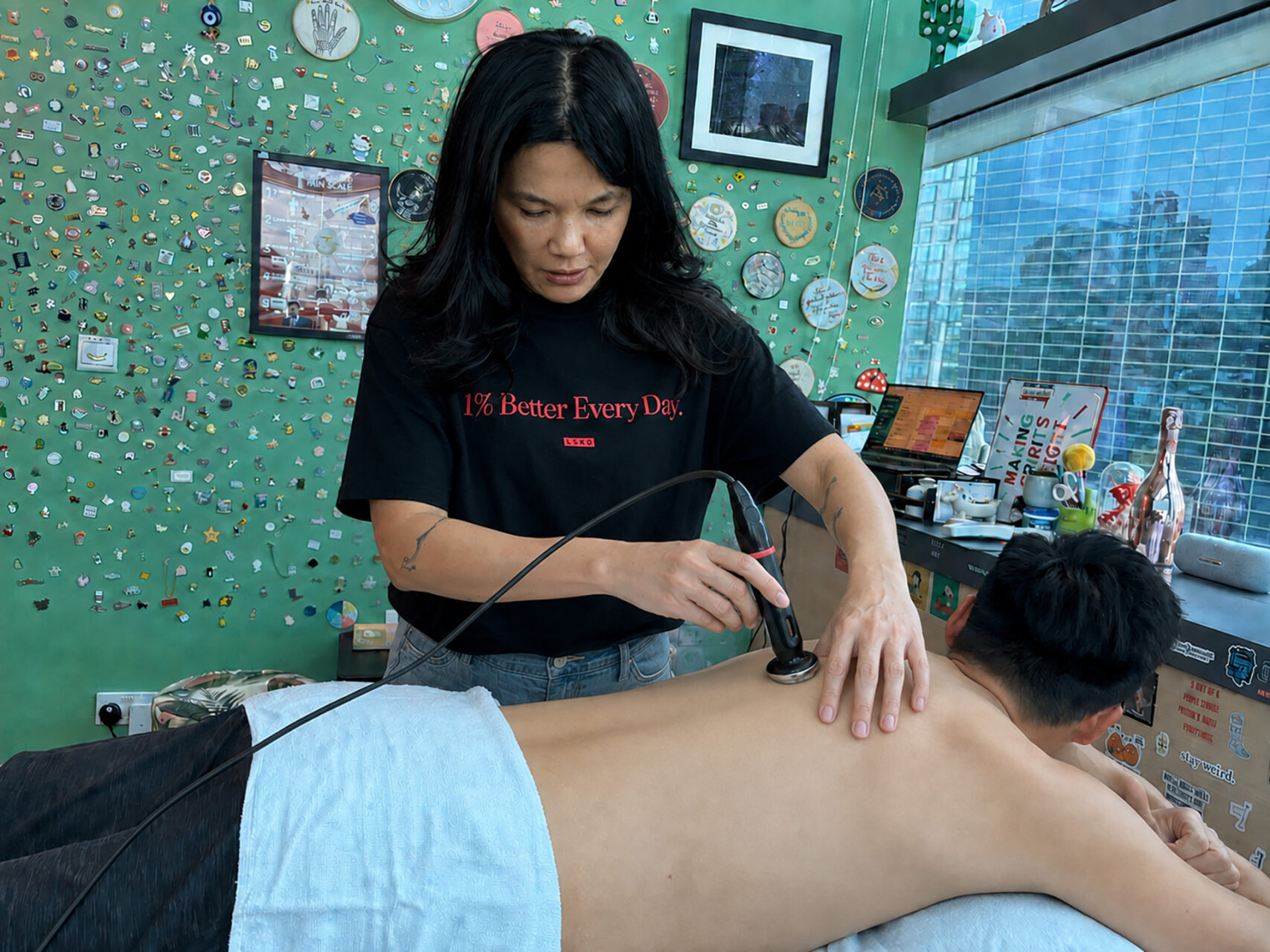
Manual therapy or soft-tissue techniques may be used as an adjunct when they help relieve pain and make movement more comfortable. They should support, rather than replace, active rehabilitation.
Stop an exercise and seek advice if it causes chest symptoms, unexpected breathlessness, dizziness, spreading numbness, weakness or a significant increase in pain. Physiotherapy cannot help with all causes of upper back pain, so speak with your medical provider to better understand your options.

What Can You Do at Home?
When warning signs are absent, self-care measures may relieve upper back pain:
- Continue comfortable daily activities.
- Take short walks and regular breaks from sitting.
- Change sitting or standing positions regularly.
- Temporarily reduce movements that cause a clear flare-up.
- Use heat or cold for comfort when safe.
- Return gradually to lifting, gym training or sport.
- Choose a comfortable sleeping position rather than forcing one prescribed posture.
Avoid forceful stretching or spinal manipulation after trauma or when a fracture is possible. General online exercises may not be appropriate when pain is caused by a rib injury, nerve problem or medical condition.
Can Upper Back Pain Be Prevented?
Not every episode can be prevented, and no approach can prevent pain for everyone. Regular low-impact movement, such as walking, and progressive strengthening can support upper back mobility and strength.
Vary working positions, take regular movement breaks and adjust work tasks that repeatedly provoke discomfort. Set the screen and work surface at comfortable heights, keep frequently used items within easy reach and avoid prolonged sitting when possible.
When lifting, keep the load close, use the hips and knees and ask for help with heavy or awkward objects. No single chair, position, mattress or exercise prevents every episode of upper back pain.
Those at risk of osteoporosis should discuss bone health, fall prevention and appropriate exercise with a healthcare provider.
Upper Back Pain Physiotherapy in Singapore
Assess upper back pain based on its pattern and likely cause. The HelloPhysio team can assess musculoskeletal pain, screen for signs requiring medical care and develop an individualized rehabilitation plan for you. Contact us today to schedule an initial evaluation for your upper back pain symptoms.
Frequently Asked Questions
What causes pain between the shoulder blades?
Upper back pain between the shoulder blades commonly comes from soft tissues, thoracic or rib joints, or pain referred from the cervical spine or shoulder. Lifting, prolonged positions and activity changes may also contribute to the pain. Chest pressure, breathlessness, sweating or nausea require emergency medical assessments.
Why does my upper back hurt when I breathe?
Deep breathing moves the ribs and can aggravate an irritated rib joint or chest-wall muscle. Pain may also come from the lungs or tissues surrounding them. Seek urgent medical care if it occurs with breathlessness, fever, cough, dizziness or coughing up blood.
Is upper back pain a sign of cancer?
Usually not. Muscle and joint causes are much more common, and upper back pain alone does not mean cancer. Arrange a medical assessment for persistent or worsening pain, particularly with unexplained weight loss, fever, night pain, a history of cancer, or feeling generally unwell.
Is poor posture the main cause of upper back pain?
No. Good posture isn’t one fixed position, and body position alone doesn’t explain most upper back pain. Staying still or repeatedly working in an uncomfortable position may contribute. Regular position changes and physical conditioning are usually more useful than holding the body rigid.
How long does upper back pain last?
A minor muscle or joint irritation may begin improving within days or a few weeks. Recovery depends on the cause, general health and physical demands. Arrange an assessment if your pain persists, worsens, or limits your normal activities. Pain lasting more than 12 weeks is considered chronic back pain. Chronic or constant upper back pain may require a broader management plan.