
What is a Slipped Disc?
The spine is made up of small bones called vertebrae. Between these bones are soft discs that act like cushions. These discs help absorb shock and allow the spine to bend, twist, and move.
A slipped disc, or a herniated disc, happens when the soft inner material (the nucleus pulposus) pushes through a tear in the tougher outer layer of a spinal disc.
A bulging disc happens when the outer edge of a spinal disc pushes outward beyond its normal shape. The disc has not necessarily torn or leaked, but the bulge may narrow the space around nearby nerves.
If the bulging disc irritates or compresses a nerve root, it can cause pain that travels into the arm or leg. Nerve-related symptoms may also include numbness, tingling, weakness, or a burning or electric-like sensation.
A herniated disc can happen in the neck, middle back, or lower back. It is most common in the lower back because this area carries more body weight and handles much of the stress from sitting, bending, lifting, running, and jumping.
Slipped Disc Symptoms
Slipped disc symptoms depend on where the affected disc sits among the bones in your spine and whether it is irritating a nerve root or nearby nerves. The symptoms of a slipped disc vary widely.
Some people have a slipped disc and feel little or no pain. In such cases, signs of disc degeneration may show only on imaging. Others develop signs that affect daily movement, work, sleep, or sport.
Common signs include:
- Lower back pain
- Neck pain
- Pain that travels into the arm or leg
- Numbness
- Tingling
- Muscle weakness
Herniated disc symptoms vary by location.
- Lower back: A herniation may cause lower back pain and sciatica. This pain travels from the lower back into the buttock, thigh, calf or foot. The pain may feel sharp or burning, with an electric or shooting pain along a nerve root. A burning pain at night can also disturb sleep. The pain may worsen with sitting, bending forward, coughing, sneezing, or lifting.
- Neck: A neck herniation may cause discomfort that spreads into the shoulder, arm or hand. Patients may notice a reduced grip strength, weak thigh muscles (a serious neurological condition called cervical myelopathy), or difficulty lifting objects. Symptoms of a slipped disc include numbness or tingling, weakness in the arm or limb, and pain.
Seek urgent medical care if your back pain is linked with loss of bladder or bowel control, saddle anaesthesia (a loss of sensation, numbness, or tingling in the areas of the body that would touch a horse saddle), progressive leg weakness, partial paralysis, fever, weight loss, or trauma. These can suggest cauda equina syndrome, which, if left untreated, can lead to permanent nerve damage. Such rare cases need an immediate emergency review.
Slipped Disc Causes
A slipped disc is often caused by age-related disc wear, poor lifting mechanics, sudden strain, injury, or reduced spinal support from weak muscles. Discs lose water with age and become less flexible, making them more likely to tear, bulge, or herniate. A small strain, twist, or lift may be enough to irritate a disc that has already become less resilient.
Common causes of slipped discs include:
- Lifting heavy objects with the back rather than the legs
- Repeated handling of heavy objects
- Repeated bending or twisting
- Prolonged sitting
- Poor posture
- Sudden jerky movements
- Reduced fitness
- Falls
- Traffic accidents
- Other sudden trauma
Runners and athletes may develop a pain after sudden training changes, poor recovery, heavy gym loading, or repeated impacts without sufficient strength in the hips, trunk, and legs. In Singapore, long desk hours and prolonged sitting can also contribute to lower back pain by increasing pressure through the discs and reducing movement during the day.
How Is a Slipped Disc Diagnosed?
A slipped disc is diagnosed through a clinical assessment and, when needed, imaging.
A slipped disc diagnosed early often responds better. Your physiotherapist will perform a physical examination. They may also ask about work habits, training loads, previous injuries, sleep, medication, and your daily activity.
The physical assessment may include checking your spinal movement, posture, gait, muscle strength, reflexes, sensation, nerve tension, hip mobility, and the condition’s response to different positions or movements. These findings help guide treatment and identify whether the source is likely the disc, a nerve, surrounding joints, or muscle guarding.
Imaging is not always needed at the start, but X-rays may help rule out other causes. An MRI scan is more useful when nerve compression is suspected or when pain is severe, persistent, or worsening.
Slipped Disc Treatment
Most people improve without surgery. Slipped disc treatment usually starts with conservative care, including physiotherapy, activity modification, pain relief and prescribed exercises.
Early care often focuses on calming the nerve irritation, easing discomfort, and helping the person move safely. Rest for a few days can aid recovery during a sore flare-up, but long bed rest is usually not recommended. Gentle movement, walking and guided exercise are often important parts of recovery.
Medications
Medication may help relieve pain during flare-ups. Over-the-counter NSAIDs, such as ibuprofen, can reduce the inflammation associated with slipped discs. Muscle relaxants may be recommended if the muscle spasms are involved.
Corticosteroid Injections
Corticosteroid injections delivered around the sciatic nerve may be considered if the nerve or chronic back pain remains high. These injections can reduce the inflammation around the affected nerves and may improve mobility during the rehabilitation. The injections do not replace physiotherapy, but they may support the recovery when the pain is limiting progress.
Physiotherapy
Physiotherapy helps manage a slipped disc by reducing the pain, restoring movement, improving strength, and guiding a safe return to activity. Some patients feel better with gentle extension movements. Others need positions that reduce nerve irritation, improve hip mobility, or decrease muscle guarding.
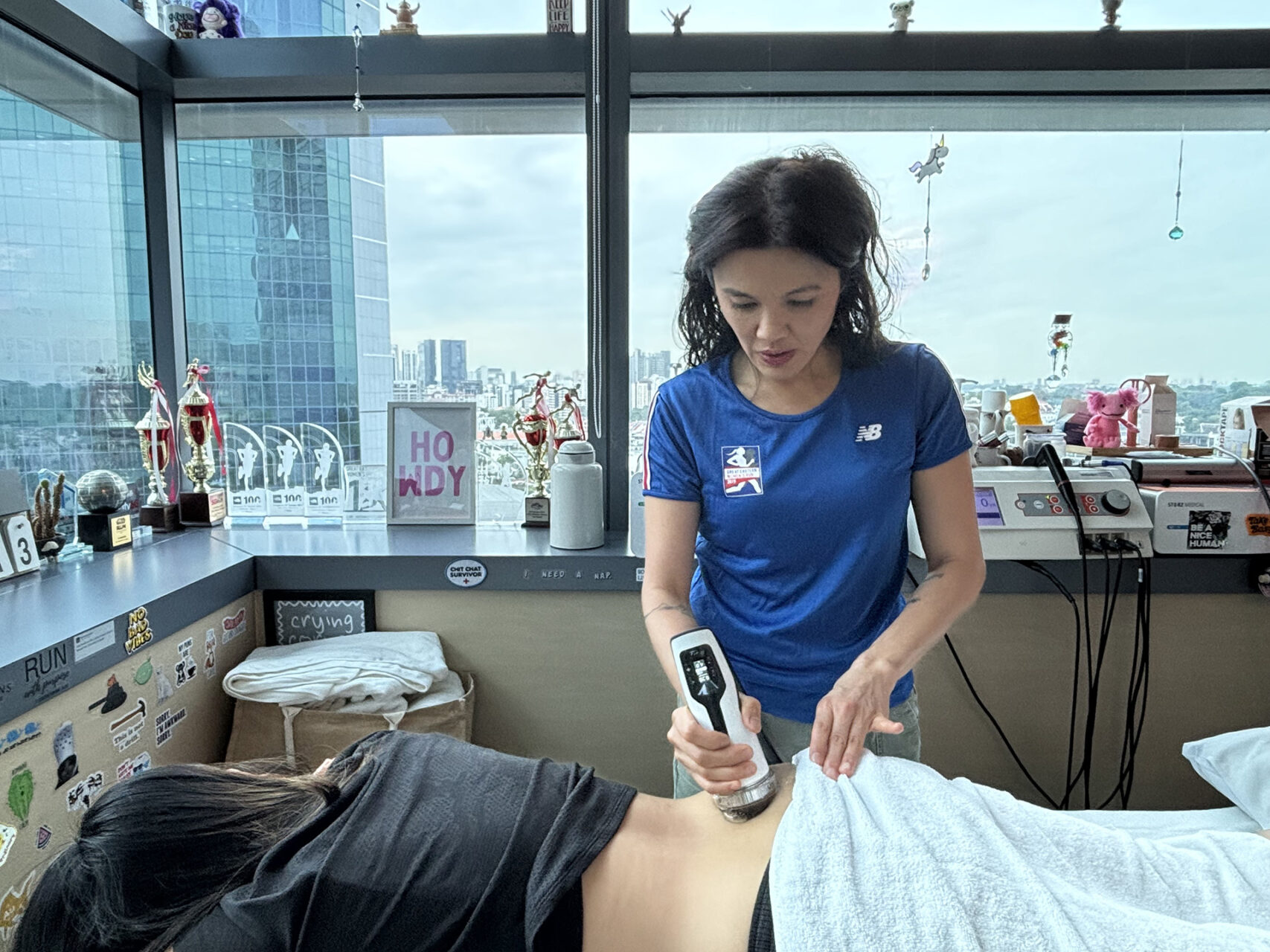
Physiotherapy may include manual therapy, soft tissue techniques, spinal mobility work, nerve mobility exercises, posture and lifting advice, and progressive strengthening. For runners and athletes, physiotherapy also looks at their training load, hip strength, trunk control, running mechanics, gym technique, and recovery habits.
Prescribed Exercises
Prescribed exercises help a slipped disc recover by improving movement, strength, nerve tolerance, and spinal support.
Exercises must be matched to the person. A routine that helps one person may make another feel worse. Early exercises may include gentle walking, breathing exercises, pelvic tilts, supported spinal mobility, nerve glides, and simple core activation.
As the condition improves, the plan may progress to bridges, side planks, bird dogs, squats, hip hinges, glute strengthening, and controlled lifting practice.
Exercises should not repeatedly trigger any sharp discomforts, worsening leg pains, or increasing numbness. Mild discomforts can happen during rehabilitation, but symptoms should settle and remain manageable.
Adjunct Modalities
Supportive treatments may help reduce pain and improve mobility, allowing your rehabilitation to progress.
- INDIBA® may be used to ease tightness, stiffness and muscle guarding.
- EMTT may be considered for selected musculoskeletal issues in which deeper-tissue stimulation supports recovery.
- Dry Needling may help when tight muscles or trigger points contribute to back, hip, or neck tightness.
- Focused or radial Shockwave Therapy may be considered if a separate soft tissue, tendon, or muscular problem is contributing to discomfort or limiting movement.
Surgery
Slipped disc surgery may be considered when conservative care does not help or when nerve compression causes severe or worsening symptoms.
Most do not need slipped disc surgery. Surgery is usually discussed with an orthopedic surgeon when discomfort persists, function is very limited, or neurological signs such as weakness, numbness, or loss of reflexes do not improve. Surgery may be urgent if there is loss of bladder or bowel control, saddle numbness, or worsening weakness.
Surgical options include microdiscectomy, endoscopic discectomy, open discectomy, laminectomy, spinal fusion, or artificial replacement. The choice of procedure depends on the disc location, nerve compression, signs, imaging findings and overall health.
Post-surgery rehabilitation
Post-surgery rehabilitation helps restore safe movement, strength and walking tolerance after a slipped disc surgery.
After surgery, the early focus is usually comfort, wound protection, gentle walking, and avoiding movements that may overload the healing tissues. Your surgeon’s instructions will guide the early stages.
Post-op physiotherapy may then progress to gentle mobility, trunk activation, hip and leg strengthening, posture education, and a gradual return to sitting, work, lifting, running or sport. For desk-based workers, this may include a return-to-work plan with sitting breaks. For athletes, rehab usually includes strength testing, movement retraining, and progressive loading before returning to any sport.
Slipped Disc Recovery
Slipped disc recovery varies, but many improve within several weeks with the right treatment plan.
Milder cases may settle within four to six weeks, and a few weeks of consistent rehab often makes a real difference. More irritated cases, especially those with nerve issues, can take longer. Herniated disc recovery time depends on the size and location of the herniation, nerve irritation, overall health, activity demands and consistency in rehab.
Slipped disc recovery is rarely straightforward. It may flare up and settle again. This does not always mean the disc is worse. The spine and nerve may still be sensitive to load.
Slipped Disc Prevention
A slipped disc cannot always be prevented, but the risk of recurrence can be reduced with strength, movement and better load habits.
Prevention starts with regular exercise and good posture. Strong trunk, hip and leg muscles help support the spine, and good posture protects the disc. Brisk walking can help prevent a slipped disc, and graded loading can help prevent recurrence. Flexibility through the hips and legs can also reduce unnecessary strain on the lower back during bending, lifting and running.
Good lifting habits matter. Bend through the hips and knees, keep the load close, and avoid twisting while lifting. Long sitting periods should be broken up with movement. Maintaining a healthy weight and avoiding smoking can also support disc health. Avoiding frequent wear of high heels may also help maintain spinal alignment and reduce additional strain on the lower back.
How HelloPhysio Can Help
If symptoms from a slipped disc are affecting your work, sleep, training or daily life, HelloPhysio can help. Our physiotherapists can assess your condition, explain what is driving your discomfort, and develop a treatment plan that includes manual therapy, prescribed exercises, movement retraining and supportive modalities where appropriate. Contact HelloPhysio to book a consultation.