
What Is Lumbar Spondylosis?
Lumbar spondylosis is age-related wear and tear affecting the intervertebral discs between the vertebrae, facet structures, bones, and ligaments in the lower spine. This form of spinal osteoarthritis develops gradually as part of the natural degeneration in the discs and joints.
The lumbar spine is the lower part of the back, below the cervical spine and thoracic vertebrae. It carries much of the body’s weight and helps you sit, stand, walk, run, bend, lift and twist.
- Over time, the intervertebral discs between adjacent vertebrae lose height and hydration.
- The small joints at the back of the spine, called facet joints, may become stiff or arthritic.
- Ligaments may thicken, and extra bone may form.
- Small bone spur growths gradually develop around the vertebrae as the body stabilises the area.
- This extra bone on adjacent vertebrae may narrow the spinal canal, press on the spinal cord or nerve roots, and place pressure on surrounding discs.
- Bone changes around the vertebrae develop slowly as part of degenerative aging.
Lumbar spondylosis affects over 80% of individuals over the age of 40, but not everyone has pain at that age. Many may show signs of mild lumbar spondylosis on an X-ray or MRI, but continue to move well. For others, these changes can contribute to lumbar spondylosis back pain, stiffness, reduced movement, or nerve-related issues.
Cervical vs Lumbar Spondylosis
Spondylosis of the lumbar spine is distinct from cervical spondylosis, which affects the neck, but the two can coexist. The cervical spine houses the upper spinal cord and supports the head and neck. Neck pain from cervical changes can coexist with lumbar, neck and back issues. The lumbar spine sits lower. Degenerative changes, including spinal cord involvement in the cervical region, can occur in multiple regions. Some people develop cervical and lumbar spondylosis together as aging progresses.
Lumbar Spondylosis Symptoms
Lumbar spondylosis symptoms can include low back pain, stiffness, reduced movement, and pain or tingling in the legs.
- Some people experience a dull ache or pain in the lower back.
- Others feel a stiffness after sitting, standing, walking, or staying in one position for too long.
- Pain may feel worse in the morning, but may improve once the body warms up and starts moving, or after prolonged activity.
- If a nerve root is irritated or the sciatic nerve is compressed, symptoms can travel into the buttock, thigh, calf, or foot. Such nerve pain may radiate down the legs. This may cause numbness, tingling, weakness, heaviness, or a burning sensation.
- Some people with narrowing around the spinal nerves feel worse when standing or walking and better when sitting or leaning slightly forward.
Early lumbar spondylosis may cause only mild stiffness or occasional lower back discomfort. More advanced cases may affect walking, balance, stairs, sleep and daily activities.
Severe lumbar spondylosis can lead to permanent nerve damage if nerve root compression is significant. Left untreated, especially when they include a worsening weakness or loss of function.
Lumbar Spondylosis Causes
Lumbar spondylosis causes and risk factors include:
- Age-related disc changes
- Repetitive spinal loading
- Previous injury
- Trauma
- Genetics
- Smoking
- Obesity
- Poor posture
- Reduced physical activity
- Sedentary lifestyle
- Spinal degeneration over time
As the discs that cushion the vertebrae of the lumbar spine age, they lose water and become less effective at absorbing shock to the lumbar spine. When disc height decreases, more load may be transmitted through the facet joints and ligaments. Over time, this can lead to stiffness, joint irritation, inflammation, bone spurs and nerve compression. Herniated discs and inflammation may send pain signals along the nerve roots.
Trauma can accelerate the degenerative changes in the bones, ligaments, and the surrounding tissues of the spine. A lifting injury, fall, car accident, sports injury, or repeated strains can change how the lower back handles a load. Jobs or sports that involve repeated bending, twisting, impact, or heavy lifting may increase stress on the lumbar spine, especially when strength and mobility do not keep up with the demands.
Lifestyle also matters. Smoking may affect tissue health. Excess body weight can increase the spinal load. A sedentary routine can lead to a weaker core, hip and back muscles, which may reduce the spine’s ability to tolerate daily stress.
Lumbar Spondylosis Diagnosis
Lumbar spondylosis is diagnosed through a medical history, physical examination and imaging tests when needed.
Your physiotherapist will ask where the pain is, how long it has been present, what makes it better or worse, and whether there is leg pain such as numbness, tingling, weakness, or heaviness. They may also ask about sleep, exercise, work demands, previous injuries, medication and other health conditions.
The physical examination may include assessing spinal movement, posture, gait, hip mobility, muscle strength, flexibility, reflexes, sensation, balance and nerve tension. These tests help determine whether the symptoms are more likely due to joint tightness, disc irritation, root compression, muscle guarding, or a general loss of strength.
X-rays may show a narrowed disc, bone spurs, arthritis, and changes in alignment. MRI or CT scans can show disc changes, compression, and spinal canal narrowing. Severe cases may need additional imaging tests.
Seek medical care promptly if your back pain is linked with a loss of bladder or bowel control, numbness around the groin or saddle area, worsening leg weaknesses, fevers, unexplained weight loss, major traumas, or severe night pains that do not settle.
Lumbar Spondylosis Treatment
Lumbar spondylosis treatment usually starts with conservative care to reduce pain, improve movement and restore daily function.
Most patients do not need surgery. Conservative care may include physiotherapy, prescribed exercises, activity modification, pain relief, ergonomic advice, and lifestyle changes. Treatments are tailored to the patient’s symptoms. The aim is to reduce lower back sensitivity while improving the spine’s ability to tolerate movement and load.
Medication may help during painful flare-ups. Anti-inflammatory drugs, including nonsteroidal anti-inflammatory drugs (NSAIDs), may be recommended when appropriate. Medications may provide temporary relief by reducing the inflammation.
Injections may be considered if your pain remains high. Spinal injections are one option. In patients with significant nerve root compression or spinal cord compression, more targeted treatment for nerve compression may be needed. Joint injections may help when pain comes from irritated spinal areas. Epidural steroid injections may be considered when nerve root irritation or spinal stenosis is contributing to leg discomfort. Injections reduce inflammation and pain and provide relief, but work best when paired with rehabilitation and physical therapy.
Physiotherapy for Lumbar Spondylosis
Physiotherapy helps lumbar spondylosis by improving movement, strength, flexibility, posture, tolerance and confidence in daily activities.
At HelloPhysio, treatment starts with understanding how your symptoms behave. Some patients feel guarded. Others experience radiating discomfort, reduced walking tolerance, poor hip mobility, or difficulty bending and lifting.
Physiotherapy may include manual therapy, soft-tissue treatment, spinal and hip mobility work, nerve glides, strengthening, walking guidance, posture variation, and lifting retraining. If running or sport is part of your life, the routine may include load management, hip and trunk strength, movement control, and a graded return to training.
Adjunctive treatments may support recovery when used appropriately:
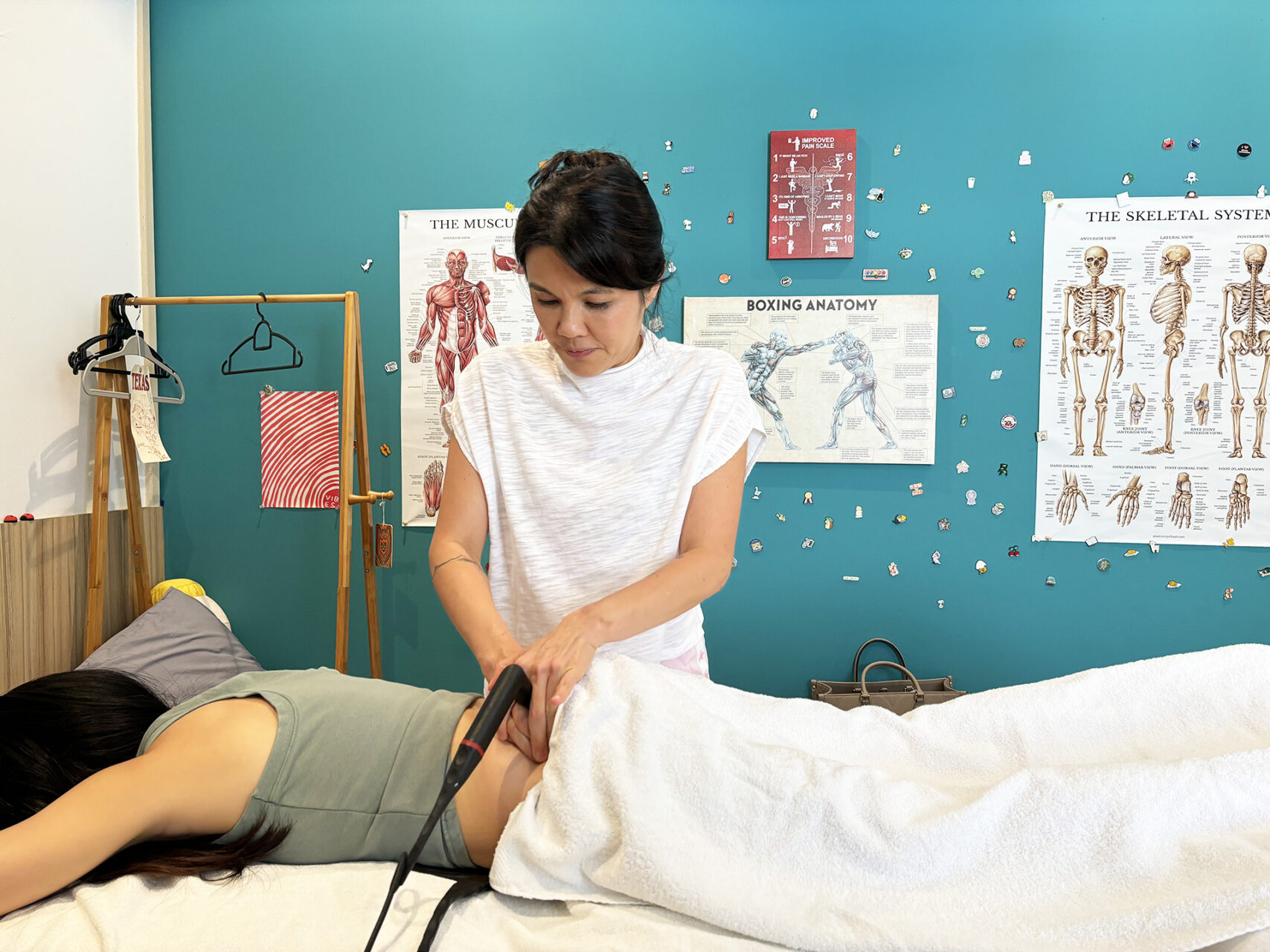
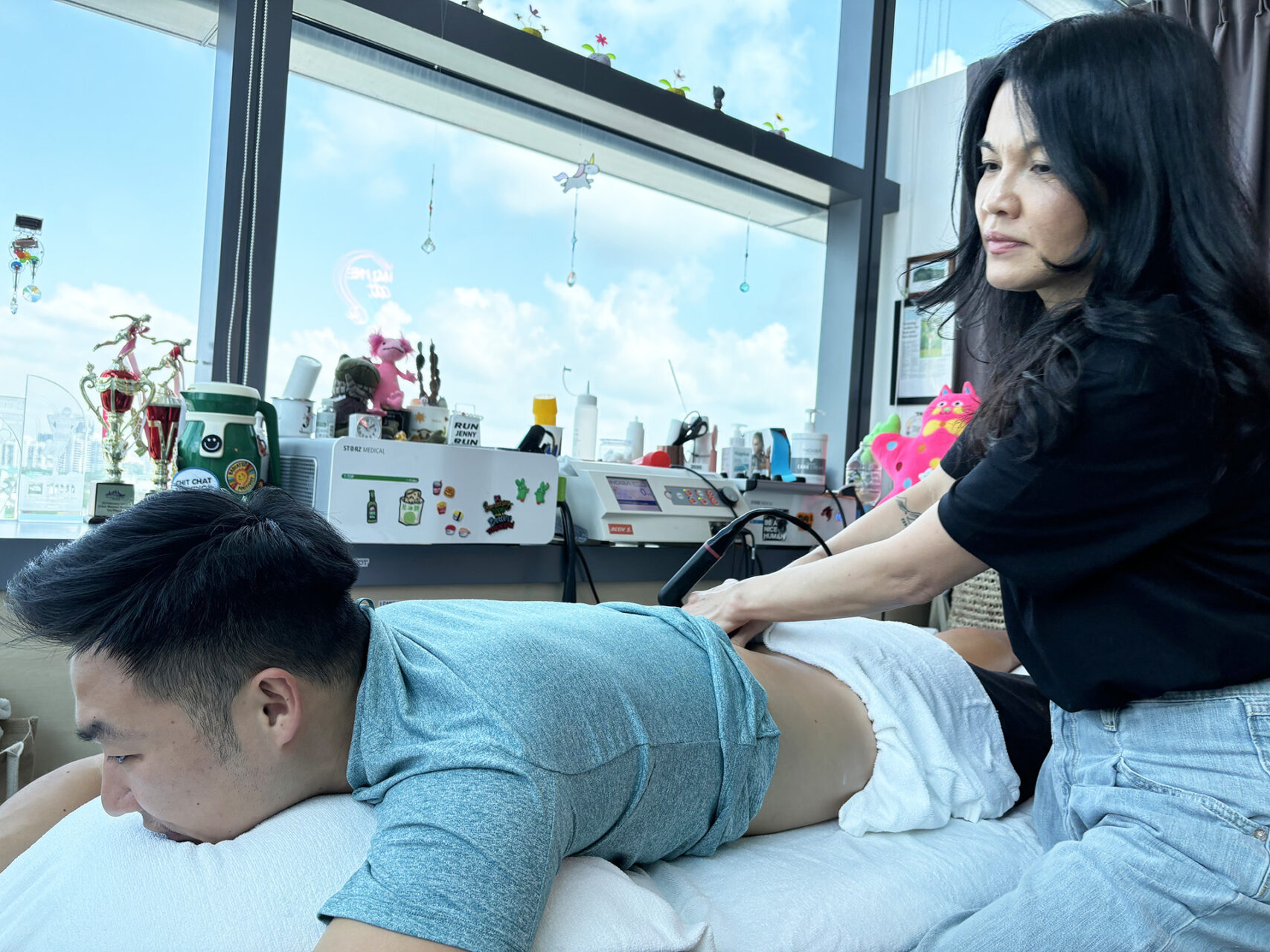
- INDIBA® may help ease pain, stiffness and muscle guarding so movement feels more comfortable.
- Dry Needling may be used when tight muscles or trigger points are adding to back, hip or leg discomfort.
- EMTT may be considered in selected musculoskeletal pain presentations to support pain modulation.
- Shockwave Therapy is not usually directed at the spine or arthritic joints, but focused or radial Shockwave Therapy may be considered if a separate tendon or soft tissue problem is also contributing to pain.
Exercises for Lumbar Spondylosis
Prescribed exercises for lumbar spondylosis help support the lower spine, reduce tension and improve tolerance for walking, sitting, lifting and sports. The best routine depends on the patient’s symptoms.
- Early sessions may include gentle walking, breathing exercises, pelvic tilts, knee rolls, hip mobility exercises and core activation.
- If standing and walking worsen symptoms, flexion-based movements such as gentle knees-to-chest practice or supported cycling may help some people.
- If stiffness is the main issue, mobility and low-load strengthening may be useful.
- As symptoms improve, the routine may progress to bridges, sit-to-stand practice, squats, hip hinges, bird dogs, side planks, glute strengthening, calf strengthening, step-ups, and controlled lifting.
Recovery does not happen only in the clinic, and prescribed exercises at home help with rehabilitation and pain relief.
Exercises to Avoid for Lumbar Spondylosis
Lumbar spondylosis exercises to avoid are those that repeatedly worsen back pain, increase leg discomfort, or place excessive load on the spine too soon.
There is no single list of forbidden movements for everyone. The wrong move is usually the one that does not match the person’s stage of recovery. During a flare-up, it may be sensible to avoid heavy lifting, repeated deep bending, loaded twisting, high-impact jumping, aggressive back bends, or intense sit-ups if these worsen pain.
If nerve pain is present, avoid pushing through worsening numbness, tingling, weakness, or spreading pain into the legs. If stenosis worsens with standing or back arching, repeated extension movements may need to be limited or modified.
Any movements should feel purposeful and controlled. Mild discomforts can occur during rehabilitation, but sensations should settle after activity and not worsen over time.
Surgery for Lumbar Spondylosis
Lumbar spondylosis surgery may be considered when conservative treatments fail or when there is a significant compression, structural instability, or worsening neurological symptoms.
Most with lumbar spondylosis do not need surgery. Surgery is usually discussed when pain remains severe despite appropriate care, walking or daily function is significantly limited, or compression is causing the weakness, numbness, or loss of function.
Common procedures include:
- Decompression surgery
- Laminectomy
- Foraminotomy
- Discectomy
- Fusion surgery
- Disc replacement in selected cases
Only a small percentage of patients require fusion surgery. The aim may be to remove pressure from nerves and ligaments, restore space around the nerves, ease pressure on surrounding tissue, or stabilize an unstable spinal segment with affected ligaments.
Lumbar spondylosis surgery is not a quick replacement for rehabilitation. Surgery carries possible complications, though they are uncommon. Complications can include infections, bleeding, and nerve injury. Even after surgery, physiotherapy remains important for restoring movement, rebuilding strength, improving walking tolerance, and reducing the risk of flare-ups.
Prevention of Lumbar Spondylosis
Lumbar spondylosis cannot always be prevented, as age-related changes cannot be fully stopped. Good habits can slow its progression and help keep the spine functional. Steps to prevent spondylosis progression include regular activity.
Regular movement, strength training, walking, healthy weight management, good sleep, smoking cessation, and movement breaks during long periods of sitting can all help.
Good lifting habits matter. Keep heavy objects close, bend through the hips and knees, and avoid twisting while lifting. For runners and athletes, gradual training progression, hip strength, core control, recovery days, and mobility work can reduce repeated stress through the lower back.
The goal is not to protect the spine by avoiding movement, but rather to build a back that can safely handle normal movement.
How HelloPhysio Can Help
Many sufferers of spinal wear and tear live active, full lives. Mild lumbar spondylosis may only need education, movement and better habits. More persistent symptoms may need a structured physiotherapy plan. With early intervention and a comprehensive plan, symptoms can be managed effectively and mobility restored.
Whether you’re dealing with mild lumbar spondylosis, back pain, or trauma-induced spinal changes, our team at HelloPhysio provides tailored care to address your unique needs. Contact us today.
FAQs about Lumbar Spondylosis
Can lumbar spondylosis be cured?
Lumbar spondylosis cannot usually be cured in the sense of reversing age-related spinal changes. Pain, stiffness, strength, mobility and function can often improve with physiotherapy, exercise, activity changes, and the appropriate symptom management.
What not to do with lumbar spondylosis?
Avoid long bed rest, repeated movements that clearly worsen symptoms, heavy lifting too soon, pushing through worsening nerve symptoms, and ignoring progressive weaknesses, numbness, or bladder and bowel changes. The goal is not to avoid all movement, but to move in a way your body can tolerate.
What is the treatment of lumbar spondylosis?
Treatment usually starts with conservative care. This may include physiotherapy, prescribed exercises, manual therapy, pain-relief medication when appropriate, activity modification, posture and ergonomic advice, and adjunctive treatments such as INDIBA®, Dry Needling, or EMTT when suitable. Injections or surgery may be considered in selected cases.
Can lumbar spondylosis go away?
The structural changes may not fully go away, but symptoms can improve. Many people with lumbar spondylosis experience reduced pain, improved mobility, and better function with the right rehabilitation plan.
How to prevent lumbar spondylosis?
You may not be able to prevent all age-related spinal changes, but you can reduce the strain on your lower back. Regular strengthening, walking, mobility work, weight management, smoking cessation, good lifting habits, and movement breaks during long sitting periods can help protect spinal function.