
What Is Ankle Impingement?
Ankle impingement is a condition in which soft tissues or bony structures inside or around the ankle joint become compressed during movement. This might be inflamed soft tissue, thickened scar tissue, synovitis, a meniscoid lesion, ligament tissue, bone spurs, or, in some cases, a small extra bone such as an os trigonum, all of which can become trapped or squeezed when the ankle bends too far in one direction. The result is mechanical ankle pain and a sense of blocked ankle movement rather than just general soreness.
The condition is easy to overlook because it may feel like an ankle sprain that never fully settles. Some people experience a sharp anterior ankle pain when squatting, going downstairs, or forcing ankle dorsiflexion. Others experience ankle pain at the back of the ankle during plantarflexion. In both situations, the common thread is that the ankle joint becomes irritated when pushed to the end of its range of motion.
Anterior, Medial, and Posterior Ankle Impingement
There are three main patterns of ankle impingement syndrome: anterior, medial and posterior.
- Anterior ankle impingement occurs at the front of the ankle joint during ankle dorsiflexion (pulling the toes up).
- Medial ankle impingement causes inner ankle pain and is often associated with scar tissue or chronic ankle instability.
- Posterior ankle impingement syndrome occurs at the back of the ankle joint during repetitive plantarflexion (pointing the toes down).
Each pattern can involve soft tissue structures, bony impingement, or both.
Anterior Ankle Impingement
The anterior type of ankle impingement is often associated with repeated ankle sprains, scar tissue, ligament thickening, and bone spurs resulting from repeated stress. Anterolateral ankle impingement and anteromedial impingement are subtypes involving the lateral malleolus and medial malleolus, respectively. Conventional radiography and magnetic resonance imaging, or MRIs, are used to identify these soft tissue structures and confirm bony impingement. It is common in sports that involve kicking, cutting and frequent ankle dorsiflexion loads.
Medial Ankle Impingement
Medial ankle impingement is less common but can occur after repeated ankle injuries, chronic ankle instability, or synovitis that traps soft-tissue structures along the inner side of the ankle joint near the medial malleolus.
Posterior Ankle Impingement
The posterior ankle impingement syndrome is more common among ballet dancers and athletes who perform repetitive plantarflexion movements, such as pointing their feet downward. The posterior aspect of the ankle joint and the posterior talofibular ligament are the key soft-tissue structures involved. In some people, the issue is related to the os trigonum, a small accessory bone behind the talus. In ballet dancers, the extreme plantar flexion positions required place the posterior ankle under repeated stress, making posterior ankle impingement particularly common in this group.
What Does Ankle Impingement Pain Feel Like?
Ankle impingement pain usually feels sharp, pinching, catching, or blocked at the front or back of the ankle joint. Many also notice swelling, stiffness, and reduced ankle movement. With anterior impingement, the ankle joint may hurt during forced dorsiflexion, squatting, stair descent, walking uphill, or landing from jumps. With posterior ankle impingement, the pain is usually deeper at the back of the ankle joint and worsens with toe-pointing or pushing off.
Another common feature is restricted movement of the ankle joint. Clicking, popping, or catching can happen, too, especially when the ankle joint moves into an overextended position. Untreated ankle impingement can lead to chronic inflammation, degenerative changes in the joint capsule and soft tissues, and persistent ankle pain and reduced range of motion.
Causes
Ankle impingement syndrome is usually caused by repeated ankle sprains, injuries, overuse, structural changes, or a combination of these factors. Repeated ankle sprains are a major driver because they can leave the ankle joint with scar tissue, synovitis, meniscoid lesion formation, ligament thickening, and subtle ankle instability. A recent ankle injury can also lead to bone spurs and new bone formation, narrowing the joint space.
Overuse is another common cause. Ballet dancers, runners, and athletes who repeatedly load the ankle joint into extreme plantarflexion or forced dorsiflexion positions are at elevated risk of ankle impingement syndrome. Flat feet, high arches, tight calves, a stiff Achilles tendon, and altered foot-ankle mechanics can all affect how force travels through the ankle joint and can lead to ankle impingement over time.
Diagnosis
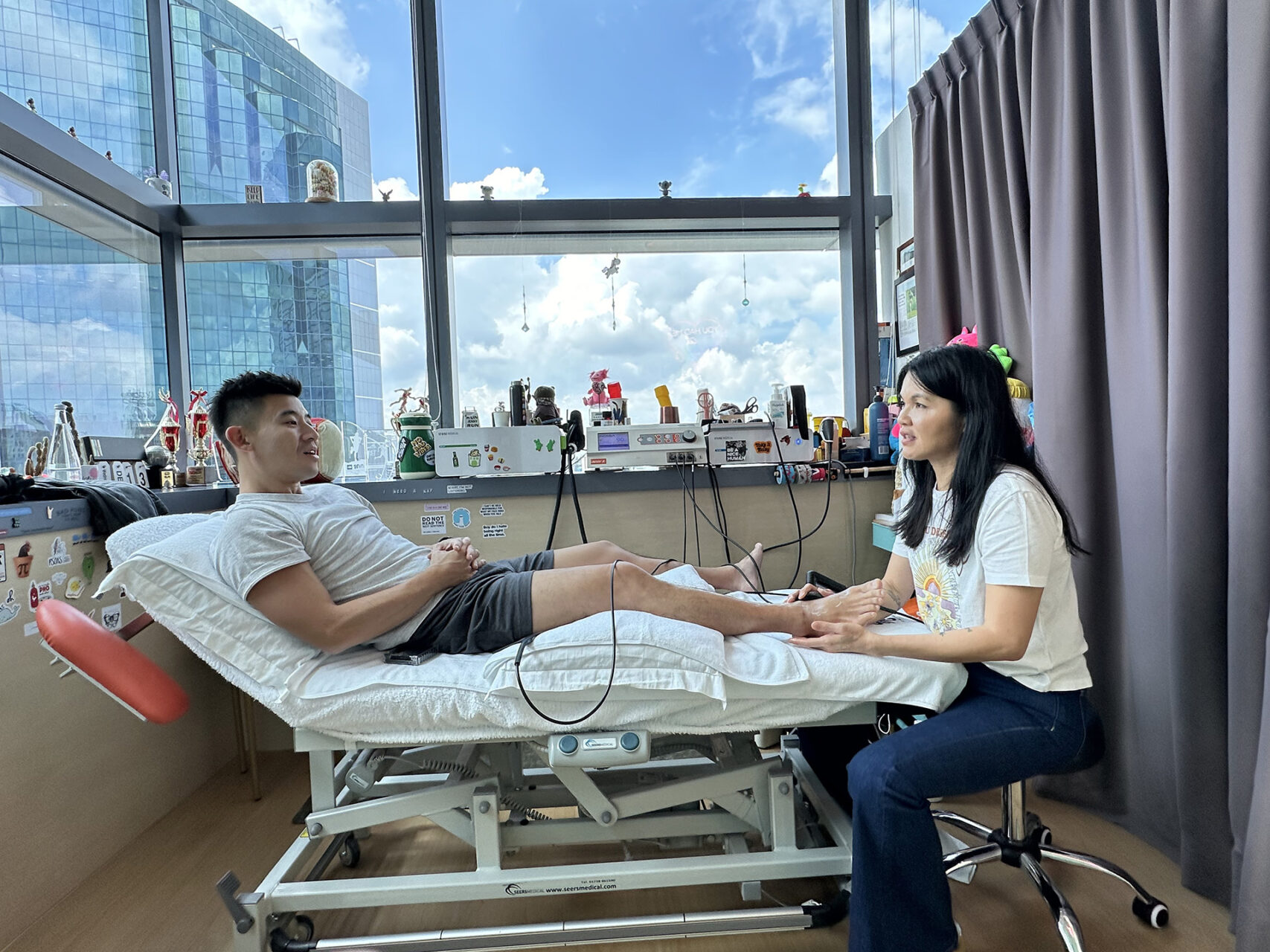
Ankle impingement is diagnosed through a detailed history, a clinical examination, and imaging when needed. The ankle impingement test, which reproduces ankle pain with provocative dorsiflexion or plantarflexion, is a key part of the clinical examination. The ankle joint is also assessed for swelling, tenderness, end-range pain, loss of range of motion, and instability.
Magnetic resonance imaging (MRI) is often used when there is concern for soft-tissue impingement, synovitis, meniscal lesions, ligament injury, scar tissue, or degenerative changes in the ankle joint. Conventional radiography may show bone spurs and bone formation at the anterior margin. Gait analysis may also be used to assess foot and ankle mechanics. The point of imaging is not only to confirm ankle impingement syndrome but also to ensure that no other abnormalities in the foot’s structure are missed.
Ankle Impingement Treatment
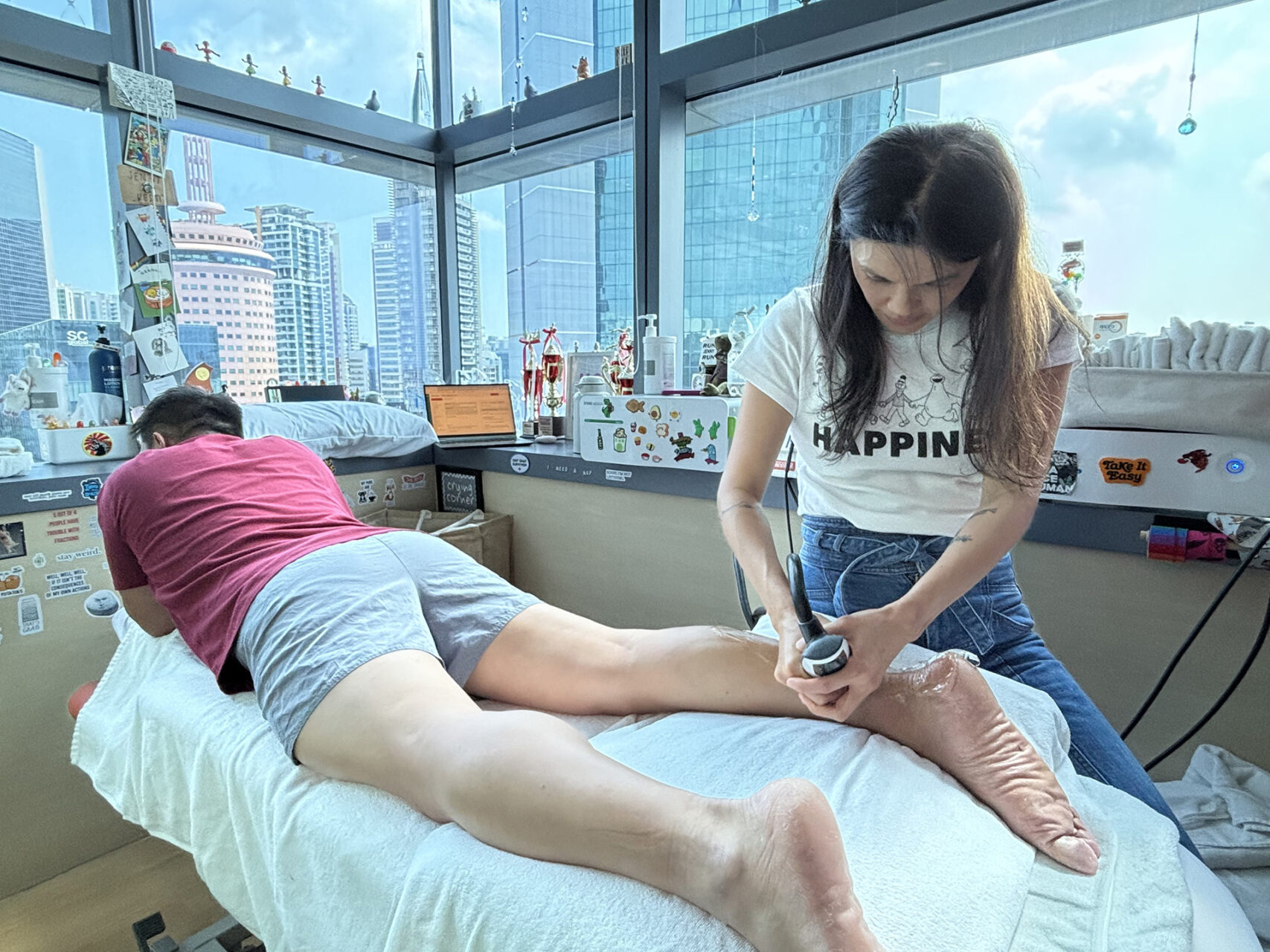
Ankle impingement is usually treated by reducing the ankle pain, restoring the ankle’s range of motion, and addressing the mechanical cause of the pinching. Physical therapy is a central part of nonsurgical treatment because the joint often needs improved mobility, muscle support, and ankle strength for long-term recovery. Nonsteroidal anti-inflammatory drugs may be used alongside physical therapy to manage acute ankle pain and chronic inflammation. An anterior ankle impingement brace or taping can also support the ankle joint while soft tissues settle.
Physiotherapy
Physical therapy helps with ankle impingement by improving ankle joint motion, strength and efficiency. Ankle impingement stretches are prescribed to restore ankle dorsiflexion and plantar flexion range without jamming the joint capsule. Home ankle impingement exercises remain essential because the ankle joint improves through regular repetition.
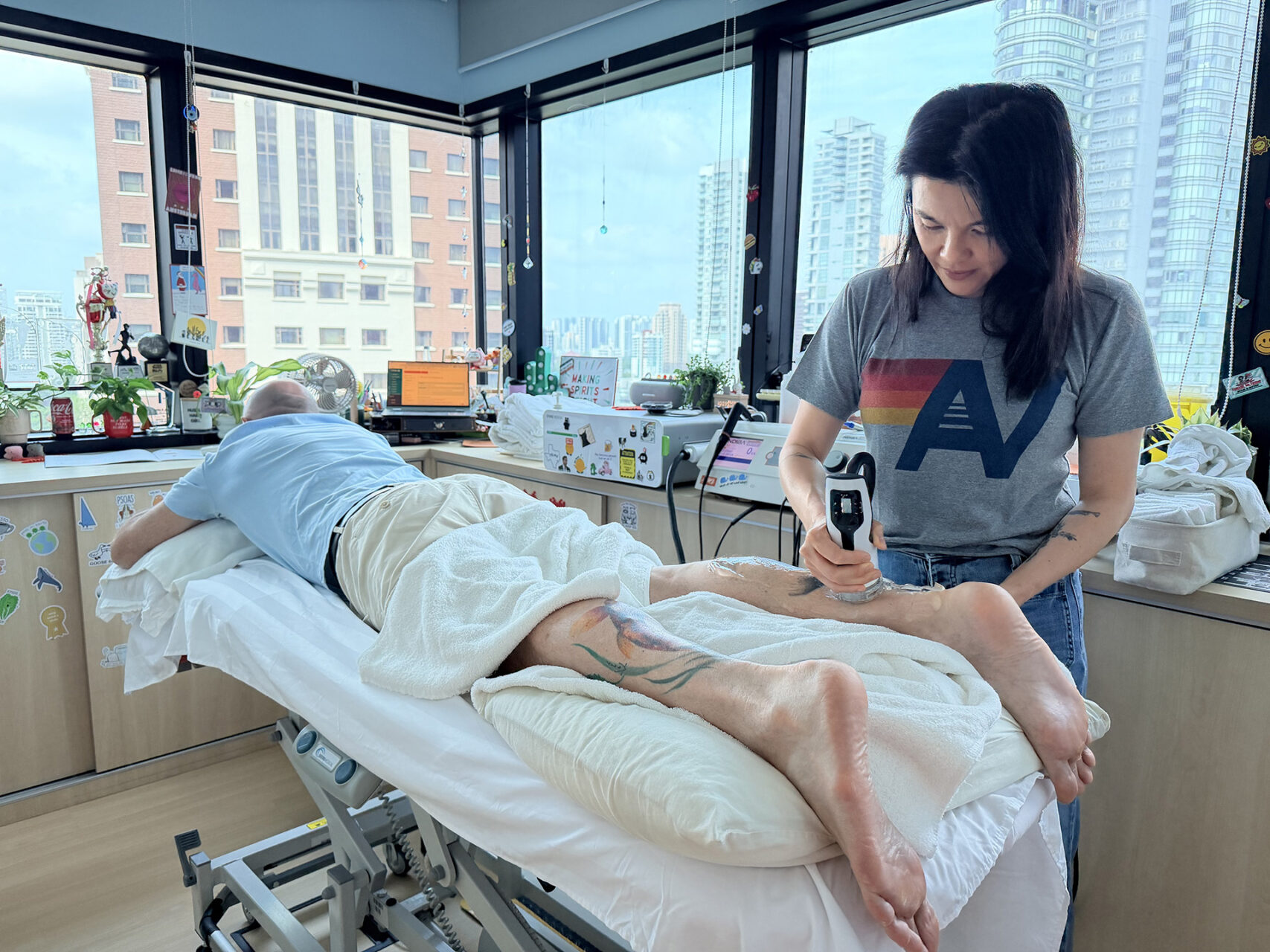
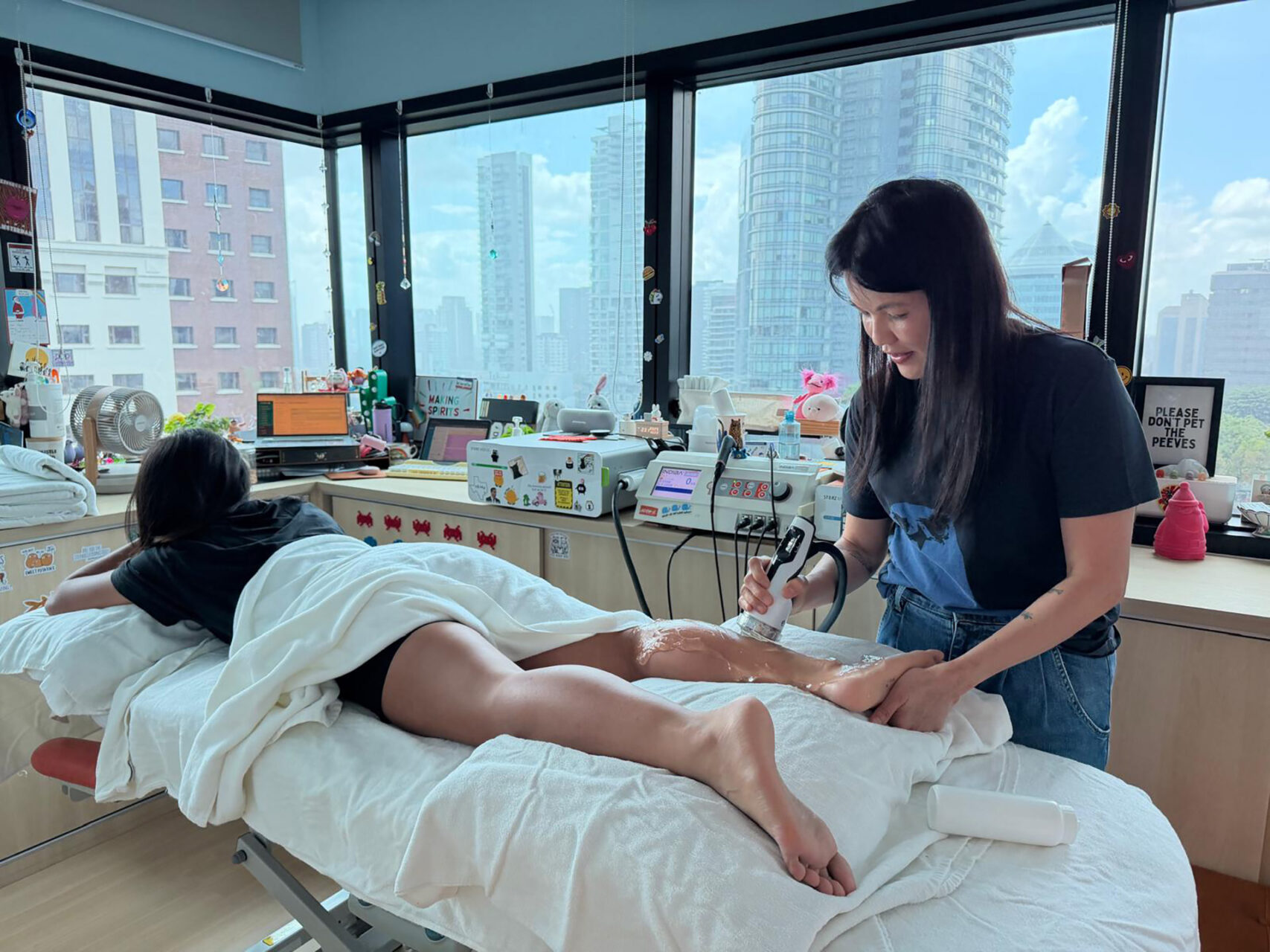
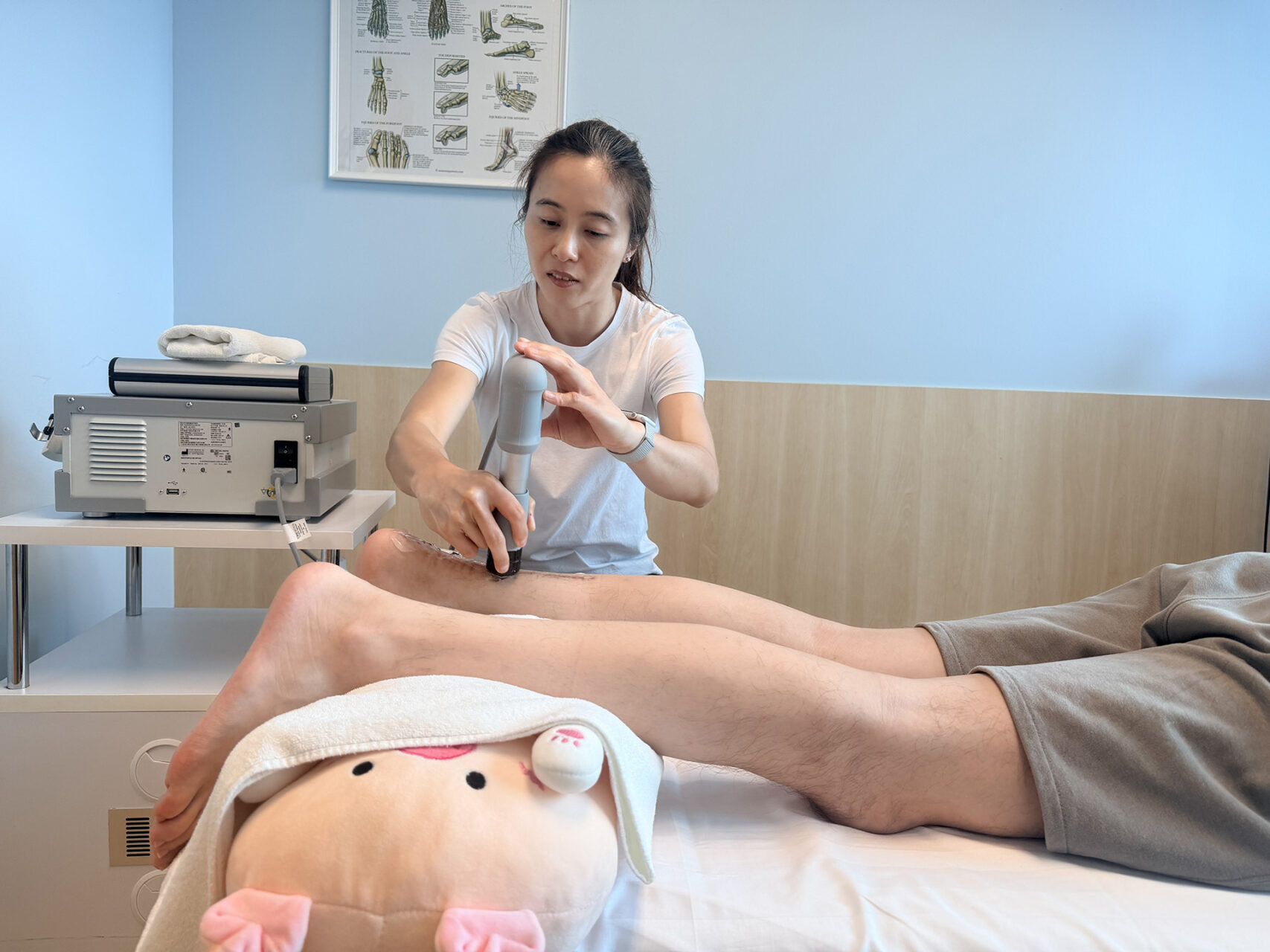
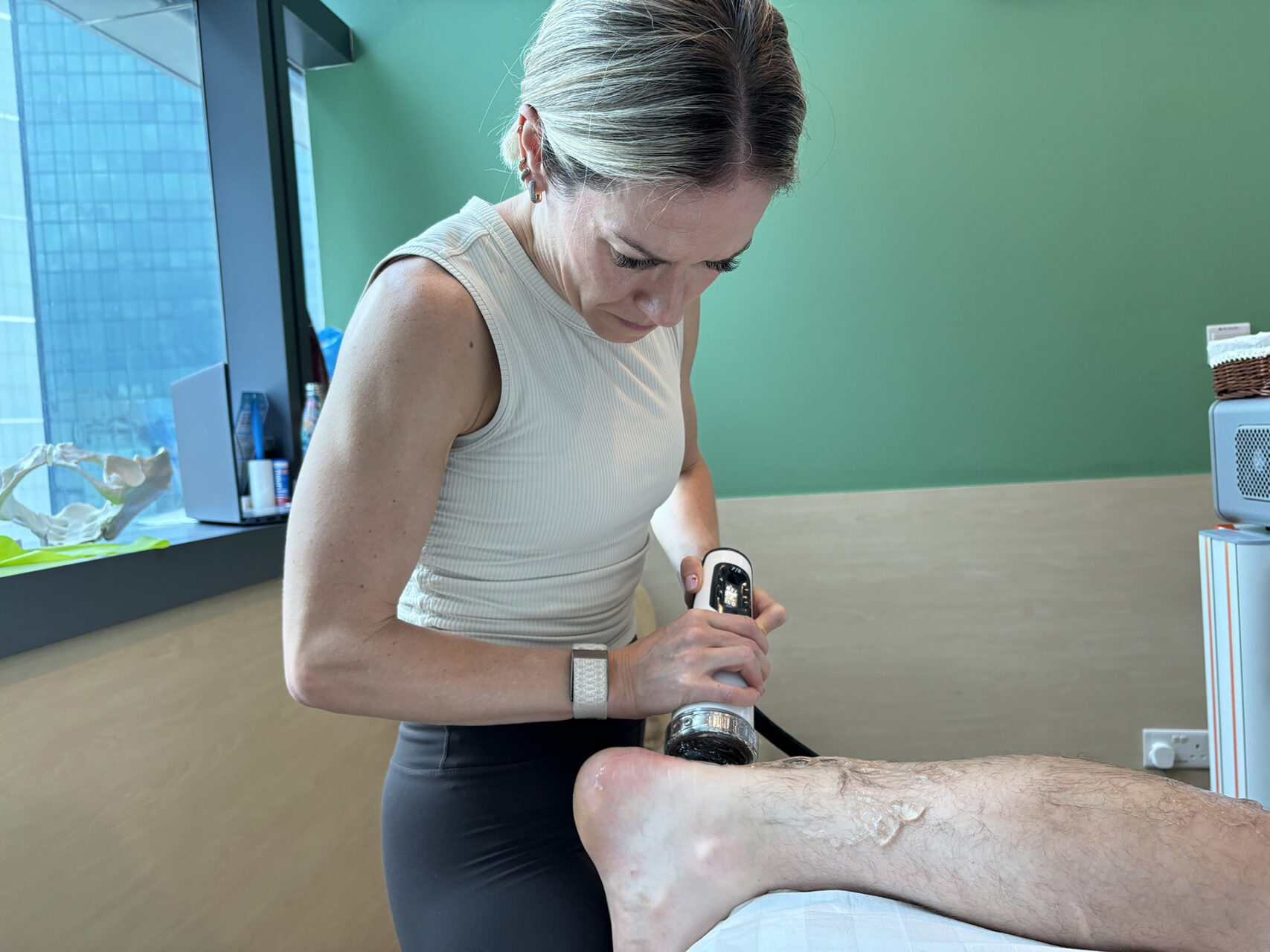
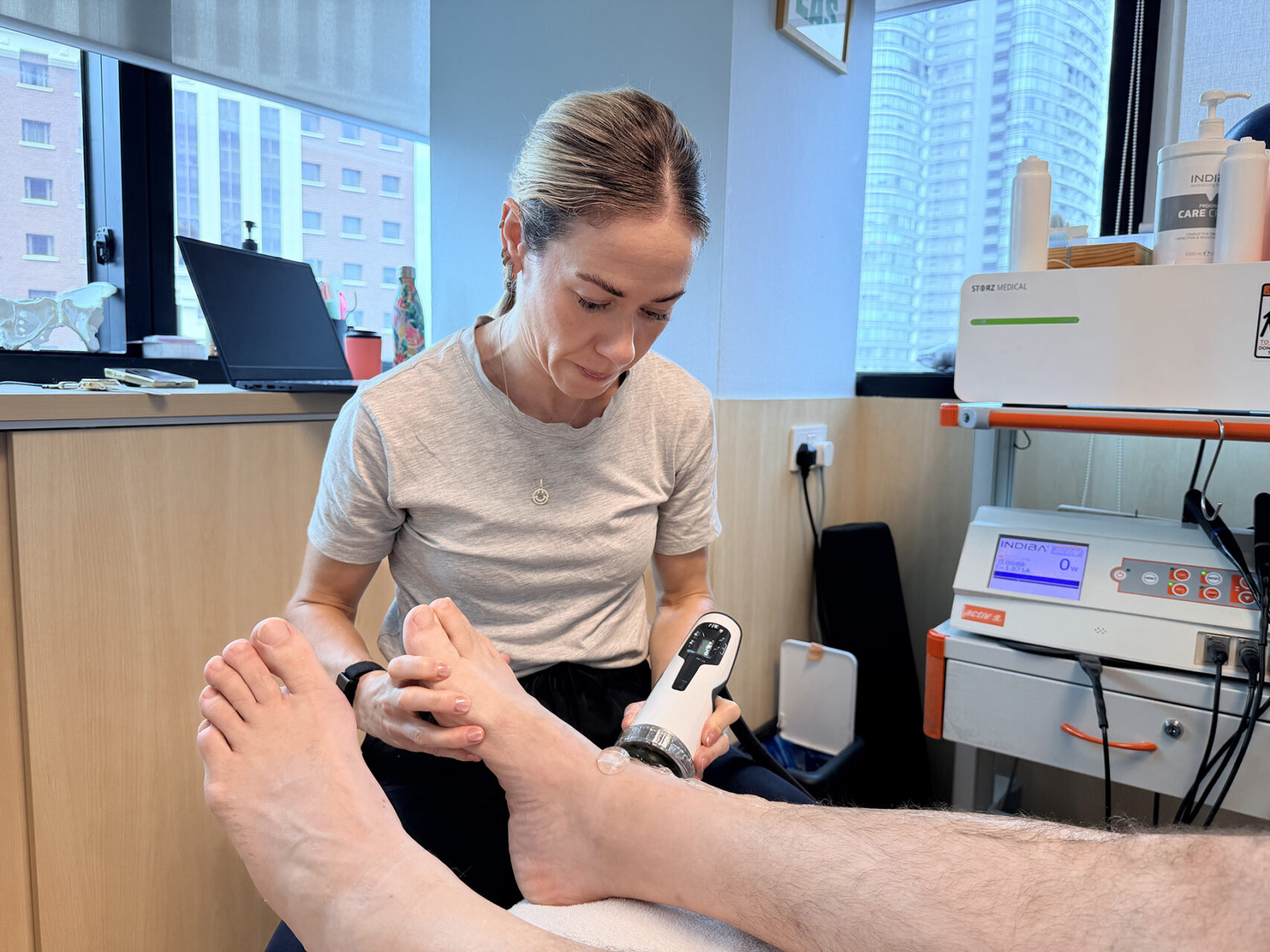
At HelloPhysio, adjunctive tools may support this process, like Shockwave Therapy or INDIBA®. These are not substitutes for ankle impingement exercises, load management, or addressing the cause of ankle impingement syndrome, but they can help some move more comfortably and address symptoms as the core rehabilitation plan progresses.
At-Home Care and Recovery
We are often asked how long it takes for an anterior ankle impingement to heal. This depends on whether soft-tissue or bony impingement is involved. Mild soft tissue impingement may resolve over a few weeks with physical therapy. Bony impingement with established bone spurs may take several months. Persistent symptoms beyond this may warrant surgical intervention.
Useful home care includes ankle impingement stretches, exercises, and supportive footwear.
Injections and Ankle Impingement Surgery
Untreated ankle impingement and persistent symptoms that do not improve with nonsurgical treatment may require cortisone injections or steroid injections into the joint capsule. An anterior ankle impingement cortisone injection may reduce the chronic inflammation and help confirm the diagnosis.
Arthroscopic surgery and arthroscopic debridement are generally preferred over open surgical intervention for an ankle impingement. Arthroscopic treatment allows the surgeon to remove the mechanical obstruction, whether it is a meniscoid lesion, scar tissue, or bone spurs, through the ankle joint with minimal soft tissue disruption.
Can Ankle Impingement Be Prevented?
Ankle impingement can often be reduced or prevented by properly managing ankle sprains, maintaining the ankle’s dorsiflexion and plantarflexion range of motion, and keeping the ankle joint and surrounding soft tissues strong. Ballet dancers and other high-risk athletes benefit from regular ankle impingement exercises, stretches and the monitoring of ankle movement. All of these can help prevent ankle impingement, especially in those who engage in movements that contribute to the syndrome.
How HelloPhysio Can Help
If your ankle joint still feels pinched, blocked, or unreliable after an ankle sprain, ankle injury, or heavy training, HelloPhysio can help. A clear clinical examination can identify whether ankle impingement syndrome is contributing to your symptoms, what is driving the ankle pain, and how to restore ankle movement without aggravating the ankle joint. If you are having difficulty with your ankle, contact HelloPhysio today to schedule your appointment.