
What is Posterior Ankle Impingement?
Posterior ankle impingement is a pinching problem at the back of the ankle that occurs when the foot is pointed downward, as when you point your toes, rise onto your tiptoes, push off while running, kick a ball, or land from a jump.
In posterior ankle impingement, structures at the back of the joint become compressed between the tibia, talus and the surrounding tissues. The result is pain, stiffness, swelling, and a sense that the back of the ankle is blocked.
Posterior ankle impingement syndrome is not one single injury. It is a group of problems that can involve bone, soft tissue, or both. The irritation may come from:
- An extra small bone
- An enlarged part of the talus
- Inflamed joint lining
- Thickened ligaments
- Scar tissue
- Irritation of the flexor hallucis longus tendon, which helps bend the big toe and runs behind the ankle
When the extra bone is the main problem, the condition is often called os trigonum syndrome, and in dancers, it is sometimes known as dancer’s heel. In footballers, repeated kicking can produce a similar footballer’s ankle, and the same pattern in any athlete’s ankle reflects the back of the joint being squeezed too often.
Symptoms of Posterior Ankle Impingement
Posterior ankle impingement symptoms include pain that may be sharp, aching, catching, or pinching. It often sits deep behind the ankle joint rather than on the Achilles tendon itself. Some people can point to one tender area. Others feel a vague ache that becomes sharper during sport or deeper ankle positions.
Symptoms may be worse with:
- Pointing the toes
- Rising onto the toes
- Running downhill
- Kicking a ball
- Jumping and landing
- Dancing on pointe
- Swimming with a strong flutter kick
- Squatting or kneeling with the foot pointed
Posterior ankle impingement syndrome can cause stiffness, swelling, clicking, locking, reduced ankle movement, and a decreased range of motion, resulting in a painful limitation at end range. Some people describe a limited ankle motion when the ankle joint is pushed into a pointed position.
In some people, the ankle feels fine during ordinary walking but painful during sports. In others, symptoms become noticeable on stairs, hills, or during long periods on the feet. The key pattern is pain that appears when the ankle moves into a strong plantar flexion or is repeatedly loaded at the back of the joint.
Causes of Posterior Ankle Impingement
A posterior ankle impingement is usually caused by a repetitive plantar flexion, a past ankle injury, or a bony structure that narrows the space at the back of the ankle.
In dancers, gymnasts, footballers and jumping athletes, repeated toe-pointing and push-off can irritate the back of the joint over time. In runners, symptoms may appear with hill running, speed work, downhill running, or repeated calf loading. In football and martial arts, kicking places the ankle into the same pointed position that can trigger symptoms.
An os trigonum is a common contributor. Many people have an os trigonum without pain. It becomes a problem when it is repeatedly squeezed between the posterior tibia and the heel bone or when the surrounding soft tissues become inflamed.
Posterior ankle impingement can also occur with a Stieda process, which is an elongated lateral tubercle of the talus.
A previous ankle sprain can also contribute. When the ankle rolls or is forced into a downward point, soft tissues at the back of the joint can become irritated or scarred. If the ankle develops instability or does not fully regain strength, mobility, and control afterwards, the same tissues may continue to be pinched. This is why posterior ankle impingement is sometimes seen after an injury that seems to have settled but has not quite returned to normal.
Diagnosis of Posterior Ankle Impingement
Posterior ankle impingement syndrome is diagnosed through a medical history, a physical examination, and imaging when needed.
A physiotherapist will ask where the pain is, when it started, what movements provoke it, and whether there has been a previous ankle sprain, fracture, or increase in training. The physical examination often includes assessing ankle joint range of motion, tenderness over the back of the ankle, calf strength, balance, walking pattern, and response to plantar flexion.
A common test involves gently moving the ankle into a pointed position to see if the familiar pain is reproduced. This is often called a forced plantar flexion or posterior impingement test. Posterior impingement is tested with forced plantar flexion, while anterior impingement is tested with forced dorsiflexion, as distinguishing between the two will help guide care.
The clinician also needs to check for other causes of posterior ankle pain, including Achilles tendinopathy, retrocalcaneal bursitis, flexor hallucis longus irritation, stress fracture, calcaneal fractures, tarsal tunnel syndrome with tibial nerve or sural nerve irritation, subtalar joint problems, or ankle arthritis.
Pain at the back and inner side of the ankle can come from pinching or irritation of the soft tissues near the inner ankle bone and the strong ligament that supports that side of the joint. This is called posteromedial ankle impingement. Pain at the front or outer side of the ankle may point to a different type of impingement, in which tissue near the front of the ankle joint is pinched.
X-rays can show extra bone, bone spurs or an unusual bone shape at the back of the ankle. MRI scans can show swelling, inflammation, tendon irritation, bone bruising and soft tissue that may be getting pinched. CT scans may be used when more bone detail is needed, especially before surgery. Together, these scans help confirm whether the problem is caused by bone, soft tissue or both.
Posterior Ankle Impingement Treatment
Posterior ankle impingement treatment usually starts with reducing the movements that pinch the back of the joint and calming the irritated tissue. Anti-inflammatory medications may help settle a flare-up, and reducing the load helps limit chronic inflammation.
Physiotherapy
Physiotherapy helps posterior ankle impingement by reducing irritation, improving ankle mechanics, and rebuilding the strength and control needed for daily movement and sport.
A physiotherapist first identifies why the joint’s posterior aspect is overloaded. For one person, the issue may be repeated toe-pointing. For another, it may be weak calf control, poor single-leg balance, limited ankle mobility, or a previous sprain that changed movement patterns.
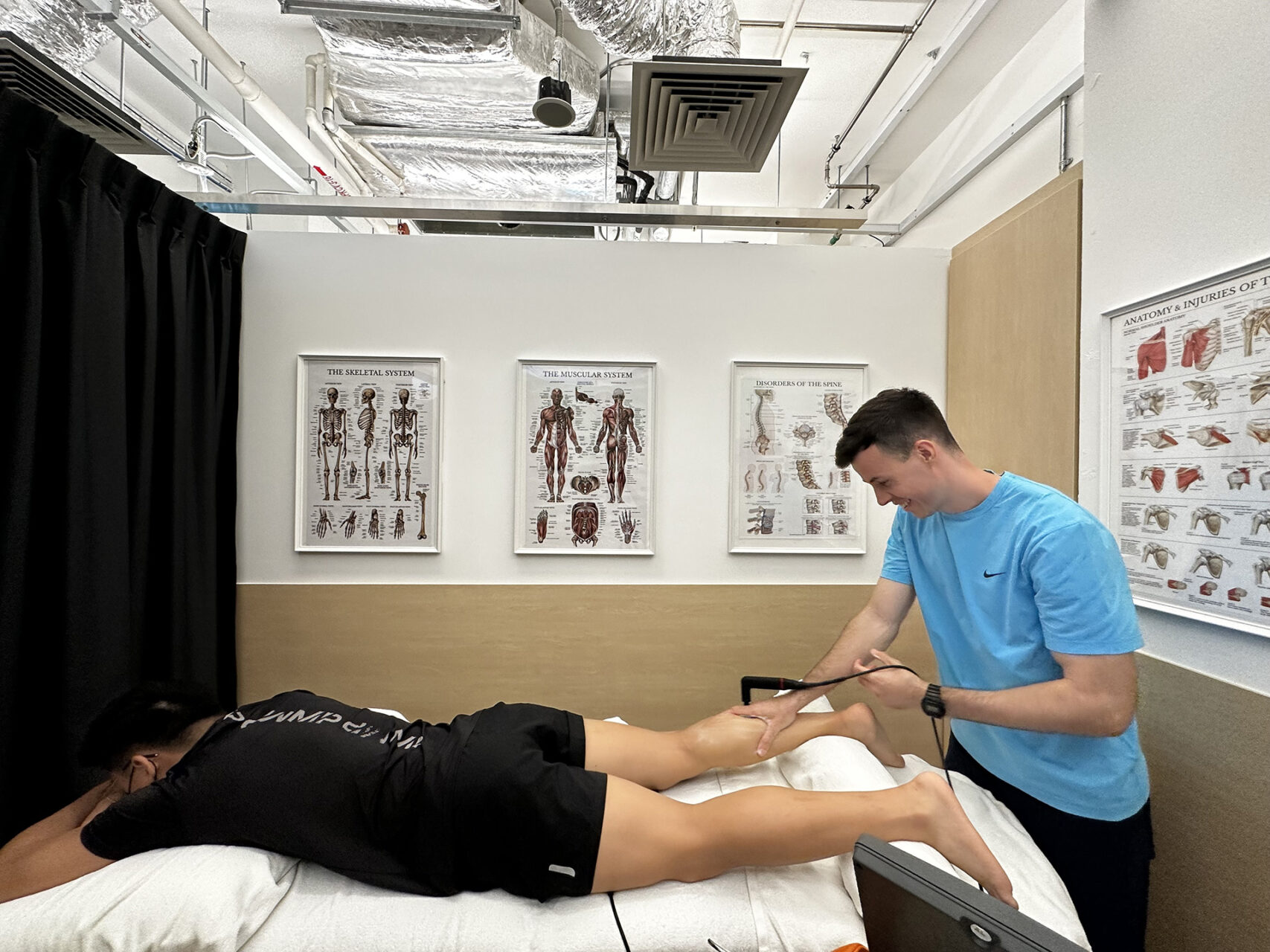
Manual therapy may be used to improve joint and soft tissue mobility. Soft tissue techniques may help reduce calf tightness and guarding around the ankle. Dry needling may be considered if calf or deep lower-leg muscle tightness is contributing to the pain or restriction, but it does not remove an os trigonum or directly clear a mechanical block.
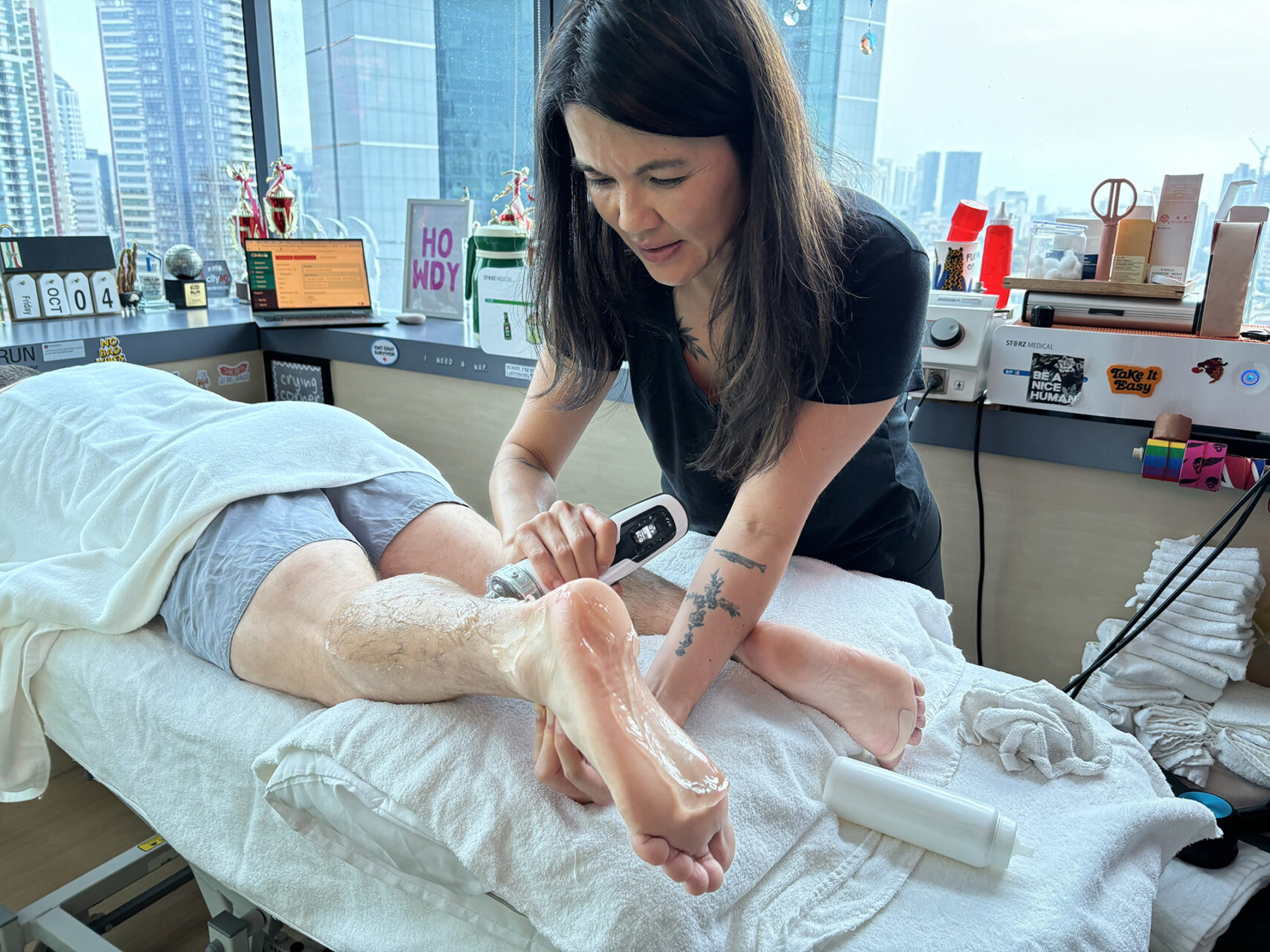
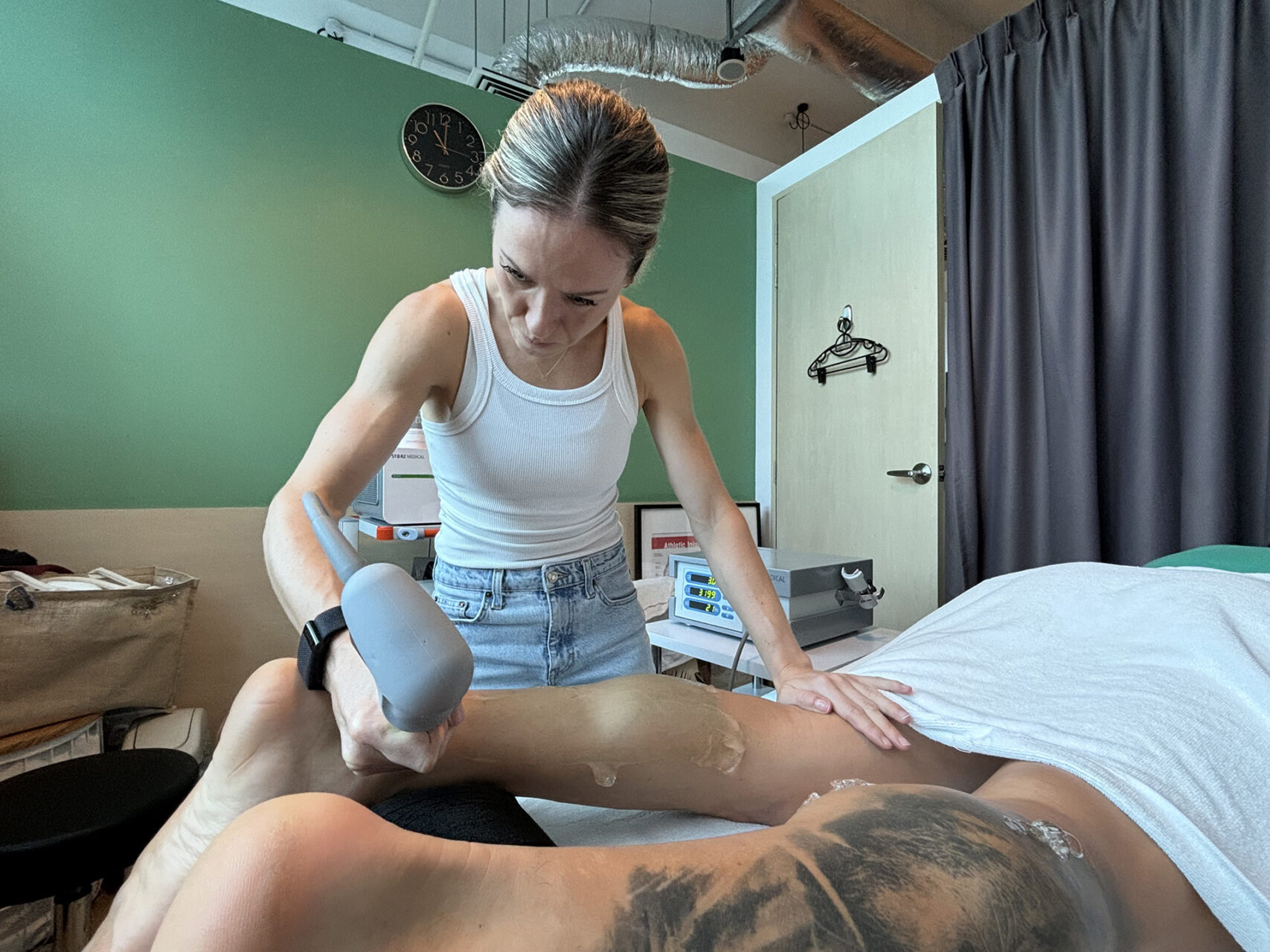
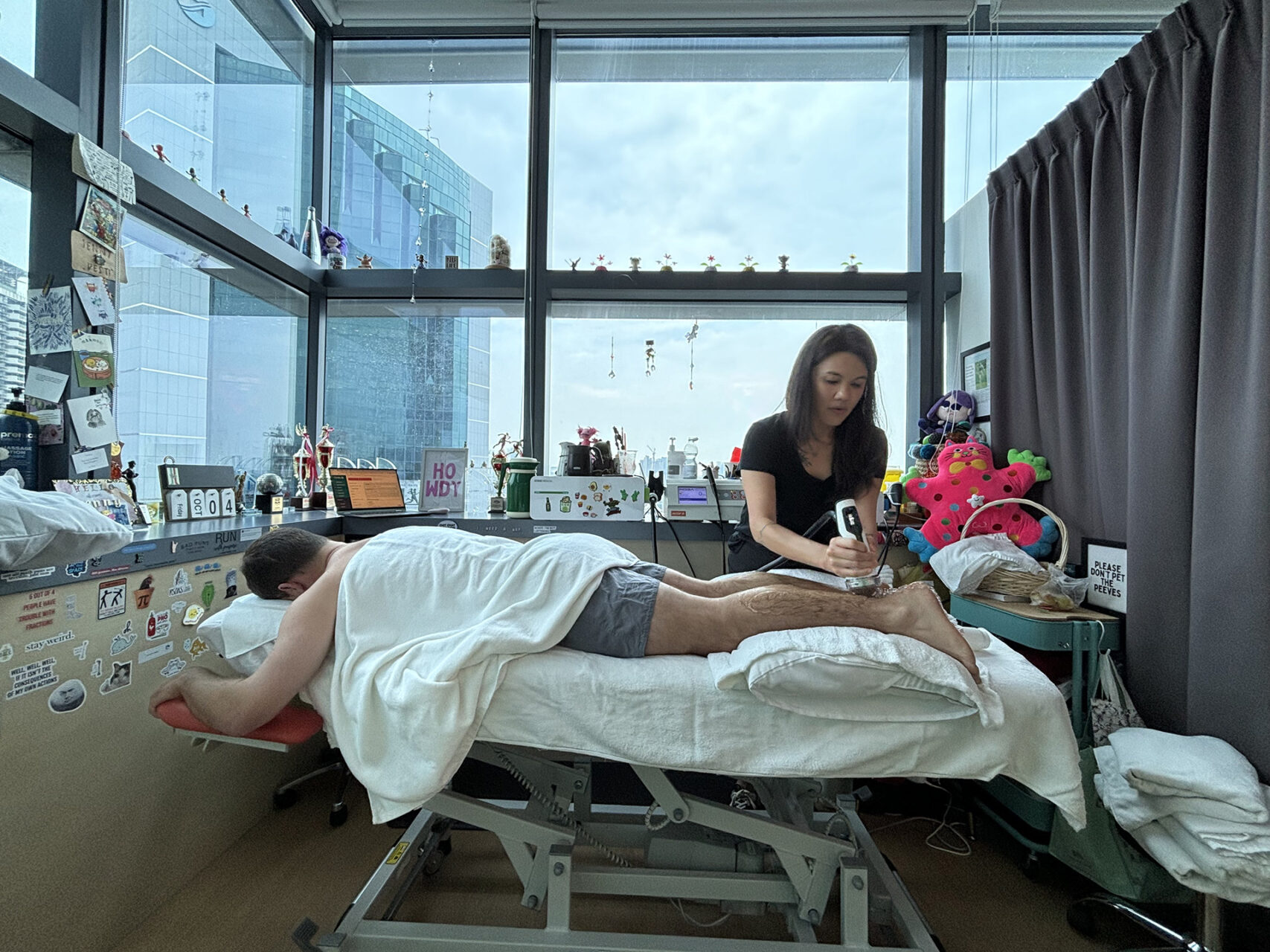
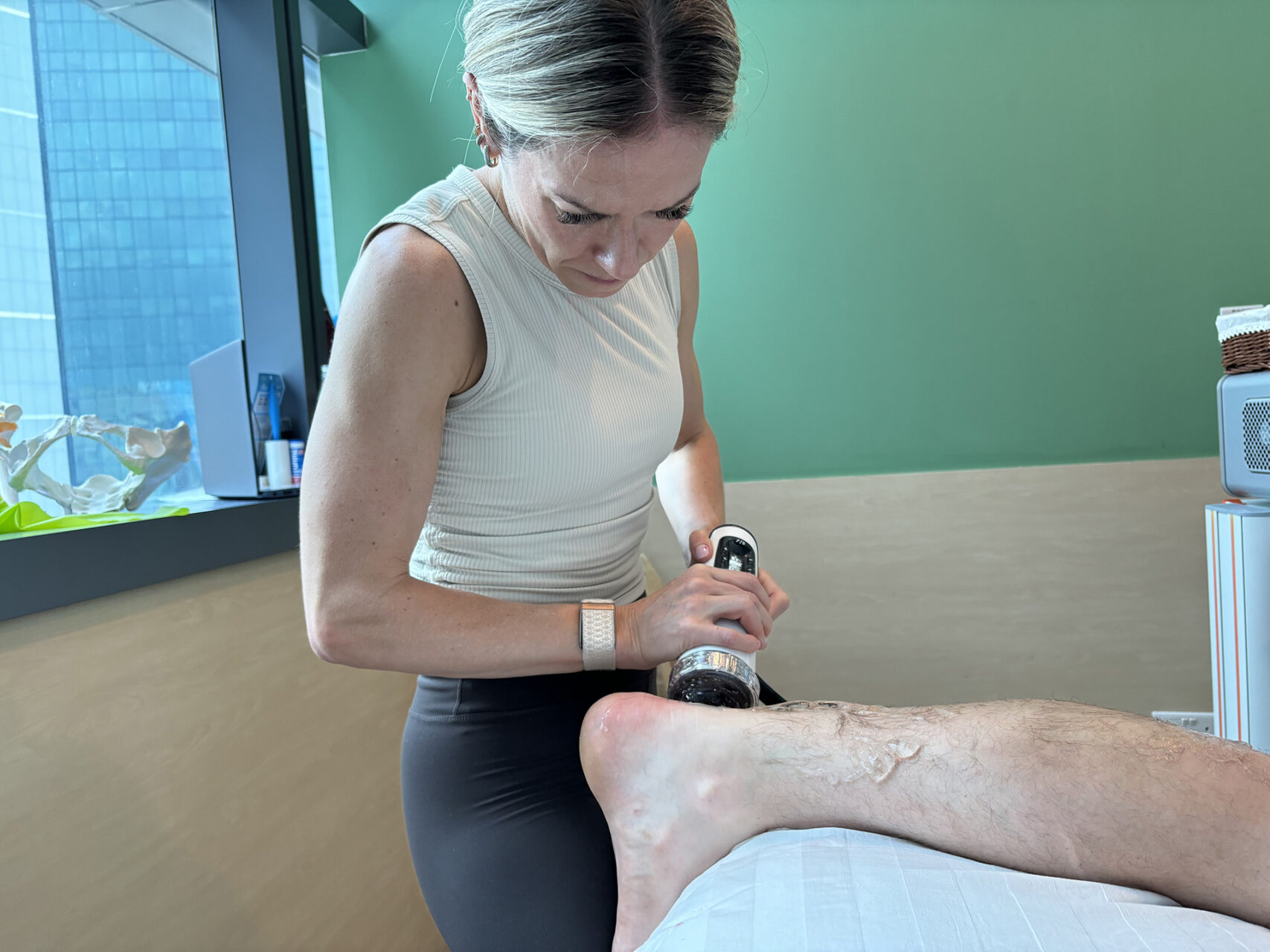
At HelloPhysio, we use INDIBA® as an adjunct treatment to support symptom relief, tissue recovery, and mobility when symptoms are irritated. Its role is to help the ankle tolerate movement and exercise more comfortably.
Rehabilitation Exercises
Posterior ankle impingement rehab exercises should restore ankle control, ankle strength, calf strength, balance, and return-to-activity tolerance without repeatedly forcing the painful pinch.
Early exercises usually focus on gentle mobility and symptom control. These may include ankle circles, ankle pumps, foot intrinsic exercises, and pain-free calf activation. The goal is to keep the ankle moving without pushing into sharp back-of-ankle pain.
As symptoms settle, strengthening exercises become more important. They may include seated calf raises, supported standing calf raises, resistance-band ankle work, balance drills, and controlled step work. The physiotherapist may also prescribe hip and core strengthening if poor lower-limb control is increasing ankle load.
Later posterior ankle impingement rehab exercises should match the person’s goals. A runner may need progressive calf endurance, flat-ground running, and then gradual hill work. A dancer may need controlled progression through relevé, demi-pointe, and eventually pointe work. A footballer may need graded kicking, sprinting, and change-of-direction drills.
The principle is simple. The ankle should earn each stage before progressing. If an exercise produces sharp pinching or next-day swelling, the load may be too high or the range too aggressive.
Taping & Braces
Posterior ankle impingement taping can help reduce pain at the end of the range of motion and improve support during activity.
Taping is most useful when symptoms are aggravated by sport, dance, stairs, or repeated push-off. It can help limit the position that causes pinching at the back of the ankle or improve awareness of ankle position during movement. Some patients use taping during the early return to activity, while others use it during higher-risk sessions.
Posterior ankle impingement taping should not be the only treatment. If the ankle still lacks strength, balance, mobility, or load tolerance, symptoms may return once the tape is removed. Taping works best as a bridge while rehabilitation improves the ankle’s ability to manage load without external support.
A brace or a short period in a walking boot may be used similarly. It can reduce irritation during walking or sport, especially when symptoms are more reactive. The long-term goal is usually to rely less on external support as strength and control improve.
Surgical Intervention
Surgery is considered when a posterior ankle impingement remains painful despite a full course of conservative treatment or when a clear mechanical block or mechanical obstruction is present.
Operative intervention may involve removing an os trigonum, trimming a prominent talar process, clearing inflamed tissue, or addressing irritation of the flexor hallucis longus tendon. Arthroscopic or endoscopic approaches are commonly used to treat posterior ankle impingement syndrome and os trigonum syndrome because they provide access to the back of the ankle through small incisions, and they are often performed by experienced ankle specialists.
Surgery is not usually the first option. Many cases improve with careful unloading, rehabilitation, taping, changes in footwear, and a gradual return to activity. Surgery becomes more relevant when imaging and clinical findings match, symptoms remain limiting, and the person cannot return to the required activity despite appropriate care.
Recovery Time
Posterior ankle impingement recovery time depends on the cause, severity, activity demands, and the duration of symptoms.
Milder soft tissue cases may improve within several weeks when painful loading is reduced and rehabilitation is started early. More stubborn cases can take a few months, especially when the ankle has been irritated for a long time or when sports require repeated plantar flexion. If os trigonum syndrome or a prominent bony structure is a major driver, symptoms may improve with conservative care, but may not fully settle.
The recovery time is often longer for dancers, footballers, gymnasts and runners because a return to sport requires the ankle to tolerate high loads at end range. Pain relief alone is not enough. The ankle also needs calf endurance, balance, confidence and sport-specific control.
After surgery, recovery varies by the procedure and goals. Some people return to light activity within weeks, while a full return to a demanding sport may take longer. Rehabilitation remains important after surgery to restore mobility, strength, control of swelling and safe loading. Endoscopic or arthroscopic approaches are often used when surgery is needed and may allow faster recovery than older open approaches in selected cases.
Prevention
Posterior ankle impingement can often be reduced by managing the training load, restoring ankle control and addressing ankle instability after injury, and avoiding repeated painful end-range loading. Prevention is especially important after ankle sprains. Pain may settle before the ankle has regained full strength, balance, and control of movement. If the athlete returns too soon, the posterior ankle may remain compressed during push-off, landing, or toe-pointing.
How HelloPhysio Can Help
You should seek help if your back-of-ankle pain persists, worsens with plantar flexion, limits sports, or does not settle with simple rest.
You should also get assessed if your ankle locks, catches, swells repeatedly, feels unstable, or if symptoms follow a significant injury. Early review can help rule out Achilles tendon problems, fractures, tendon irritation, or other causes of posterior ankle pain.
At HelloPhysio, our ankle specialists assess how your ankle moves, where the ankle pain is coming from, and what loads are keeping it irritated. Your treatment may include manual therapy, prescribed home exercises, posterior ankle impingement taping, progressive strengthening, and adjunctive care where appropriate.
If posterior ankle pain is affecting walking, running, dancing, sports, or movement, contact HelloPhysio to book a consultation.