

What Is Degenerative Disc Disease?
Despite the name, degenerative disc disease (DDD) is not really a disease but a common change in the discs between the bones of the spine and is a natural breakdown of the soft, rubber cushions between vertebrae in your spine. These discs act like cushions, helping the spine bend, twist, and absorb load. As these spinal discs dehydrate, shrink and lose their shock-absorbing qualities over time, it leads to pain, stiffness, and nerve compression in the back and neck.
Mild degenerative disc disease is common and often manageable. Most people show some disc degeneration by age 40. By age 60, about 90% of adults show signs of disc degeneration on imaging. Many live without pain, but the condition becomes a problem when a damaged disc or nearby structures cause back pain or other symptoms.
As there is no quick cure for degenerative disc disease, symptoms are managed by helping the spine adapt better to daily activities, reducing pain, improving mobility, and building strength.
Symptoms of Degenerative Disc Disease
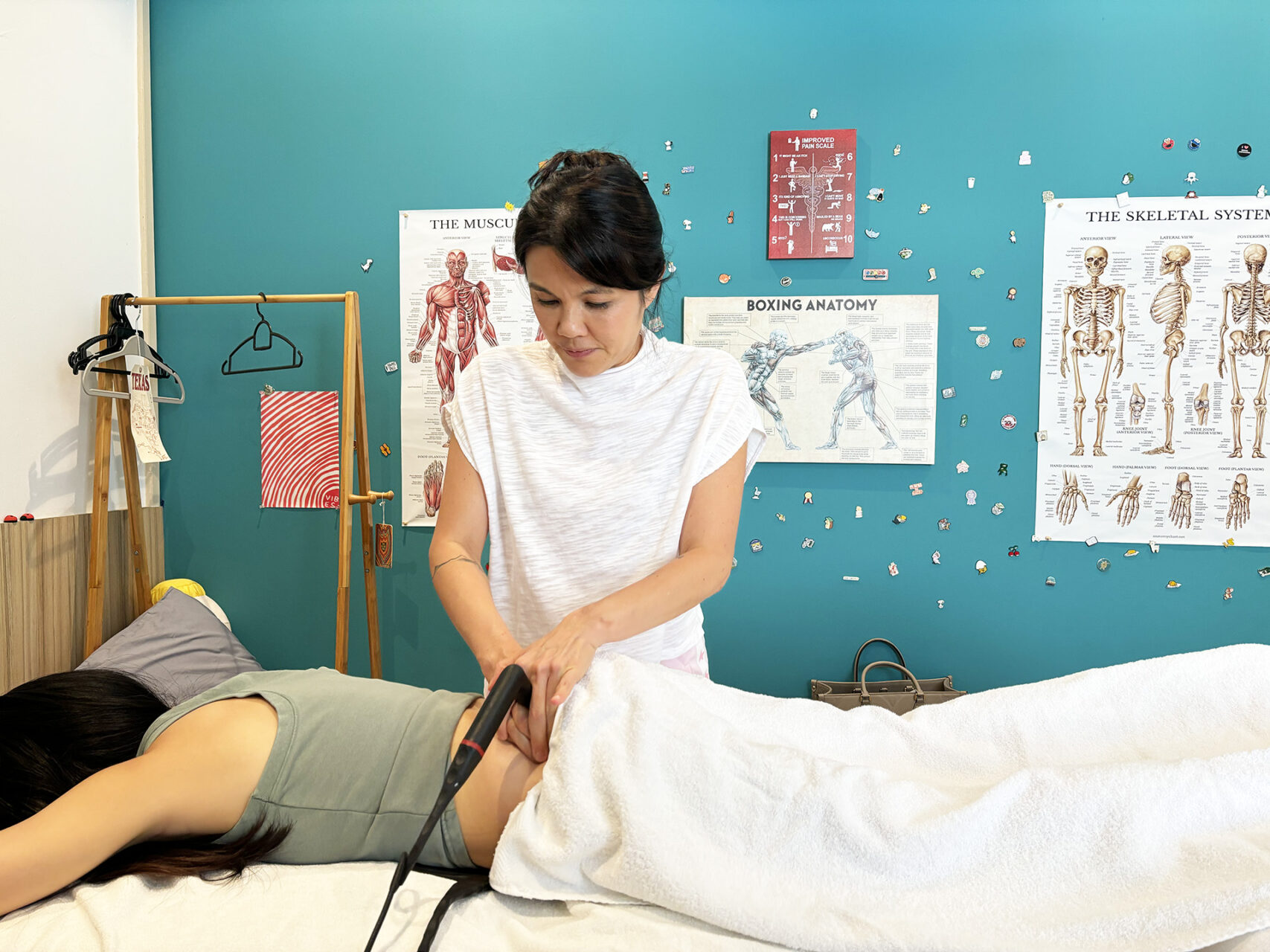
Symptoms often include pain that comes and goes and stiffness in the neck (cervical degenerative disc disease) and lower back.
The dull, aching, sharp, burning, or stiff feeling often worsens with sitting, bending, lifting heavy objects, twisting, or staying in one position for too long. Some people feel better when walking or changing positions. Others have flare-ups that last for days or weeks before the pain settles.
Degenerative disc disease symptoms can also include pain that travels. Herniated discs can cause pain, numbness, tingling, or muscle weakness when they press on a nerve. If a disc bulges or irritates a nearby nerve, symptoms may spread into the buttock, thigh, calf, foot, shoulder, arm, or hand.
Degenerative Disc Disease Stages
Degenerative disc disease stages describe how disc changes may progress over time:
- In the early stage, the disc may begin to lose normal function and become more sensitive. This is sometimes called the dysfunction stage. A person may have mild degenerative disc disease with occasional stiffness or pain.
- In the dehydration stage, the disc loses more water and height. Pain may become more frequent, especially with sitting, bending, or lifting.
- In the stabilization stage, the spine adapts to the changing disc. Bone spurs, stiffness, and nerve-related narrowing may develop.
- In a collapse, the disc loses height, and bones, joints, or nerves in the spinal canal may be irritated, especially in the lumbar and lower spine. This stage can bring persistent pain, nerve compression, or spinal stenosis.
Not everyone moves through all stages. Some people remain stable for years with few symptoms. Others need more structured care if pain or nerve symptoms increase.
Causes of Degenerative Disc Disease
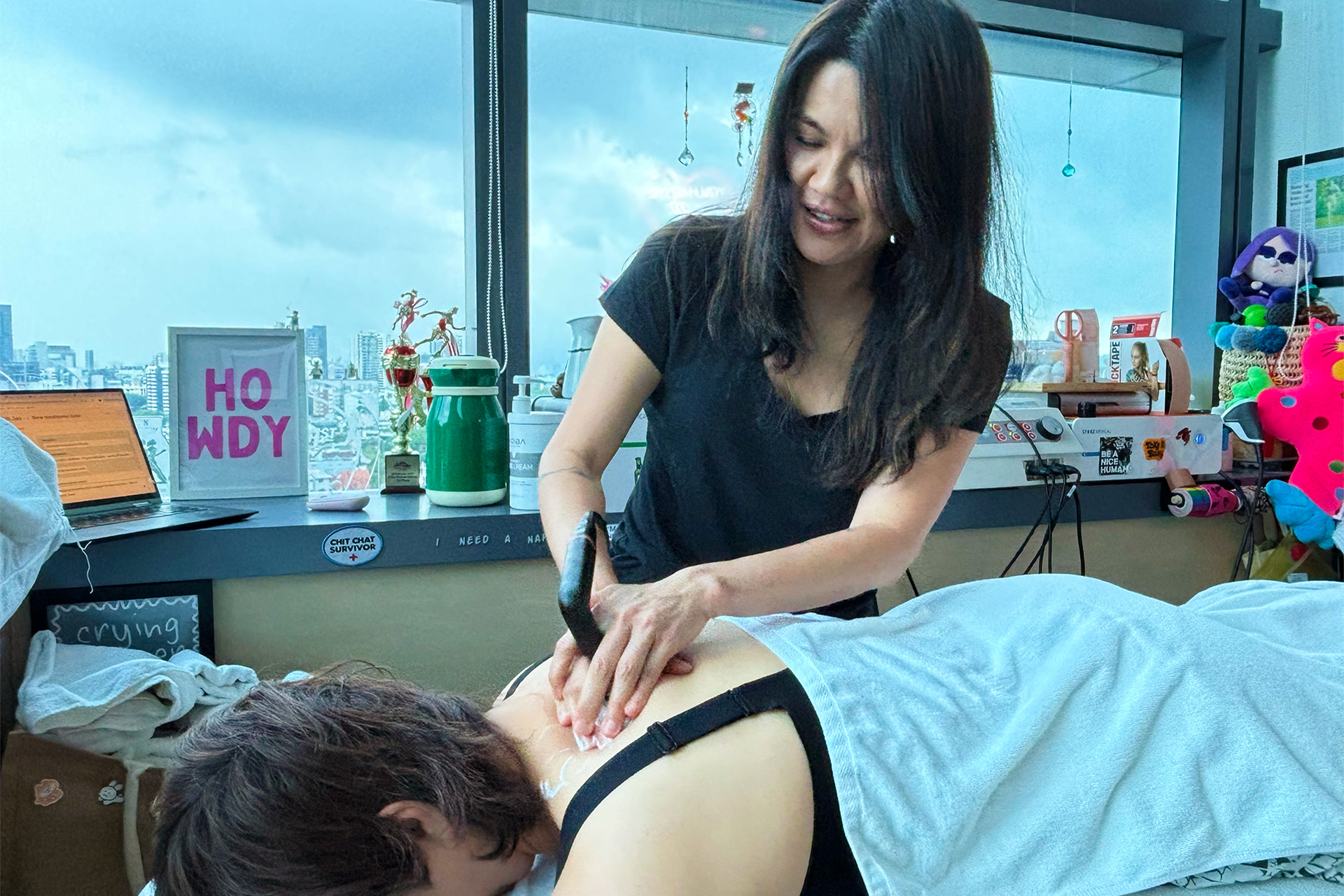
Causes include aging, disc dehydration, small tears in the disc wall, previous injury, genetics, repetitive loading, smoking, obesity, and physically demanding work.
Spinal discs contain water. As people age, the discs gradually dry out and become less effective at absorbing shock. Small tears may form in the outer layer of the disc, weakening the disc’s structure and making it more prone to further tearing, which can lead to herniation. A degenerated disc can reduce nerve function nearby, irritating the nerves, joints, and soft tissues.
If you suffered a prior injury in the spine, such as from a fall, sports injury, car accident, or repeated strain on the disc and surrounding joints, you may also suffer from DDD. Genetics can also play a role in spinal degeneration.
Daily activities can also add to the symptoms of degenerative disc disease. Repeated heavy lifting, prolonged sitting, poor recovery, and high-impact loading may aggravate the DDD pain.
Smoking reduces blood flow and slows the healing of DDD. Excess body weight will increase spinal stress. Lifestyle changes help reduce pain.
In Singapore, long hours at a desk and too little movement during the day can contribute to neck and lower back pain. Tight hips, hamstrings, and leg muscles can also place extra strain on the lower back during bending, lifting and walking.
Diagnosis of Degenerative Disc Disease
Degenerative disc disease is diagnosed through medical history, physical examination and diagnostic imaging when needed. Imaging scans help when symptoms caused by a disc are unclear; further diagnostic tests may follow.
The physical examination will assess spinal movement, posture, strength, reflexes, sensation, flexibility, and walking pattern.
X-ray images and MRIs show disc height loss, arthritis, bulging discs, nerve compression, and soft-tissue detail.

Degenerative Disc Disease Treatment
Degenerative disc disease treatment typically starts with conservative care, and early treatment often yields optimal outcomes. Most people do not need surgery.
Treatment options often include physiotherapy, exercise, medication when appropriate, posture and activity advice, movement retraining, and pacing strategies.
- Pain medication may help during painful flare-ups. Anti-inflammatory medicines such as NSAIDs can reduce the pain and swelling for some, while muscle relaxants may help if the back is in spasm. These medicines are not suitable for everyone, especially those with stomach, kidney, heart, bleeding, or medication-related concerns. Speak with a doctor or pharmacist before using them.
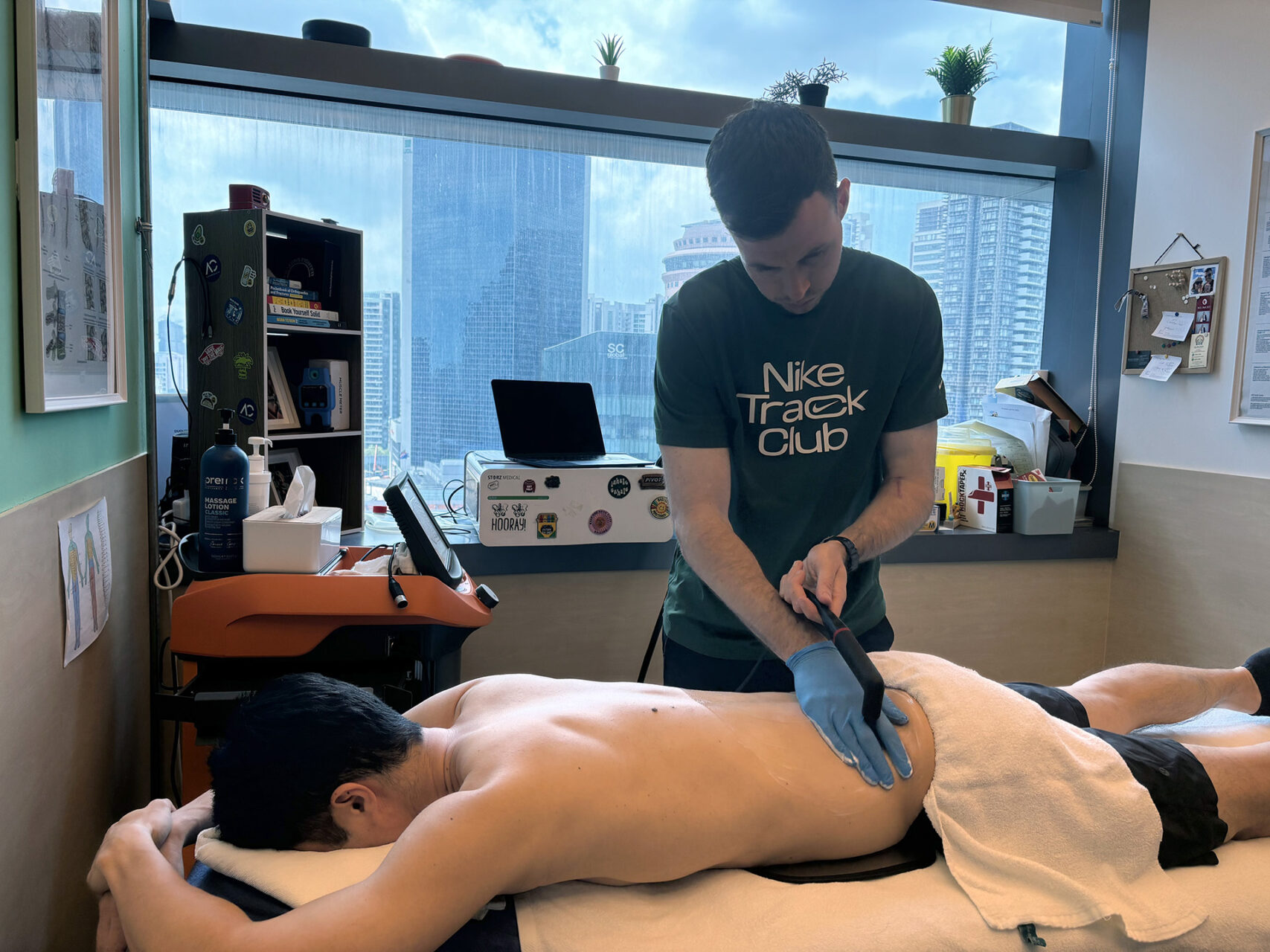
- Physiotherapy improves mobility, reduces sensitivity, restores strength, and helps the spine tolerate load. Treatment may include manual manipulation, stretching exercises, core muscle building, nerve mobility work, walking, lifting retraining, and at-home exercises.
- Prescribed exercises may include pelvic tilts, breathing drills, spinal mobility, hip stretches, bridges, glute strengthening, core control, and gradual resistance training. The right starting point depends on the symptoms. Exercises should build tolerance without any sharp pain or nerve symptoms. If severe or intense pain occurs during exercise, reassess. New pain is a warning.
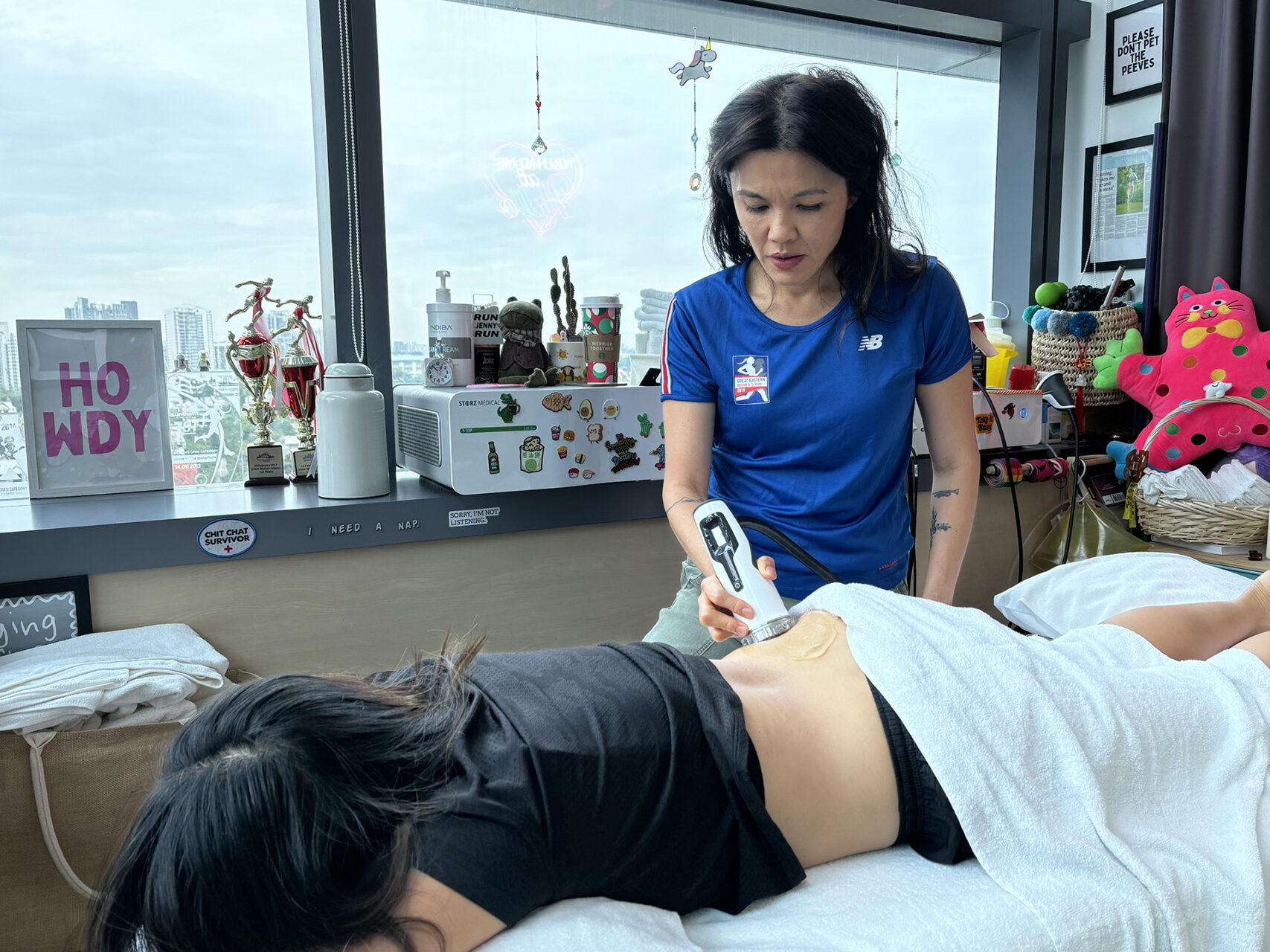
- Adjunctive treatments may be used as part of a broader rehab plan. INDIBA® may help ease pain and stiffness, making movement feel more comfortable. Dry Needling may help when tight muscles or trigger points add to back or neck discomfort. EMTT may be considered for selected muscle and joint pain. Shockwave Therapy is not usually used to treat the disc itself, but it may help if a separate soft-tissue or tendon problem is also contributing to the pain.
At HelloPhysio, treatment is tailored to the person to improve symptoms. A runner with degenerative disc disease pain may need load management, hip-strength training, and guidance for returning to running. An office worker may need spinal mobility, postural variation, and strength work to tolerate long hours of sitting. A post-surgical patient may need staged rehabilitation and careful progression.
Degenerative Disc Disease Pain Relief
Degenerative disc disease pain relief works best when short-term symptom control is combined with long-term strengthening and movement. Pain management blends both to decrease pain. Pain signals from inflammation can ease; most pain, including chronic pain, eases without medication.
Heat may ease stiffness. Ice may help during an irritated flare-up. Gentle walking, swimming, or cycling can reduce stiffness and improve circulation. Changing positions often is usually better than sitting or standing still for long periods.
Spinal Injections
Spinal injections may reduce swelling when pain is linked to nerve root or spinal nerve irritation. They relieve pressure on the affected disc and nearby spinal cord and nerve root tissues.
Epidural steroid injections may be used when a disc problem irritates a nerve and causes radiating pain into the arm or leg. Facet joint injections may be considered when pain appears to come from the small joints at the back of the spine. These injections do not reverse disc degeneration, but they may reduce inflammation enough to make movement and rehabilitation easier.
Surgery
Degenerative disc disease surgery is usually considered for severe cases only when conservative management fails or when there is significant nerve compression, weakness, or structural disease.
Most patients with this condition do not need surgery. Surgery may be discussed if the pain remains severe after about three months of appropriate conservative care, if function is still very limited, or if there is a persistent nerve compression. Surgery may be considered sooner if there is a worsening weakness, severe neurological symptoms, or a more urgent medical finding.
Options include a discectomy (a minimally invasive procedure), laminectomy, foraminotomy, spinal fusion of two or more vertebrae to eliminate movement, or disc replacement. A spine specialist plans the spine surgery.
Postoperative physiotherapy and rehabilitation are important. The spine still needs strength, mobility and load tolerance to reduce the risk of future flare-ups.
Prevention of Degenerative Disc Disease
Degenerative disc disease prevention focuses on keeping the spine strong, mobile and well supported.
Disc aging cannot be fully stopped. However, healthy habits can reduce the chance that disc changes become painful or disabling.
- Regular physical activity, strength training, weight management, smoking cessation and movement breaks during extended periods of sitting support spinal health and reduce the risk of spinal conditions.
- Low-impact exercises, such as walking or swimming, can maintain fitness without excessive strain.
- Strength work for the core, hips, back and legs helps distribute the load and supports normal movement during prolonged activity. Flexibility in the hips, hamstrings and legs can also reduce stress on the lower back during daily movement.
Good lifting habits and gradual training progressions are important, especially for runners, athletes and those with physically demanding work. Degenerative disc disease prevention is not about avoiding all bending or lifting. It is about building a body that can handle those movements safely.
How HelloPhysio Can Help
At HelloPhysio, we recognize that each patient’s experience with the condition of degenerative disc disease is unique. With the right treatment options, you can manage the condition. If you’re living with degenerative disc disease and are seeking effective treatment options, take the first step towards a pain-free life and contact HelloPhysio today for your personalized physiotherapy program.