
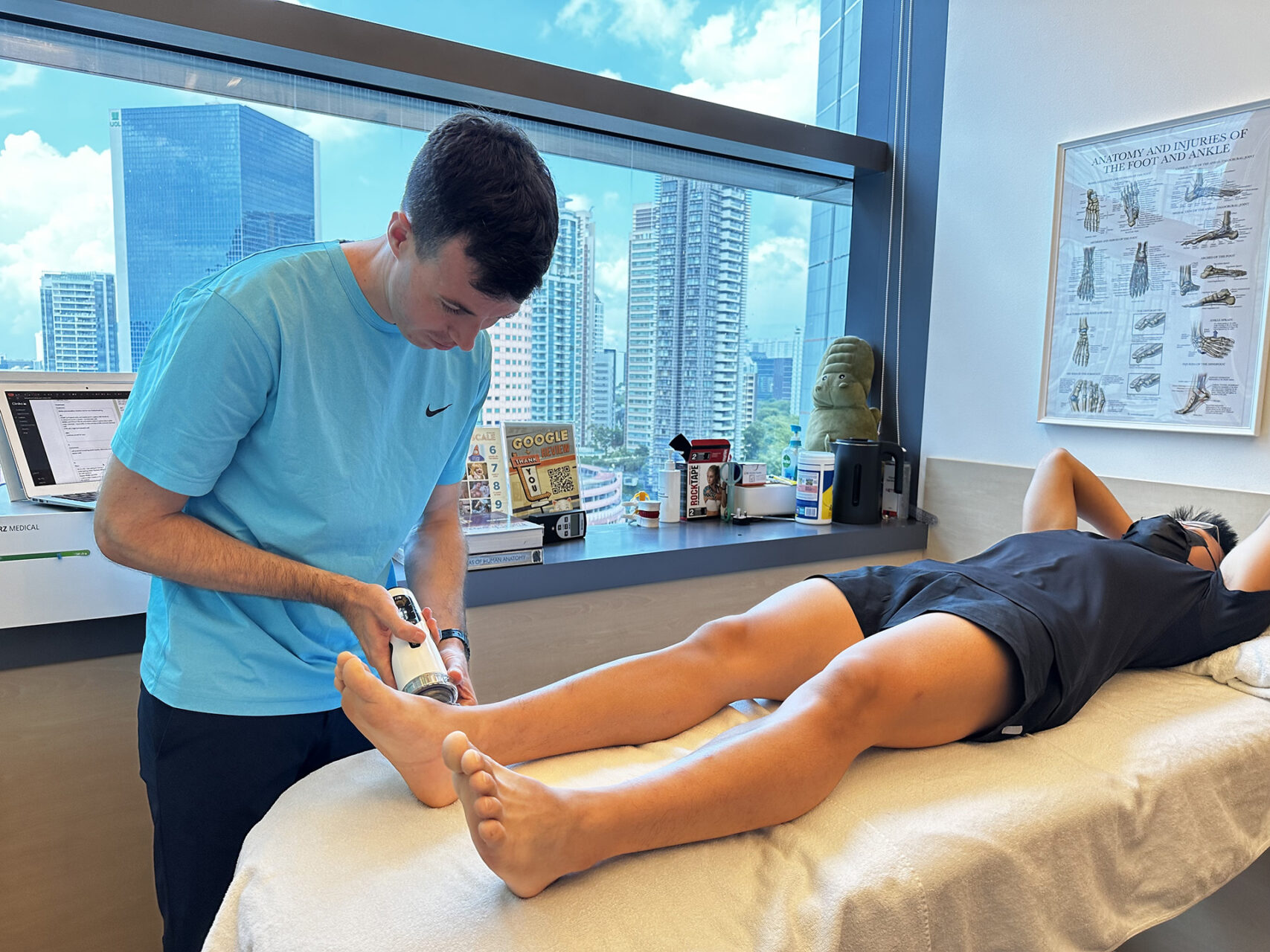
Anterior ankle impingement is a common cause of pinching pain at the front of the ankle joint. It usually shows up when the ankle joint bends upward, such as during squatting, stair climbing, lunging, landing, or pushing up a hill. Many describe it as a blocked feeling rather than simple soreness, as though the ankle joint runs out of space before the movement is finished.
The condition matters because it often lingers. You may feel that the original ankle sprain has healed, yet the front of the ankle joint still pinches with exercise, deep bending, or certain training drills. Over time, that combination of pain, stiffness and altered movement can affect running, sports, and even ordinary walking on slopes or stairs.
What Is Anterior Ankle Impingement?
An anterior ankle impingement, sometimes called a ‘footballer’s ankle’, reflects its prevalence in sports that repeatedly load the ankle joint. It is a condition in which soft tissue, scar tissue, or bone at the front of the ankle joint gets pinched between the tibia and talus when the ankle joint moves into dorsiflexion. In plain terms, something within the anatomy of the front of the ankle is getting trapped when the foot is brought upward toward the shin. This trapped tissue may be swollen synovium, thickened ligament, scar tissue from an old sprain, a meniscoid lesion, or a small bony spur.
Symptoms
The symptoms of anterior ankle impingement usually include ankle pain at the front of the ankle joint, a pinching or catching sensation, reduced dorsiflexion, and discomfort with squatting, climbing stairs, going up hills, or landing. In some people, the pain sits slightly toward the outer front of the ankle on the lateral side, especially if ligament thickening from past sprains is involved. Swelling, inflammation, local tenderness, and a general sense that the ankle joint feels weak or untrustworthy can also be part of the picture. A decreased range of ankle motion is another common early finding, and ankle instability from prior sprains may worsen symptoms.
The symptoms are often most obvious during activity rather than at rest. Running uphill, walking up stairs, deep squatting, lunging, or forcing the foot upward can quickly reproduce the ankle pain. Early symptoms of anterior ankle impingement may come and go, which is why some people keep training through them for months before seeking help. This can lead to the ankle joint feeling stiff first thing in the morning, aching after sport, or clicking or catching during movement.
Anterior Ankle Impingement Causes
Anterior ankle impingement most often results from repeated ankle sprains, chronic microtrauma, scar tissue, thickened ligaments, and bony spurs at the front of the ankle joint. Commonly, a person has one severe inversion sprain or several milder sprains over time, and as the ankle heals, the soft tissues in the joint capsule and the anterior capsule at the front of the ankle joint can thicken or scar. When the ankle joint bends upward, those tissues are then caught between the shin bone and the talus.
Causes of anterior ankle impingement also include repetitive dorsiflexion and plantarflexion loads during sport. Football players, ballet dancers, court athletes, runners, and other athletes who squat or lunge often place their ankles in the exact position that reproduces the pinch. As the body responds to repeated strain and ankle injury, bone spurs, also called bony osteophytes, form along the tibia or talus, further narrowing the joint space and reducing the ankle range of motion.
Understanding the causes of an anterior ankle impingement helps explain why this condition is common in athletic populations and why it is not always solved by rest alone. In Singapore, sports medicine and sports orthopaedic clinics commonly find chronic sprain changes, scar tissue and bone spurs as key causes of anterior ankle impingement in active patients.
Diagnosis
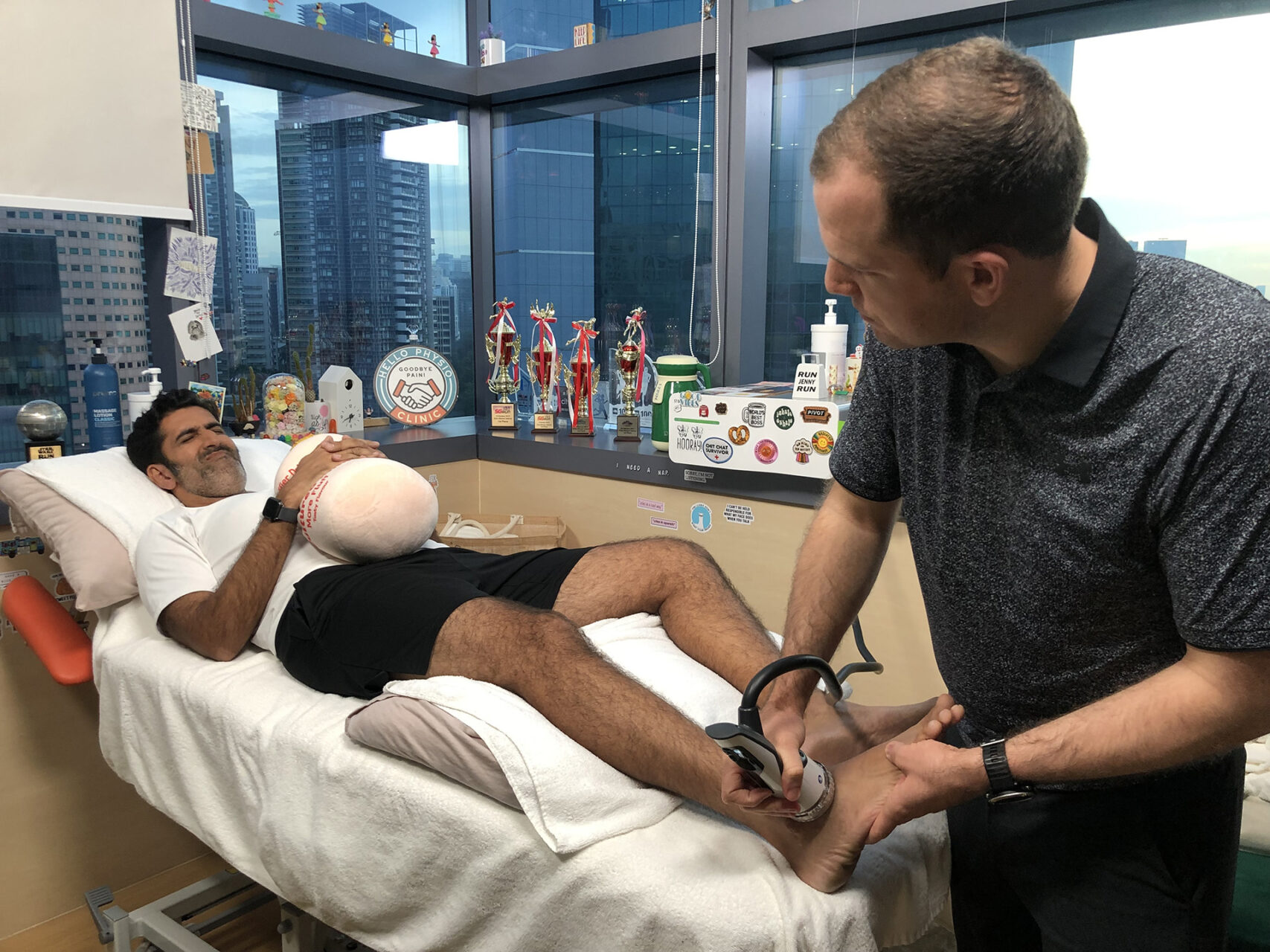
Anterior ankle impingement diagnosis and treatment begin with a medical specialist asking you about the pattern of ankle pain and confirming what is being pinched. A clinician will usually ask about prior sprains, the location of ankle pain, the activities that trigger it, and whether the ankle joint feels blocked or unstable. On physical examination, the ankle joint is assessed for tenderness, swelling, loss of dorsiflexion range of motion, balance, ligamentous stability, and pain reproduced with squatting or forced dorsiflexion. The foot posture and lower leg alignment are also assessed.
Occasionally, imaging is necessary to accurately diagnose anterior ankle impingement. X-rays are useful for spotting bone spurs on the tibia or talus. Magnetic Resonance Imaging (MRI) may help rule out other causes of ankle pain or assess soft-tissue and osseous abnormalities, although the clinical exam remains central. Sports medicine specialists may also evaluate the ankle joint for related conditions, such as anterolateral and posterior ankle impingement, and athlete’s ankle presentations.
Anterior Ankle Impingement Treatment
Ankle impingement treatments vary depending on which structure is pinched, often requiring different approaches. Anterior ankle impingement treatment usually starts with reducing movements that repeatedly provoke the pinch, while improving ankle movement and loading. That often means temporary activity modification, a short period of reduced sport, ice after an aggravating activity, and nonsteroidal anti-inflammatory medications when appropriate. In more severe cases, a walking boot or a short period of protection may be used to allow the ankle joint to settle.
The longer-term treatment plan for anterior ankle impingement should address both symptoms and mechanics. If the ankle joint has limited mobility, chronic swelling, recurrent inflammation, weak calf control, or lingering instability after a sprain, these issues must be treated alongside the local ankle pain. The best anterior ankle impingement treatment provides the ankle joint with more comfortable movement and better support.
Exercises and Physiotherapy
Anterior ankle impingement exercises are a core part of recovery because the ankle joint usually needs improved mobility, strength, and control, not just less pain. Early physical therapy often focuses on restoring a comfortable ankle range of motion, reducing swelling, and improving ankle joint mechanics without forcing the painful pinch. Stationary cycling, pain-limited ankle range-of-motion work, calf strengthening, foot control, and proprioceptive drills are commonly used starting points for rebuilding the ankle.
As symptoms settle, anterior ankle impingement exercises can progress to single-leg balance, calf raises, step work, controlled knee-over-toe drills, and, if appropriate, return to impact loading. The exact mix varies depending on whether the main issue is soft-tissue irritation, stiffness after a sprain, chronic ankle instability, or a more mechanical bony block. In the clinic, a physical therapist may use hands-on mobilization to help improve ankle joint motion. At home, consistency matters more than intensity. Regular anterior ankle impingement exercises are often what convert short-term relief into real functional change.
Physical therapy also helps by addressing the patterns around the ankle joint that sustain symptoms. Tight calves, poor landing control, weak hip and calf support, and loss of ankle proprioception after prior sprains can all contribute to the injury. At HelloPhysio, this may also include adjuncts to support a broader physical therapy plan for your ankle.
Adjunctive Modalities
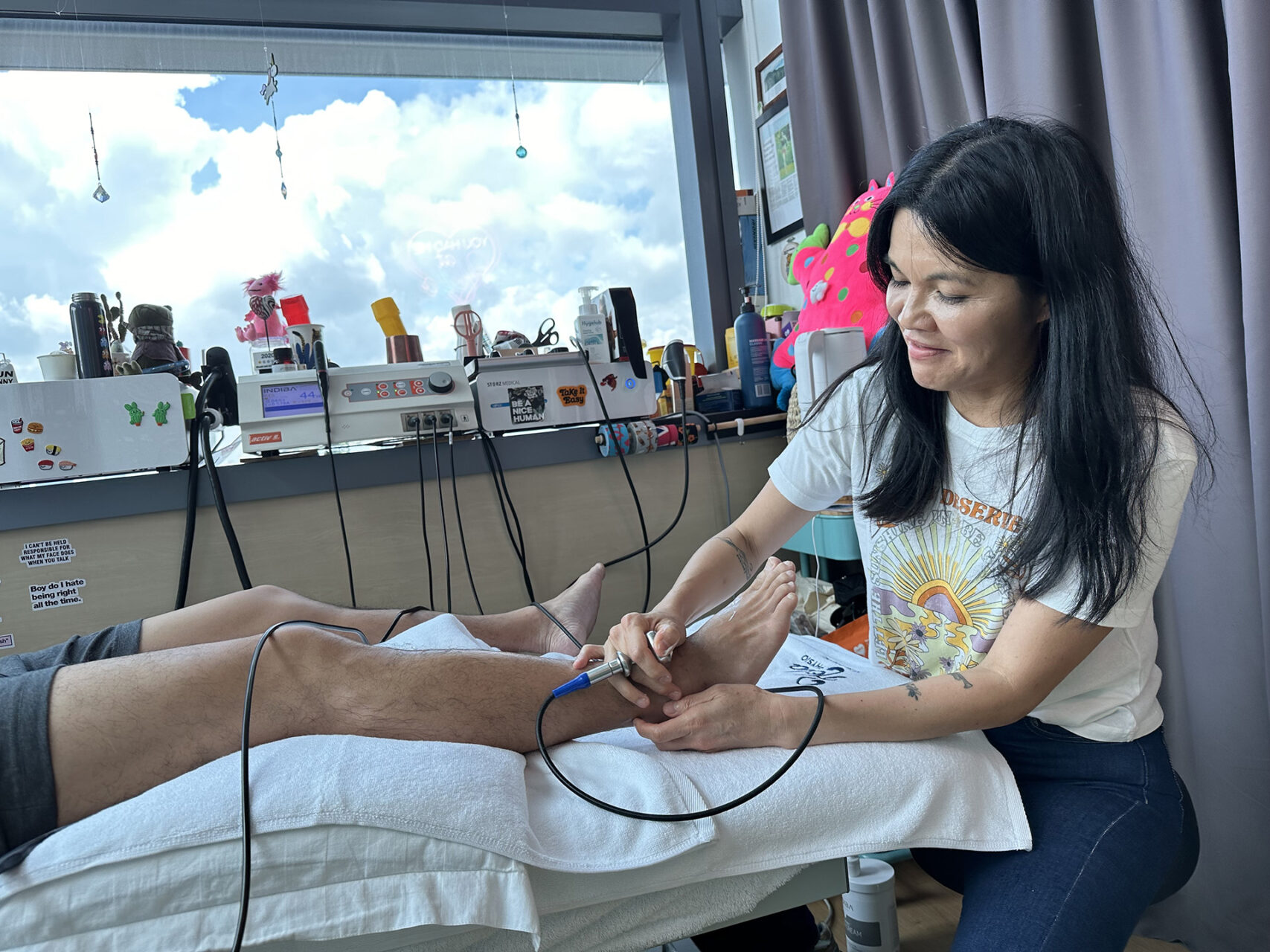
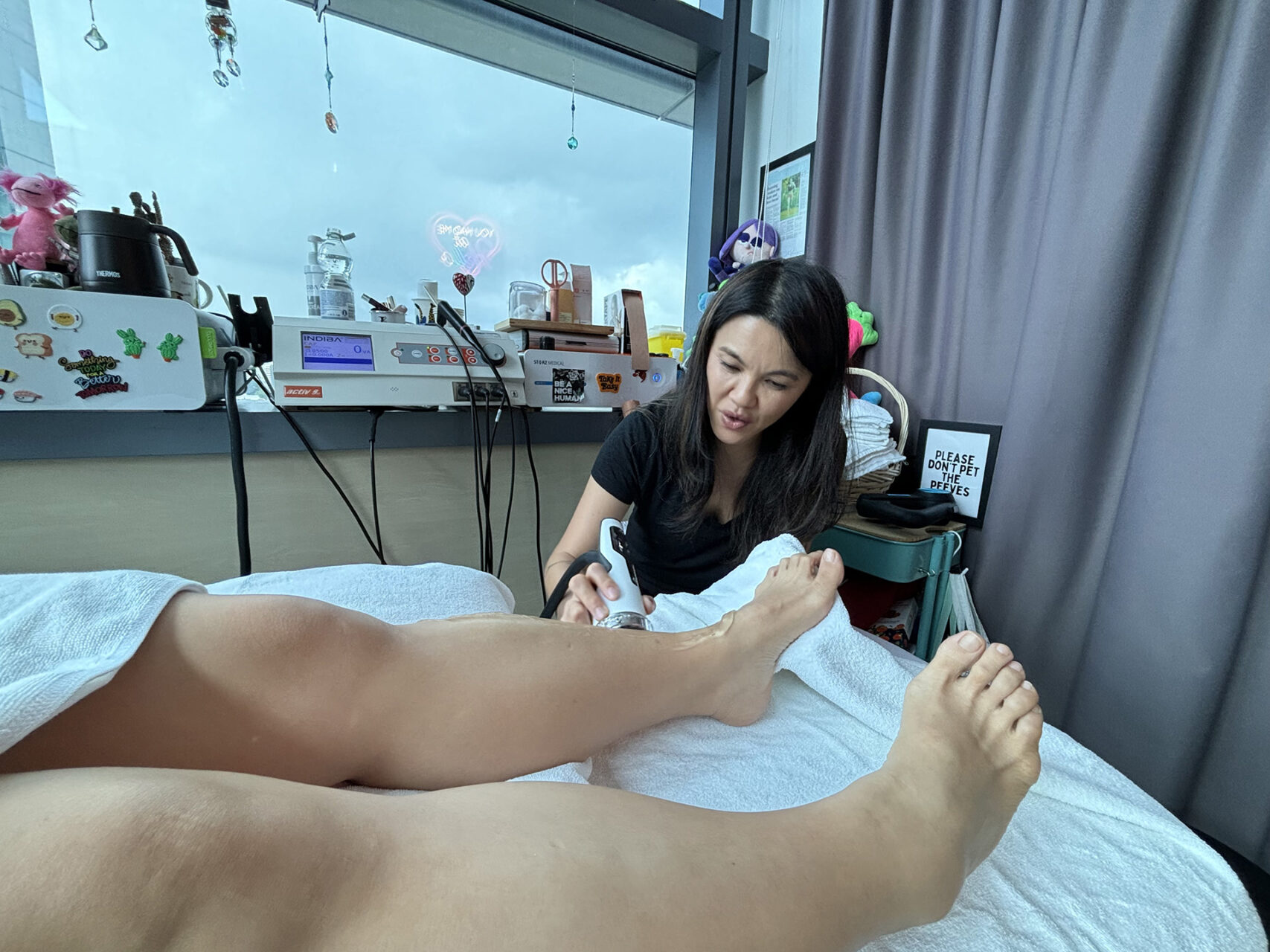
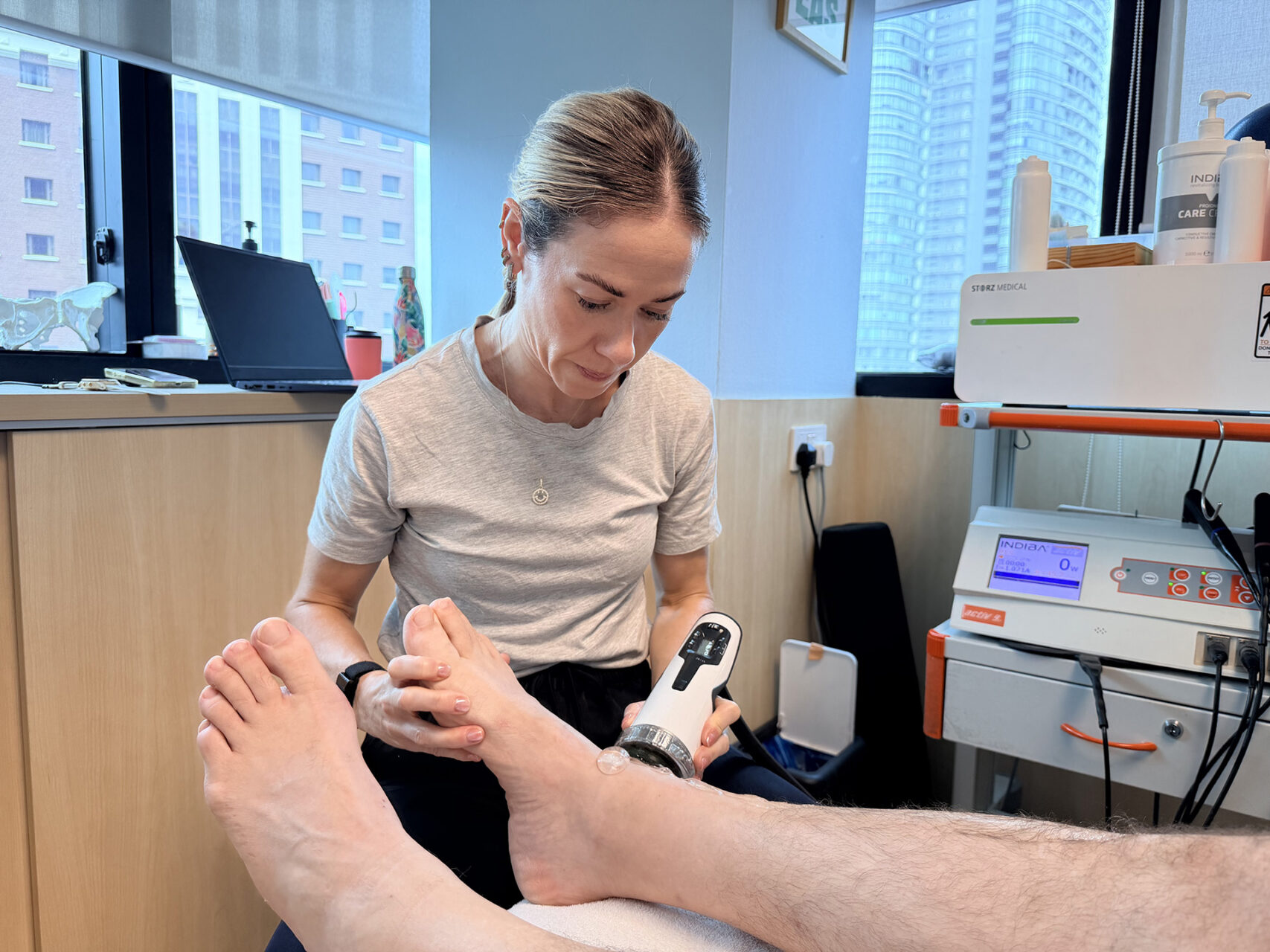
INDIBA® is used in musculoskeletal rehabilitation to help reduce pain, improve mobility and support tissue recovery, and Extracorporeal Magnetotransduction Therapy (EMTT) is used for selected musculoskeletal pain presentations. These tools do not remove a bone spur or replace regular rehabilitative exercise, but they may help some patients move more comfortably while manual therapy, strengthening, and reloading continue. For stubborn guarding in the calf or the front of the lower leg, Dry Needling may be used as an adjunct to reduce muscle overactivity and improve mobility, though it is not a standalone solution for a mechanically pinched ankle joint.
Taping and Bracing
Anterior ankle impingement taping and bracing the front of the ankle joint can ease impingement pain and provide temporary support during activities like walking or sports. An anterior ankle impingement brace can be especially helpful if repetitive movement aggravates symptoms or if the ankle joint feels unstable after past sprains. Sports taping for anterior ankle impingement can support the soft tissue around the ankle joint and help reduce inflammation during activity. While these supports do not fix the core issue, they make the ankle joint easier to manage during your rehabilitation. The key is that the support should not simply mask sharp pain, but rather allow you to train safely and comfortably.
For some athletes, taping can also prevent excessive movement during high-risk activity as the ankle regains strength and balance after recurrent sprains. However, the long-term goal is to build sufficient internal control to no longer need external support and to avoid relying on taping or bracing during activity.
Cortisone or Surgery
Anterior ankle impingement cortisone injections are sometimes considered when ankle pain and inflammation are making progress difficult. Corticosteroid injections may reduce inflammation and swelling in the pinched soft tissue and joint capsule, lowering ankle pain enough to allow physical therapy to proceed. They do not correct the mechanical cause when a spur or a persistent block is present, but they can be helpful in selected cases.
Surgery is usually reserved for patients whose symptoms do not improve enough with good conservative care. Surgical management of anterior ankle impingement commonly involves arthroscopic removal of inflamed soft tissue, scar tissue, meniscoid lesions, and bone spurs at the front of the ankle joint. Surgical management tends to work best when the ankle pain is truly localised to the front of the ankle joint, and there is not already significant arthritis driving the symptoms. Long-term follow-up after surgery for anterior ankle impingement shows good outcomes in most cases.
Anterior Ankle Impingement, Running and Returning to Sport
Anterior ankle impingement running problems are especially frustrating because running itself may feel fine on level ground at first, then become painful on hills, stairs, or faster efforts. Anterior ankle impingement-related running pain often presents with repeated plantarflexion loading, such as uphill running, speed work, or late-race fatigue mechanics. For runners, that can make the injury feel unpredictable when the real problem is that the ankle joint is being pinched at a specific angle and under a specific load. This is similar to how posterior impingement affects ballet dancers performing repeated plantar flexion, and how posterior ankle impingement develops in athletes who repeatedly load the ankle in plantar flexion.
Anterior ankle impingement while running usually improves when the ankle joint moves better, tolerates load better, and handles dorsiflexion without a sharp pinch. Return to running is often more successful when it starts on flat ground with short, controlled sessions before hills, speed, or jumping are reintroduced. If the first test run immediately reproduces the old pinch, the ankle joint is usually not yet ready for full loading.
For athletes, the same logic applies to cutting, jumping, deep squatting, and sport-specific drills. The foot and ankle joint should be able to handle brisk walking, calf raises, single-leg balance, and controlled dorsiflexion loading before returning to higher-demand sport. Many patients achieve full recovery within four to six weeks of structured physical therapy, though some cases take longer, especially if they are chronic or if surgery is needed.
Prevention
Anterior ankle impingement can recur if the ankle joint remains stiff, unstable, weak, or is exposed to the same repeated strain that caused the injury in the first place. That is why good recovery after an ankle sprain matters so much. Returning to sport before balance, strength, and mobility are restored is one of the easiest ways to allow the injury to progress into a more chronic phase.
Prevention usually comes down to respecting ankle sprains and keeping the ankle joint strong enough for the demands placed on it. Warm-up, calf and ankle flexibility, foot and lower leg conditioning, and appropriate support during return to play all help. If the ankle joint keeps pinching at the front, it is usually a sign that something still needs to be addressed, rather than a sign to simply force through it.
How HelloPhysio Can Help
If you have ankle pain at the front of the ankle joint, a blocked feeling when you squat or climb stairs, or struggle with repeated flare-ups after old sprains, HelloPhysio can help. A clear assessment can identify whether an anterior ankle impingement is contributing to your symptoms, what is keeping the ankle joint irritated, and how to rebuild movement and confidence step by step. With the right plan, most people can reduce ankle pain, move more freely, and return to daily life or sport with a steadier, more reliable ankle joint. Call HelloPhysio today to start taking your first steps towards pain-free running.