
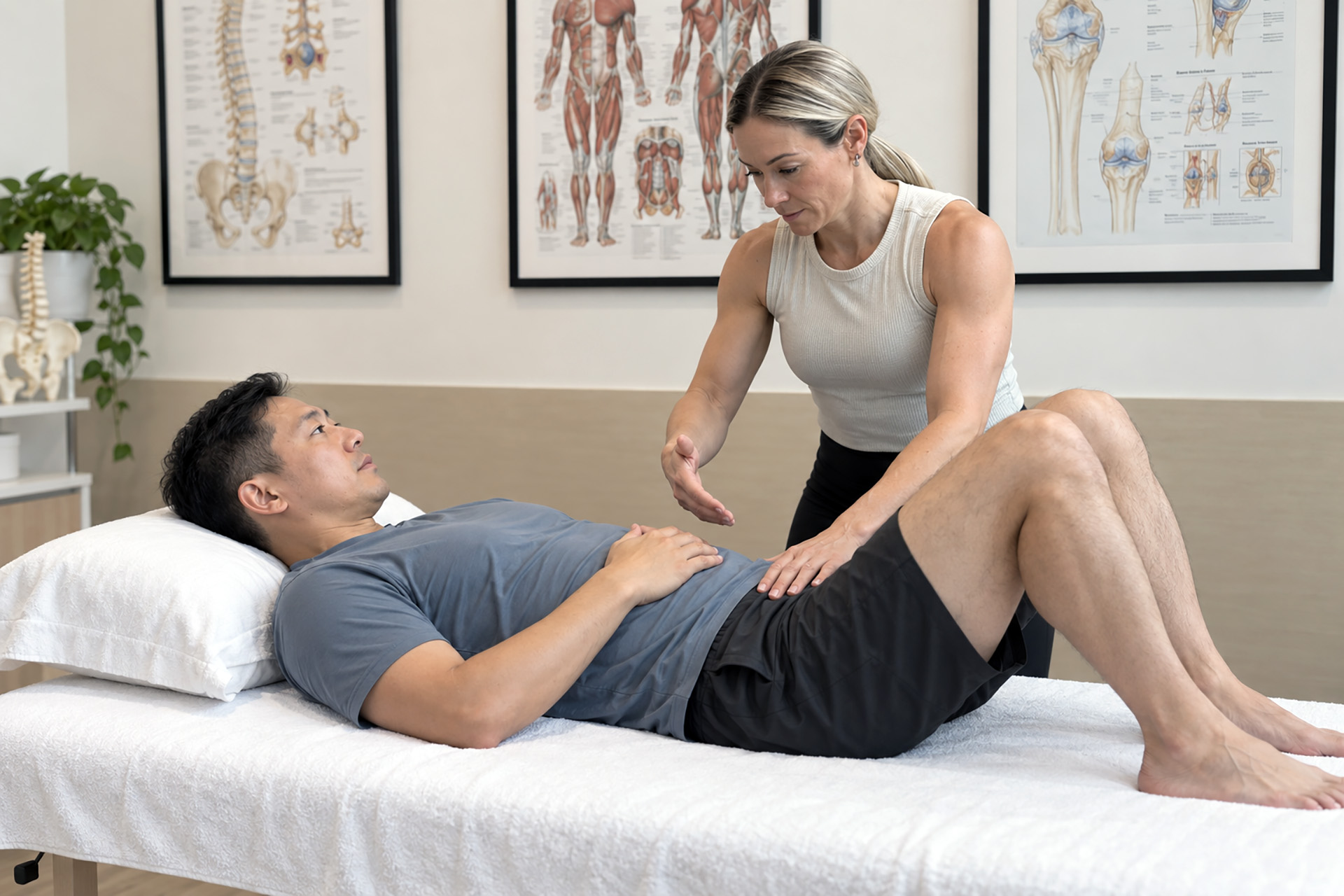
Spondylolisthesis means one vertebral body has slipped forward relative to the vertebral body below it. Lumbar spondylolisthesis occurs in the lumbar spine and is the most common form. Vertebral displacement develops in the lower lumbar spine. Backward displacement is retrolisthesis. Some people with spondylolisthesis have no symptoms; others have back pain or leg symptoms.
What are the Symptoms of Spondylolisthesis?
Spondylolisthesis symptoms vary with vertebral slippage and nerve compression. Some patients with spondylolisthesis experience no discomfort. For others, common spondylolisthesis symptoms include:
- Lower back pain or stiffness
- Tight hamstrings
- Buttock pain or radiating pain into the leg
- Tingling, numbness or weakness linked to an affected nerve root
- Difficulty standing or walking
Certain activities, such as standing, walking, or repeated backward bending, may worsen symptoms. Symptoms do not show the degree of vertebral displacement, so a proper assessment matters.
Seek emergency care for new bladder dysfunction, loss of bowel control, numbness around the groin or saddle area, or severe or worsening leg weakness. These neurological complications may indicate cauda equina syndrome or severe nerve compression within the spinal canal, and require more urgent attention.

What Causes Spondylolisthesis?
The different spondylolisthesis causes define the types of spondylolisthesis:
- Degenerative spondylolisthesis commonly occurs when age-related disc degeneration and facet joint changes reduce spinal stability. Degenerative lumbar spondylolisthesis commonly occurs in older adults and may occur with spinal stenosis.
- Isthmic spondylolisthesis can follow a stress fracture in the pars interarticularis, a bony bridge behind a vertebra. Isthmic spondylolisthesis occurs most often in adolescents who participate in sports involving repeated spinal extension. Adult isthmic spondylolisthesis may cause symptoms later.
- Dysplastic spondylolisthesis is associated with a congenital difference in how part of the spine formed.
- Traumatic spondylolisthesis results from an acute fracture or dislocation caused by injury.
- Pathologic spondylolisthesis occurs when a localized or systemic disease, including some spinal tumors, weakens a vertebral body.
- Iatrogenic spondylolisthesis can develop after spine surgery alters supporting structures.
Risk factors differ by type. For isthmic spondylolisthesis, risk factors include sports that repeatedly load the lumbar spine in extension, such as gymnastics, weightlifting or rugby.
Degenerative spondylolisthesis is not the same as lumbar spondylosis, which describes degenerative changes in the lower spine, or a slipped disc, which affects disc tissue. These conditions can cause similar back pain. In lumbar spondylolisthesis, vertebral displacement may narrow the spinal canal and compress nerve roots, resulting in sciatica.
How is Spondylolisthesis Diagnosed?
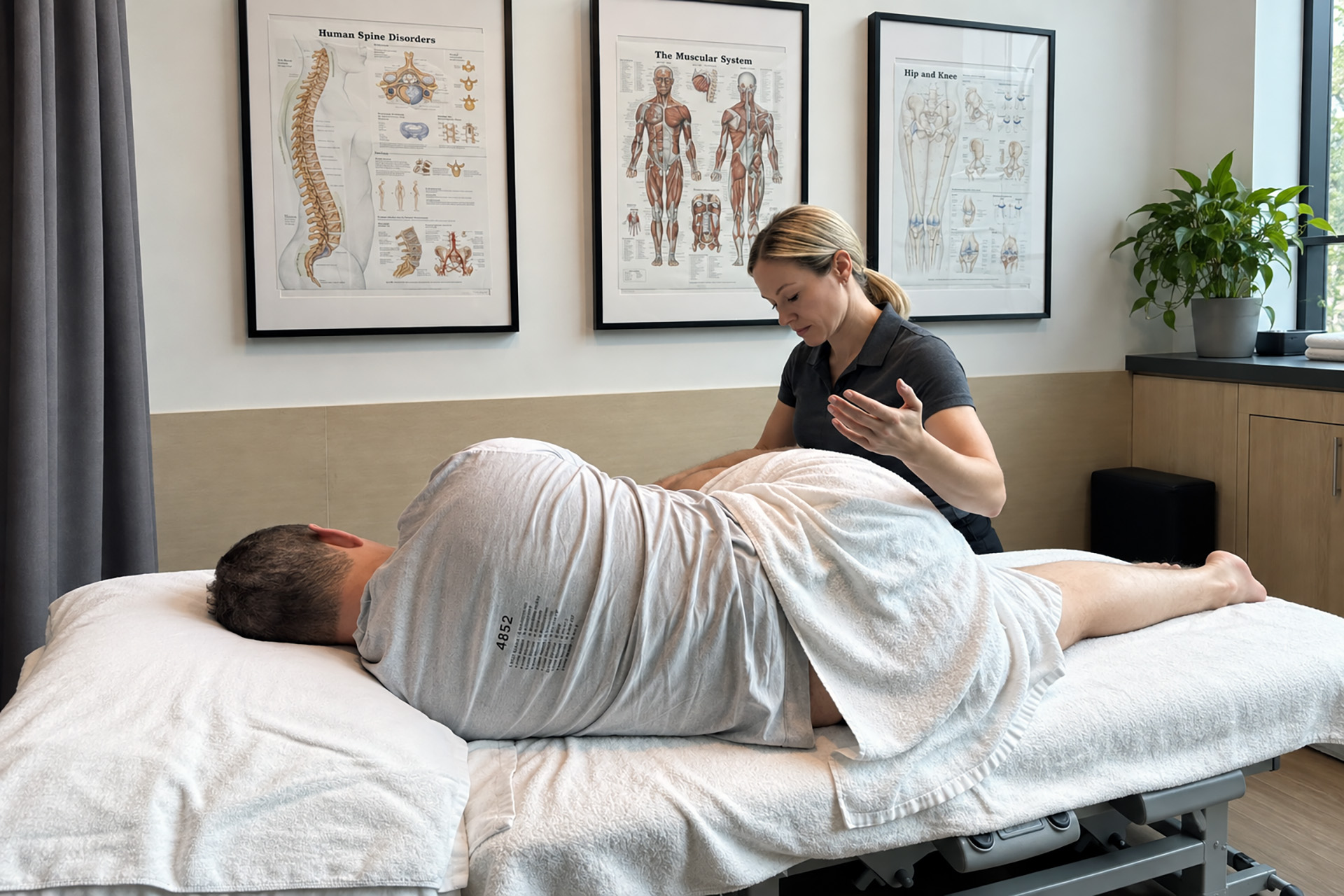
Diagnosing spondylolisthesis begins with your medical history and a physical examination. The clinician may assess your movement, flexibility, spinal alignment, strength, reflexes, sensations and walking. This can identify an affected nerve and signs of nerve compression.
Imaging tests will help confirm degenerative spondylolisthesis and other forms of lumbar spondylolisthesis. A standing X-ray shows vertebral displacement and grade. Magnetic Resonance Imaging (MRI) may be used for radiating pain, suspected nerve root compression or spinal stenosis. Computed Tomography (CT) scans can show a stress fracture associated with isthmic spondylolisthesis. When diagnosing spondylolisthesis with significant vertebral displacement, clinicians compare spinal alignment with symptoms because a disc slip can be painless.
Spondylolisthesis Treatment
Lumbar spondylolisthesis treatment depends on your age, cause, slip grade, symptoms, nerve compression and activity needs. Low-grade spondylolisthesis often remains stable without surgery. Degenerative spondylolisthesis and low-grade isthmic spondylolisthesis are often managed nonsurgically. High-grade spondylolisthesis requires a specialist review, but the grade alone does not determine the treatment.
Nonsurgical spondylolisthesis treatments combine pain management, prescribed exercises, activity changes and a gradual return to activity. Prolonged bed rest is usually avoided. Ask the doctor or pharmacist whether pain medication is suitable for you. A brace may be used for selected younger patients with isthmic spondylolisthesis and a recent pars stress fracture. Epidural steroid injections may be used in some cases to temporarily ease persistent leg pains caused by nerve compressions.
How can Physiotherapy Help Spondylolisthesis?
Physiotherapy aims to improve function rather than move the vertebra back into place. Spondylolisthesis physical therapy may include:
- Progressive exercises to build trunk and hip strength, movement control, and flexibility.
- Hamstring mobility when the tightness limits comfortable movement.
- Guidance on lifting, work, sport and symptom-guided activity changes.
- A gradual return to walking, running or training.
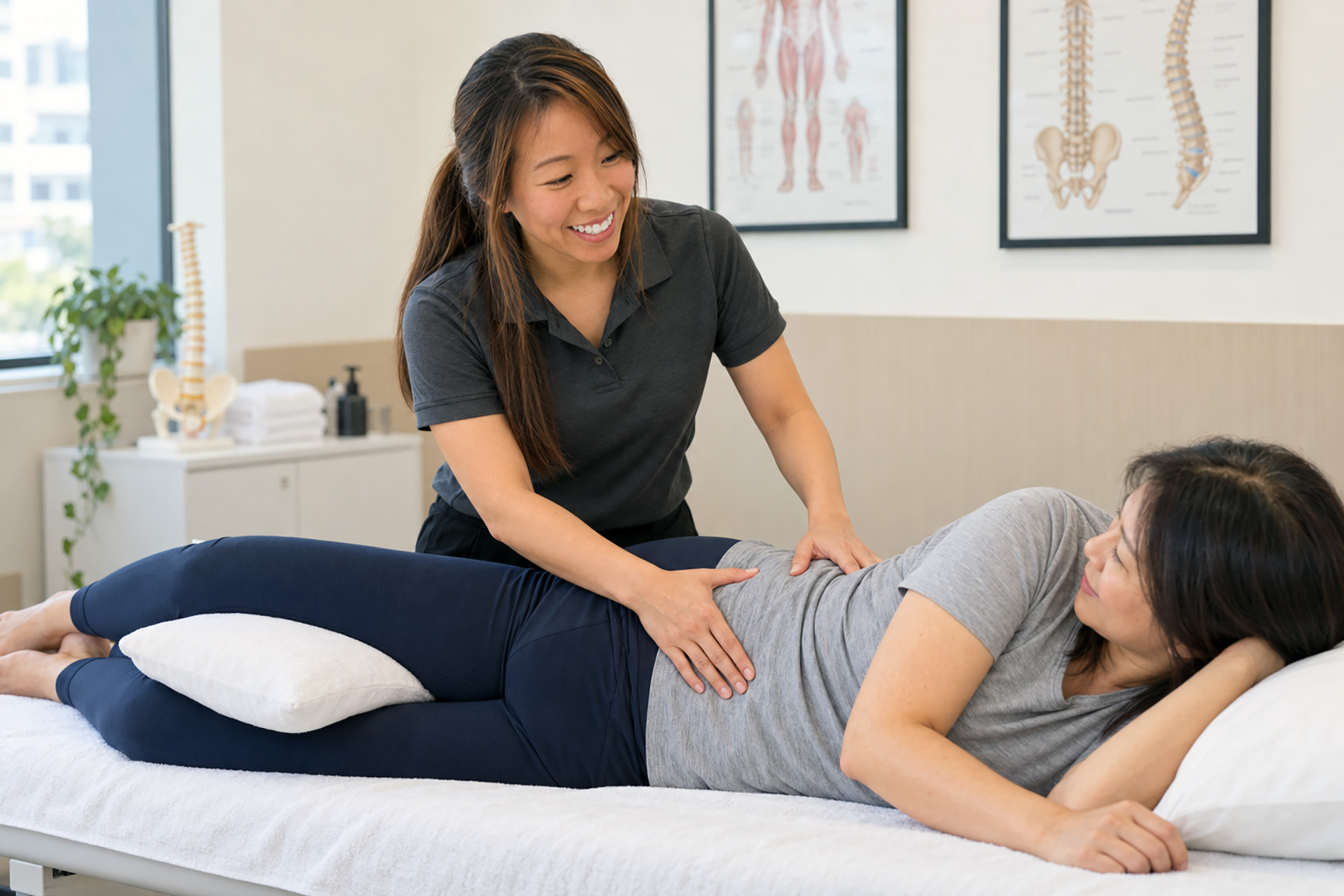
A spondylolisthesis physical therapy plan addresses the cause of back pain, nerve compression and activity tolerance. Clinical Pilates may provide a supervised way to progress strength and control. Manual therapy may help with short-term back pain or stiffness when it supports participation in active rehabilitation. Neither approach corrects spinal instability or vertebral slippage; it can only assist with the symptoms.
Surgical Treatment
For degenerative spondylolisthesis, surgical treatment may be considered for persistent back pain, progressive neurological deficits, a progressive deformity or selected high-grade spondylolisthesis. A spine or orthopedic surgeon may recommend neural decompression to relieve nerve root compression, spinal fusion to address instability, or both. Some procedures use minimally invasive spine surgery techniques. Surgical management depends on the cause, nerve compression, and global spinal alignment.

Is Spondylolisthesis Serious?
Not always. Many people with degenerative spondylolisthesis or low-grade spondylolisthesis in the lumbar spine have little back pain and remain active. High-grade spondylolisthesis or severe cases with chronic pain, neurogenic claudication or an affected nerve require closer medical review. Seek medical assessments for severe pain, persistent back pains, difficulty walking or new neurological symptoms.
If back pain or leg symptoms affect daily activity, contact HelloPhysio for an assessment. A physiotherapist can assess your movement, strength, nerve function and signs of nerve compression, and recommend rehabilitation treatment or a medical referral.
Frequently Asked Questions
Can spondylolisthesis get worse over time?
Spondylolisthesis can sometimes progress, but a progression is not inevitable. The likelihood depends on factors such as the type of spondylolisthesis, age, spinal anatomy, activity levels, and underlying degenerative changes. In children and adolescents, vertebral slippage may occasionally increase during growth spurts. In adults, degenerative changes can contribute to gradual progression. However, many remain stable for years without any significant worsening.
Can exercise help people with spondylolisthesis?
Exercise can be an important part of managing spondylolisthesis for many people. A tailored exercise program may help strengthen the abdominal, back, hip, and pelvic muscles, improve flexibility, and support spinal function. Low-impact activities such as walking, swimming, or cycling may also suit some individuals.
However, choose exercises based on the person’s symptoms, spinal stability, and underlying cause. In some cases, movements involving excessive spinal extension, heavy lifting, or high-impact activity may need modification or avoidance. A physiotherapist or other qualified healthcare professional can develop a safe, individualized program and advise when activities can be progressed.
Can you live a normal life with spondylolisthesis?
Yes, many with spondylolisthesis can live active, fulfilling lives. The condition varies significantly from person to person, and some individuals experience few or no symptoms. For those with discomfort, appropriate treatments can often improve pain, strength, mobility, and daily function.
Maintaining regular physical activity within comfortable limits, following recommended exercises, managing body weight when appropriate, and using good movement techniques may support spinal health. Some activities may need temporary modification during painful periods. With appropriate management and medical guidance, having spondylolisthesis does not necessarily mean giving up work, exercise, travel, or other everyday activities.
Can spondylolisthesis be cured without surgery?
Many with spondylolisthesis can manage their symptoms successfully without surgery. Treatment may include physical therapy, targeted exercises, activity modification, and appropriate pain-management strategies. The goal is often to reduce pain, improve strength and mobility, and support normal daily activities rather than physically moving the vertebra back into its original position.
Surgery is generally considered when symptoms remain significant despite appropriate non-surgical treatment, or when there is substantial nerve compression, instability, or another concerning problem. A healthcare professional can recommend treatment based on the individual’s condition and symptoms.