
What Is A Chronic Ankle Sprain?
A chronic ankle sprain is a condition characterized by lingering discomfort, weakness, or ankle instability that persists after an ankle sprain, often because the ankle joint never fully regains strength and control. Some people feel a constant ache. Others feel the ankle “give way,” especially on uneven ground, stairs, or during sports that involve cutting and landing.
The first ankle sprain often injures the lateral ankle ligaments on the outside of the joint, but it can also irritate tendons, connective tissues, cartilage and nerves. If swelling, stiffness or weakness lingers, the ankle may remain sensitive and reactive with activity.
Many people notice chronic ankle pain after a sprain during longer walks, after workouts, or the next morning. This does not always indicate a major tear or severe ankle sprain. It often means the ankle is still underprepared for the loads you are asking it to manage. The right plan for chronic ankle instability focuses on restoring mobility, rebuilding strength, and retraining the ankle so it can tolerate real-life and sport activities again.

Chronic Ankle Instability Symptoms
Chronic ankle instability symptoms usually include repeated “rolling” of the ankle joint, the ankle wobbling during walking, and reduced confidence during quick changes of direction. You may also notice swelling that returns after activity, stiffness in the front of the ankle, or pain along the outside of the ankle where the ligaments and peroneal tendons sit.
Even when the ankle feels fine on flat ground, it may fail under fatigue or on uneven surfaces. Previous ankle injuries that have not adequately healed can affect balance, leading to recurrent ankle sprains and greater instability over time. Each subsequent sprain increases the risk of further ankle injuries.
Why It Happens
The most common reason an ankle sprain becomes chronic is incomplete rehabilitation, not a lack of rest. Ligaments heal, but the ankle joint also needs strength, mobility, and coordination to function. If you return to your favourite sport without proper rehabilitation, the joint may stay stiff, the calf muscles may weaken, and you may lose some of the ankle’s range of motion.
There are 4 main types of ankle sprains: chronic, inversion, eversion and high. An acute sprain is a recent injury with active inflammation, swelling and pain. A chronic ankle sprain is one that has not been fully rehabilitated, with lingering weakness, recurrent sprains, or persistent ankle instability months after the original injury. These two conditions demand slightly different intervention strategies for an effective recovery.
Other contributors include poor ankle dorsiflexion, lingering fluid retention and an altered gait. Cartilage irritation or an osteochondral lesion of the ankle joint can also lead to persistent pain. In some cases, the ligaments remain mechanically loose, leading to chronic instability that may require specialist review by an ankle surgeon, especially if the instability is severe.

How It Is Diagnosed
Diagnosis starts with a focused examination and a review of the medical history that assesses ligament function, joint mobility, tendon integrity, and balance. Your clinician will ask how the injury happened, what physical activities trigger your symptoms, and whether the ankle repeatedly gives way. The exam often includes range-of-motion testing, palpation, strength checks, and functional tasks such as single-leg standing, step-down control, and hop readiness if appropriate.
Imaging tests are not always needed. An X-ray may be used if a fracture was missed or if recovery is not progressing. An MRI may be considered if there is concern for cartilage injury, tendon tear, or persistent joint irritation.

Chronic Ankle Sprain Treatment
Treatment for chronic ankle sprain works best with progressive loading that rebuilds strength and confidence. Treatment options range from conservative care to surgical intervention, depending on the severity.
Effective treatment starts with addressing the underlying ankle instability. Early on, we focus on calming the ankle and restoring motion. That may include hands-on therapy, mobility work, and guidance on footwear and activity modifications to help you stay active without the issue flaring up. Nonsteroidal anti-inflammatory drugs may help reduce the inflammation in the short term. An ankle brace may also be used during physical activities to provide support while the ankle rebuilds tolerance.
As the ankle settles, the primary drivers of recovery are strength and control. This is where a structured plan makes a difference. You should not guess how much to do or when to push. Your plan should have that covered. Recovery time varies depending on the severity of the ankle sprain and the consistency of your rehab program.

Chronic ankle instability treatment
Many athletes with recurrent ankle sprains and chronic ankle instability find that their ankle is slow to respond when they land awkwardly or cut quickly. Neuromuscular training, proprioception drills and progressive strength work for the ankle muscles improve that response and reduce ankle instability, even under fatigue.
We also address the lower extremity movement chain above the ankle. Hip strength and trunk control can influence how the foot lands and how force travels through the leg. For runners, we may adjust loading, terrain, and cadence so the ankle is not forced to handle sudden spikes, such as during long runs on a cambered road. Many athletes with repeated ankle sprains benefit from this whole-leg approach during physical activities and walking.
Chronic ankle sprain rehab exercises
Exercises for chronic ankle sprain should rebuild mobility, calf and peroneal muscle strength, and control in the positions that challenge the ankle. Early exercises often focus on ankle range of motion, calf raises within tolerable limits, and controlled inversion and eversion strength of the foot and ankle muscles. As you improve, you progress to single-leg standing with movement, step-down control, walking on uneven ground, and eventually hopping, cutting, and sport drills.
A good home program is specific. Exercises for chronic ankle sprain should be progressed based on quality and response, not just time. If discomfort spikes sharply or ankle pain flares, the dose will need to be adjusted. Do not leap to quitting the regime entirely; this is an opportunity to refine it to improve recovery.
Adjunct therapies that support rehab
Adjunct therapies can help when pain and stiffness make it hard to train consistently, but they work best when paired with prescribed exercises.
- INDIBA® may be used to support comfort and tissue recovery in irritated soft tissues, so you can progress with loading while experiencing fewer flare-ups.
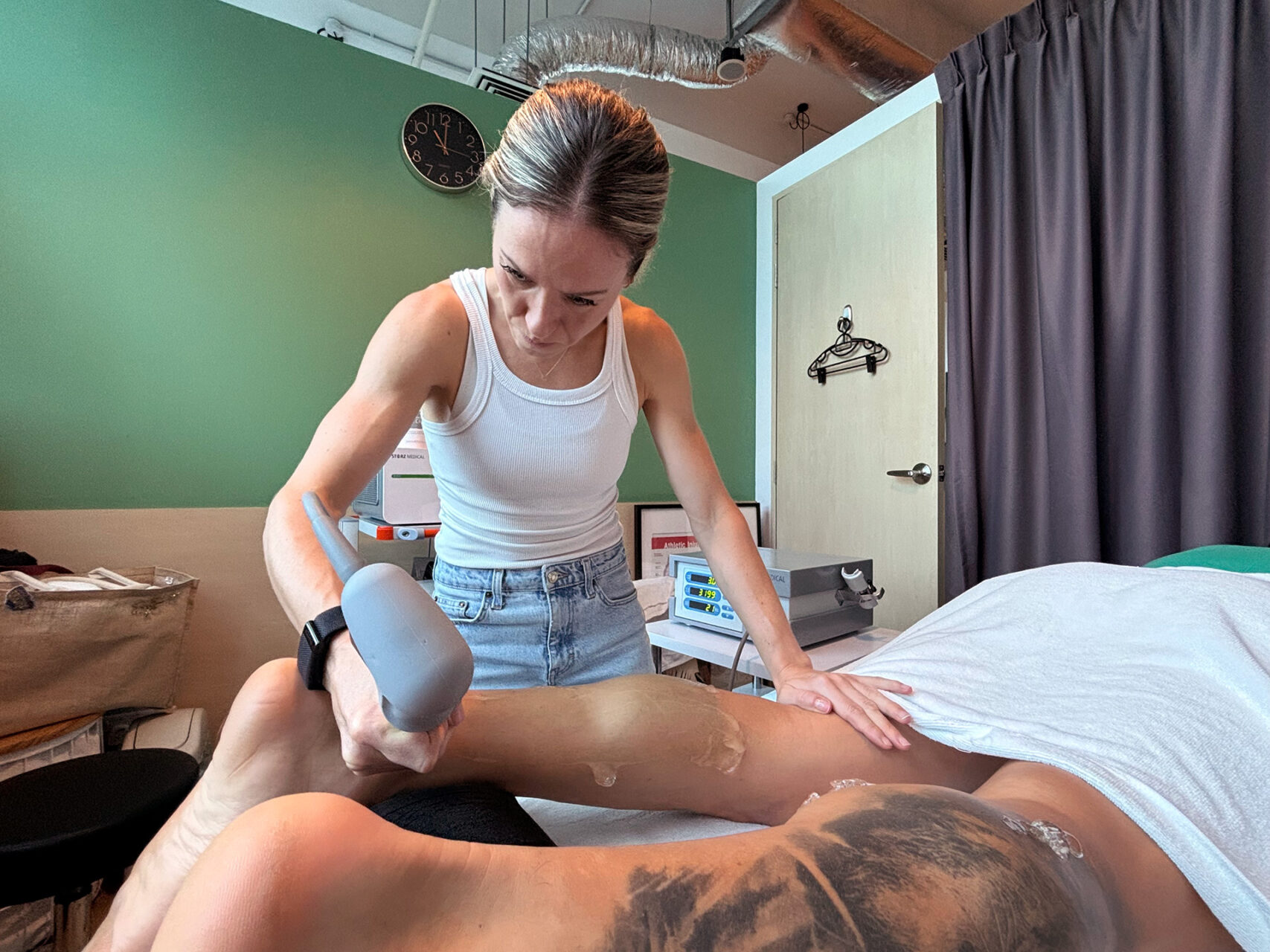
- Shockwave Therapy is not a primary treatment for ligament laxity, but it may be useful when chronic ankle instability symptoms are driven by tendon or fascia irritation near the ankle. Focused shockwaves may be chosen for deeper, localized tendon irritation, while radial shockwaves may be used for broader soft tissue sensitivity.
- EMTT may be considered in selected cases to support recovery alongside a progressive strengthening plan.
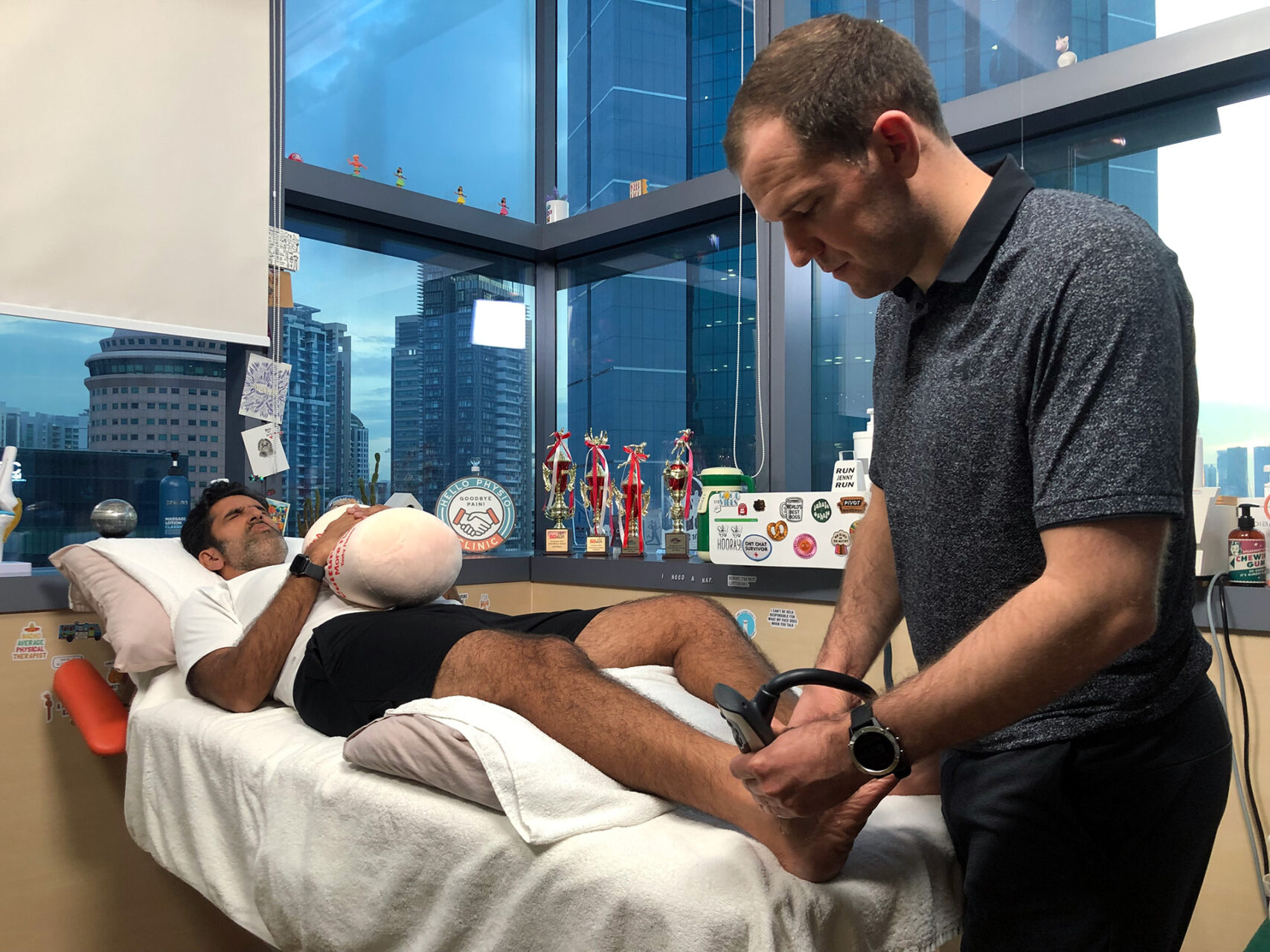
- Manual Therapy can improve ankle joint mobility and reduce protective guarding.
- Dry Needling may be considered when calf or peroneal muscle trigger points limit ankle motion or contribute to persistent tightness.
When chronic ankle sprain surgery is considered
An ankle surgeon will assess whether structural repair is needed if instability persists despite well-delivered rehabilitation or for broken ankles. Chronic ankle instability surgery is usually aimed at stabilizing the lateral ligaments, often through repair or reconstruction, when the ankle joint repeatedly gives way and limits sport or everyday activities. Underlying medical conditions should also be evaluated, as they can contribute to poor healing.
If surgery is recommended, physical therapy remains essential both before and after the procedure. Prehab improves strength and mobility going into the procedure; post-op rehab restores range of motion, rebuilds calf capacity, and retrains foot and ankle control for a safe return to sport.
Preventing Recurrence
The best prevention for a chronic ankle sprain or ankle instability is a maintenance plan that keeps the ankle strong, mobile and reactive. Many patients feel better, stop exercising, and then, unfortunately, re-sprain the ankle during a busy month or a harder training block. Maintenance does not have to be long, but it must be consistent. Recurrent ankle sprains are common among sports that involve repeated cutting and turning, such as basketball, football, and tennis. If you run regularly at East Coast Park or play court sports on weekends, a brief weekly routine of balance, calf strength and walking on varied terrain can reduce your risk of further ankle injuries and ankle instability.
How HelloPhysio Can Help
Seek prompt assessment if your ankle keeps giving way, if each subsequent sprain feels worse, or if you cannot progress despite rest and basic exercises. Seek care quickly if you have severe pain, an inability to bear weight, a visible deformity, or numbness and progressive weakness, as these may be signs of a more severe, urgent condition.
If you are dealing with chronic ankle pain after a sprain or a recurrent ankle sprain pattern, you do not have to guess your way back with Reddit threads or by enduring the pain silently. HelloPhysio can help with a thorough assessment, a clear plan and progressive loading that matches your sport and schedule. Book a consultation so we can confirm what is driving your ankle sprain injury and guide a chronic ankle sprain treatment plan that holds up long-term.