
What Is an Ankle Fracture?
The ankle joint is formed by the lower end of the tibia, the lower end of the fibula, and the talus, the bone that sits underneath them. An ankle fracture is a break in one or more of these bones that make up the ankle joint. Healthcare providers often classify a break by which area of the ankle is involved and whether the bones have remained aligned.
A nondisplaced break means the bone pieces have not shifted much, while a displaced ankle fracture means the bone fragments have moved apart. In more serious injuries, the ankle joint can lose its normal position entirely, resulting in an ankle fracture-dislocation pattern that usually requires urgent reduction and surgical planning. Open fractures, where a broken bone pierces the skin, are emergencies due to the risk of infection and require immediate treatment. Other types of ankle fractures have differing management strategies.

Ankle Fracture Types
Ankle fracture types are named by the part of the ankle that breaks and by how stable the ankle joint remains.
- Lateral malleolus fractures: Fractures of the outer bone, near the lower fibula, are among the most common.
- Bimalleolar and trimalleolar fractures: Fractures which afflict multiple parts of the ankle are usually more unstable.
- Lower fibula fractures: Fractures of the outer ankle bone are usually stable.
- Higher fibula fractures: Fractures, especially those near the ligaments that connect the tibia and fibula (the two lower leg bones), are more likely to be unstable and involve damage to the ankle ligaments.
Essentially, the higher the break in the fibula, the higher the chance of ankle instability and ligament injury.
CT scans are often helpful if the back of the ankle joint is broken, as regular X-rays may not show the full extent of the injury. This is especially true for the back of the shin bone, where the fracture can severely damage the joint surface. CT scans are also good for complex breaks involving the outer ankle bone. MRI scans may be used when the main concern is damage to soft tissues, like ligaments or tendons.

Fractured Ankle Symptoms and Signs
The signs of a fractured ankle usually include pain, swelling, bruising, tenderness, and difficulty bearing weight. Fractured ankle symptoms may come on immediately after a twist, fall, collision, or awkward landing, and are common after twisting injuries to the ankle. Sometimes the incident can lead to a hairline ankle fracture. Others, if the joint is also dislocated, the deformity of a full fracture can be obvious. Numbness, coolness, or a change in skin color is more concerning because it can point to nerve or blood vessel problems, including possible tibial nerve involvement in severe cases.
A ligament ankle sprain and a broken ankle can feel similar in the first few hours, especially when swelling is marked. However, what may seem like a normal ankle sprain could in fact involve a broken bone. That is why severe pain, marked tenderness over the bone, or an inability to comfortably take at least four steps should not be brushed off. In Singapore, ankle injuries often result from a simple misstep on the stairs, a fall on a wet surface, or a twist during futsal, tennis, or running. If you are unsure if you fractured your ankle, assume it needs assessment until imaging proves otherwise.

Ankle Fracture Causes: Who Is at Risk?
An ankle fracture most often occurs after a twist, roll, fall, direct blow, or high-force impact. Common causes include rolling the ankle while running or walking, tripping, falling from a height, sports injuries and motor vehicle accidents.
Stress fractures of the ankle bones are a separate but related concern, particularly in runners and athletes who increase their training load too quickly.
The risk tends to be higher in contact and court sports, as well as in any activity with sudden changes of direction. Risk factors include poorer balance, a history of ankle injury, lower bone density, and reduced reaction time. Weak bones from osteoporosis or low bone density can also increase the risk of a broken bone even with a relatively minor incident. In addition, smokers and those with diabetes may face slower bone healing and a higher risk of wound or bone-healing problems after treatment.
Fractured Ankle Diagnosis
A fractured ankle is diagnosed based on history, physical examination, and imaging, usually starting with X-rays. The clinician will look for swelling, bruising, tenderness, deformity, skin injury and any signs that nerves or blood vessels may be affected. X-rays often confirm where the break is and whether the ankle bones are out of place.
More complex injuries may need additional imaging. A CT is especially helpful when the joint surface or posterior malleolus is involved, as it provides a clearer image for surgical treatment planning. Magnetic resonance imaging (MRI) is sometimes used when the main question is ankle ligament damage or associated soft tissue structures, rather than the bone pattern alone.

Ankle Fracture Treatment
Ankle fracture treatment depends on whether the ankle joint is stable, whether the ankle bones are displaced, and whether the ankle can be kept in good alignment while it heals. Early ankle fracture immobilization may start with a splint for the ankle fracture, especially while swelling is high. After that, the limb may be protected in an ankle fracture cast, a removable ankle brace, or an ankle fracture boot, depending on the fracture pattern and medical advice.
This period of protection is not just about comfort. Proper ankle fracture support keeps the ankle bones from shifting while the early healing callus forms. Stable fractures can tolerate some weight-bearing, while unstable fractures may require several weeks of non-weight-bearing. A typical stable fracture may take about 6 weeks to heal in a cast or boot, but ankle fracture healing time can be longer if the break is more severe, or if bone healing is slower due to age, smoking, diabetes, or other health factors.
When Is Ankle Fracture Surgery Needed
Ankle fracture surgery is usually needed when the ankle is unstable, the ankle bones are displaced, the ankle joint is dislocated, or the fracture is open. Surgery is also commonly recommended for bimalleolar fractures, bimalleolar equivalent fractures, significant posterior malleolus fractures, some syndesmotic injuries, and other fracture patterns where the talus is not sitting properly under the tibia and fibula. The goal is to restore the ankle mortise, the U-shaped socket formed by the distal tibia and fibula that securely houses the talus bone, to its normal shape.
Most ankle fracture surgeries use internal fixation with plates, screws, or both to hold the broken parts in the correct position while they heal. In cases where bone fragments cannot be adequately stabilised with hardware alone, bone grafting may also be considered.
Sometimes, surgical treatment is delayed briefly so swelling can settle first. In some complex distal tibial fractures, severe pilon fracture patterns may also be managed with external fixators before internal fixation is applied. (A pilon fracture is a severe, high-energy break at the bottom of the tibia involving the weight-bearing surface of the ankle joint.) Recovery after surgery varies, but the ankle often remains stiff, swollen, and weak for months, which is why ankle fracture surgery recovery does not end when the incision heals. The rehabilitation phase, during which people rebuild walking mechanics, calf strength, balance, and return-to-sport capacity, is critical.

How Physiotherapy Helps Ankle Fracture Recovery
Physiotherapy aids ankle fracture recovery by restoring movement, strength, balance, walking mechanics, and confidence once the bone has healed and the ankle is stable enough to support loading. Rehabilitation usually begins when your doctor allows it, often after the fracture has begun to heal and the ankle fracture cast or boot has been removed.
Early rehab often focuses on ankle pain and swelling, then gradually on joint motion. The ankle joint, foot, calf, and lower leg can become surprisingly stiff after even a few weeks of immobilization. Physical therapy at HelloPhysio commonly combines hands-on work, progressive exercises, and clear, simple at-home exercises such as ankle pumps, alphabet drills, towel-assisted calf stretching, supported calf raises, and balance retraining, when appropriate.

Adjunct Modalities to Speed Recovery
Adjunctive modalities can also help when they are used for the right reason and at the right stage:
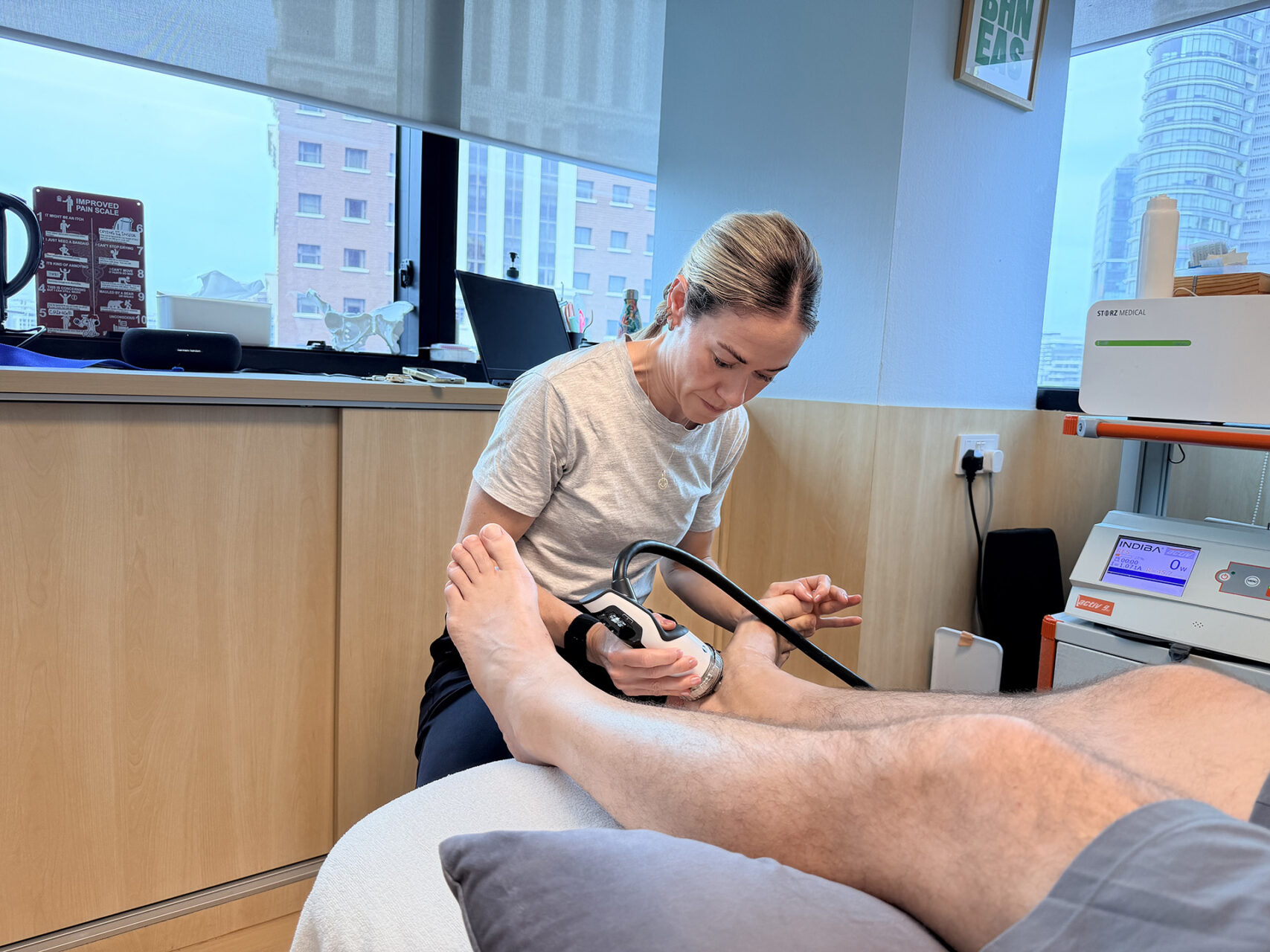
- INDIBA® uses 448 kHz radiofrequency and is positioned as a tool to support pain reduction, tissue recovery, and improved mobility in musculoskeletal rehabilitation.
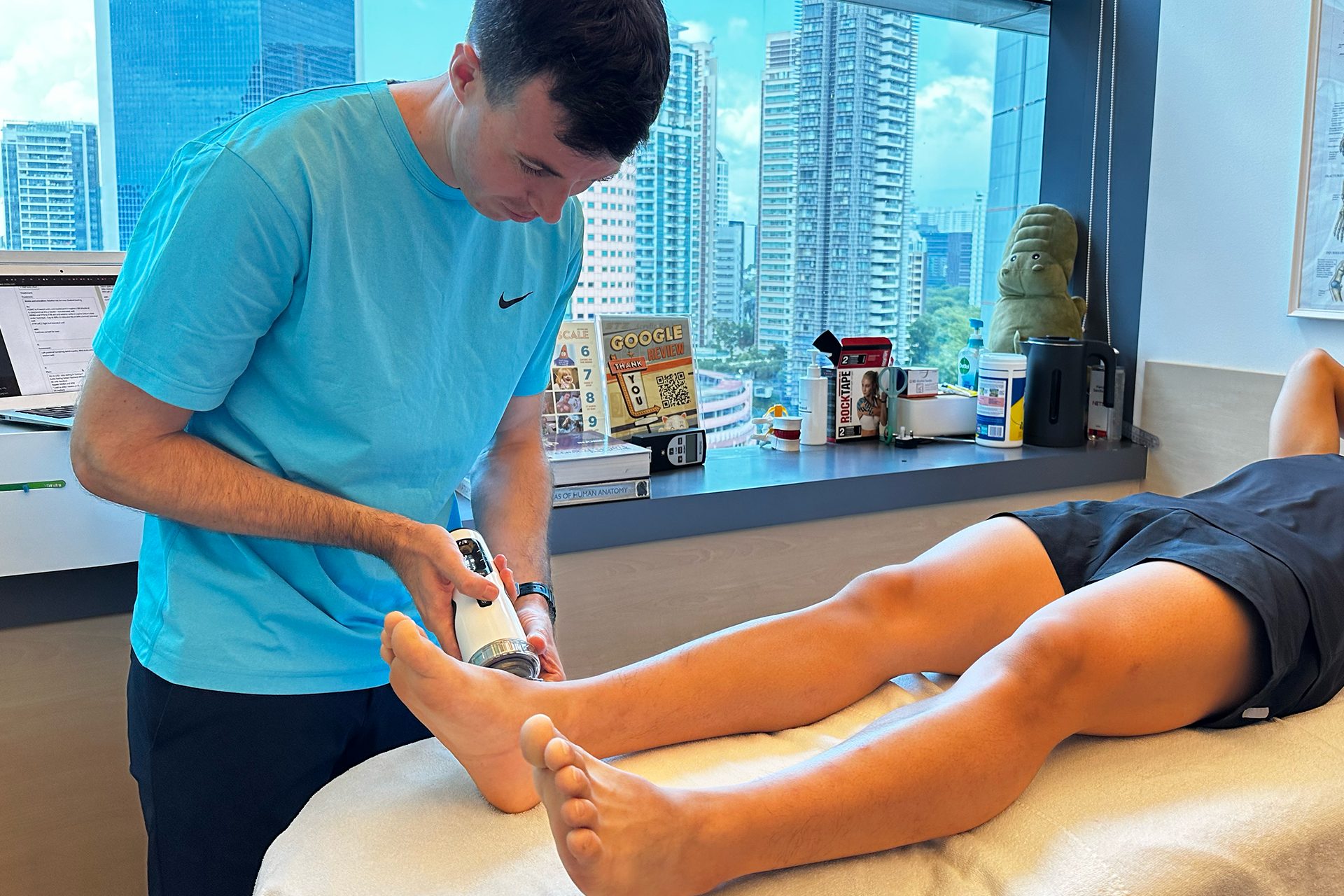
- Extracorporeal Magnetotransduction Therapy (EMTT) is a noninvasive magnetic field treatment developed for musculoskeletal pain and inflammation.
- Dry Needling may help with myofascial trigger points, ankle pain, and range of motion in tight calf, shin, or lower leg muscles that often become overactive after a period in a walking boot.
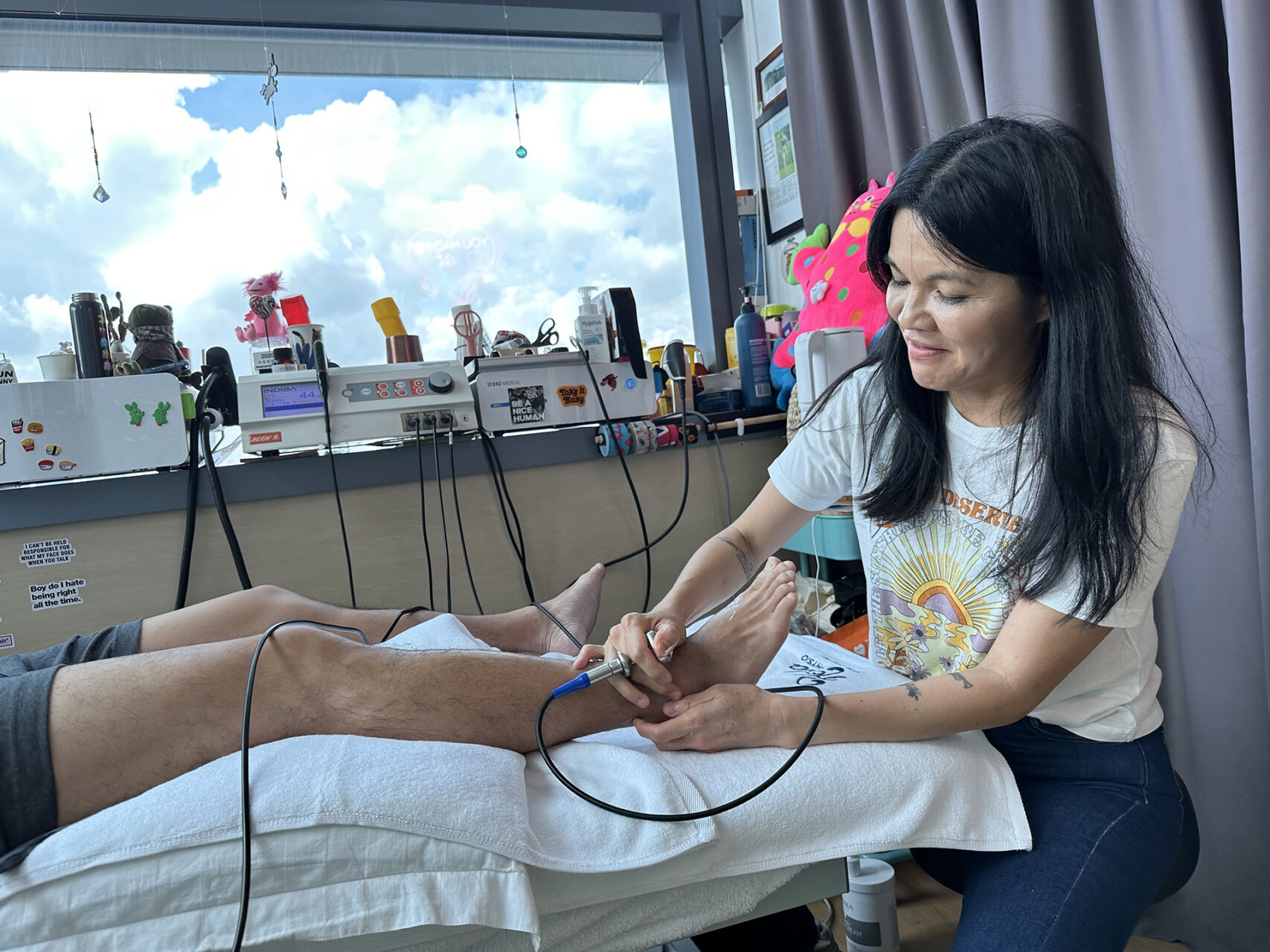
- Focused or Radial Shockwave Therapy is not a first-line treatment for a fresh fracture, but in selected, later-stage cases, it may be considered for stubborn tendon or soft-tissue overload that develops during the return to loading, especially once the fractured ankle has healed.
These tools work best as part of a wider plan, not as a substitute for graded exercise and clinical review.

Ankle Fracture Recovery Timeline & Healing Time
The ankle fracture recovery time depends on the fracture pattern, whether surgery was required, and how well the ankle regains function after immobilization. In general, a straightforward fracture that does not require surgery may heal in roughly 12 to 16 weeks, while more complex fractures can take many months, and some surgically treated ankles require a year or longer. That is why ankle fracture healing and recovery are related but not identical. The bone may unite before the ankle feels normal in daily life.
A practical way to think about ankle fracture recovery is in phases. First comes protection and swelling control. Next comes gradual weight-bearing and restoring motion, which are important for proper healing and preventing stiffness. Then comes rebuilding strength, single-leg control, and walking quality. The final stage is a return to higher-demand activities such as running, jumping, hiking, or court sports.
Fractured ankle recovery time is longer when there has been surgery, multiple malleolus fractures, a syndesmotic injury, or prolonged use of a walking boot. Fractured ankle recovery tips are simple: follow weight-bearing advice, keep swelling down, do your home program consistently, avoid smoking, and do not return to impact work too soon.
Ankle Fracture Complications & Prevention
Ankle fracture complications can include stiffness, swelling, malunion (when a fractured bone heals in an abnormal, deformed, or misaligned position), arthritis, wound problems, nerve irritation, and a lasting weakness or instability. Some swelling and stiffness are common for months, even after the fracture has healed on an X-ray. Bone breaks that fail to heal properly, known as nonunion, are among the more serious complications. Surgery also carries risks such as infection, bleeding, and irritation from the plates or screws. Risk factors that can also worsen outcomes include smoking, older age and diabetes.
Prevention after a fracture is less about avoiding the original cause of the accident and more about reducing the chance of re-injury or a chronic limitation. That means restoring ankle stability, ankle mobility, calf strength, balance, and proprioception, which is your body’s sense of joint position. It also means a gradual return to exercise rather than jumping straight from a walking boot into full training.
Most ankle fractures that are managed well can heal properly and allow a full return to activity, provided rehabilitation is thorough and addresses the heel bone, surrounding soft tissue structures, and ankle joint mechanics. A good rehabilitation plan does more than help the bone heal. It helps the whole lower leg absorb load properly again.
How HelloPhysio Can Help
If you have ankle pain after a fall, have been told you have a broken ankle, or feel stuck during recovery from ankle fracture surgery, HelloPhysio can help. Our team can work alongside your doctor to guide movement, control swelling, improve strength, balance, and gait, and support a return to sport with a plan that fits your stage of healing. Contact HelloPhysio to book a consultation and get expert help for a safer, steadier recovery.