
What Is Subcutaneous Calcaneal Bursitis?
Subcutaneous calcaneal bursitis is an irritation of the small fluid-filled sac that sits between the skin at the back of the heel and the Achilles tendon. Known as the subcutaneous calcaneal bursa, this sac acts like a cushion between the skin and the Achilles tendon, which inserts into the heel bone just below.
Heel bursitis occurs when the calcaneal bursa is repeatedly compressed or rubbed, causing it to become irritated and swollen, resulting in heel pain. When that bursa becomes inflamed, the back of the heel can become sore, swollen, warm and sensitive to pressure, especially from shoes.
The heel bursa near the skin surface and the retrocalcaneal bursa deeper in the heel are the two main bursae in this area. The former is subcutaneous calcaneal bursitis, and the latter is known as retrocalcaneal bursitis.
Both subcutaneous calcaneal bursitis and retrocalcaneal bursitis share some symptoms but differ in location and cause. Subcutaneous calcaneal bursitis is usually more closely linked to direct pressure from footwear and superficial rubbing, while retrocalcaneal bursitis is more often tied to deeper compression around the Achilles tendon insertion. Either way, treatment is necessary in order to prevent pain from interfering with your daily life.
Walking, climbing stairs, standing for long periods, or wearing shoes with a rigid heel counter can all keep the area irritated. For runners and active adults, heel bursitis may also show up after a sudden increase in training, hill work, or repeated push-off activity. Most cases of heel bursitis improve with the right combination of load reduction, footwear changes, and rehabilitation, but it tends to linger when the original source of friction is not addressed.
What Does Subcutaneous Calcaneal Bursitis Feel Like?
Early symptoms of heel bursitis often include mild pain that is worse with activity, along with swelling and tenderness at the back of the heel. Subcutaneous calcaneal bursitis usually feels like pain, swelling, and tenderness at the back of the heel. The area around the back of the heel may look puffy or red and may feel warm to the touch.
Bursitis often hurts more when you stand on your toes, walk uphill, run, or wear tight-fitting shoes or high-heeled shoes that press directly on the posterior heel. Some people describe it as bruise-like soreness, while others notice a sharp, rubbing pain whenever the heel collar of the shoe touches the area.
Heel bursitis pain is often worse after activity and may ease a little with rest, only to return when you resume walking. Morning stiffness or soreness when first getting out of bed can also happen, especially if tight calf muscles or Achilles tendon stiffness are present.
Achilles tendon and ankle pain can sometimes accompany heel bursitis, which involves inflammation of the surrounding tissue. If the heel bursitis becomes more irritated, the pain can become more constant and start to affect normal walking.
What Causes Subcutaneous Calcaneal Bursitis?
Subcutaneous calcaneal bursitis is most often caused by repeated friction, direct pressure, or overuse around the back of the heel. There are also factors that increase the risk of developing heel bursitis. Tight calves, limited ankle flexibility, higher or flatter arches, excess body weight, and a bony prominence at the back of the heel, sometimes called a Haglund deformity, can all increase friction or pressure.
Causes include:
- Tight-fitting shoes – the clearest triggers, especially those with a stiff back that rub against the heel
- High-heeled shoes – equally problematic, as they force the foot into an unnatural position that bears weight improperly
- Running, jumping, prolonged standing, and quickly increasing activity can overload the area
- Direct blow or trauma to the heel may start the problem.
Plantar fasciitis and other foot conditions can also alter load patterns and increase the risk of heel bursitis as the person’s gait alters, leading to undue pressure on the back of the heel when walking. Inflammatory conditions such as rheumatoid arthritis, gout, and related disorders can also contribute. In rare cases, a bacterial infection can inflame the calcaneal bursa and will require prompt medical attention.
In Singapore, heel bursitis often occurs in those who spend long days in tight or ill-fitting shoes, closed-back work shoes, or those who walk frequently on hard indoor surfaces or Singapore’s tough pavements. These day-to-day loads may not feel dramatic, but they can repeatedly press on the same part of the heel, irritating the calcaneal bursa.
How Is Subcutaneous Calcaneal Bursitis Different from Retrocalcaneal Bursitis?
Subcutaneous calcaneal bursitis is more superficial, while retrocalcaneal bursitis is deeper and sits between the Achilles tendon and the heel bone. Unlike retrocalcaneal bursitis, subcutaneous calcaneal bursitis is driven primarily by surface friction rather than deep compression.
This means the subcutaneous bursa is often more easily provoked by touching or squeezing the skin at the back of the heel, or by wearing tight-fitting shoes.
In real life, the two conditions can overlap with an Achilles tendon irritation, which is one reason heel pain at the back of the ankle is sometimes confusing and difficult to diagnose based on symptoms read online. A person may think they have Achilles tendinitis, plantar fasciitis, a shoe blister, or a heel spur when the main issue is actually the bursa. A careful examination by a medical specialist helps determine whether Achilles tendon bursitis involves the superficial or deep bursa, making treatment more precise.
How Is Subcutaneous Calcaneal Bursitis Diagnosed?
The proper diagnosis of subcutaneous calcaneal bursitis requires ruling out other causes of heel pain. It is usually diagnosed through a history and physical examination. The location of the pain, the role of footwear, whether the area is swollen or warm, and how the symptoms behave with activity all give useful clues.
During the examination, the clinician will usually assess tenderness, swelling, ankle motion, calf flexibility, and whether the symptoms seem to arise from the bursa rather than the Achilles tendon itself. Biomechanical abnormalities, such as overpronation or altered gait, can also be assessed during a walking or gait evaluation.
Imaging is not always necessary, but it can help when heel bursitis symptoms are persistent or when distinguishing between subcutaneous calcaneal bursitis and retrocalcaneal bursitis. Conditions such as insertional Achilles tendinopathy, a Haglund deformity, or plantar fasciitis can also produce similar patterns of heel pain and should be considered.
X-rays can show heel bone abnormalities, such as a bony prominence. Ultrasound scans can show an inflamed bursa and can also assess nearby soft tissues. Magnetic resonance imaging (MRI) may be considered if the concern is that the pain may instead be due to Achilles tendinopathy, a stress injury, or another deeper condition.
How Is Subcutaneous Calcaneal Bursitis Treated?
Heel bursitis treatment aims to reduce friction and pressure so that the calcaneal bursa can calm down and heal. In early-stage heel bursitis, this usually means reducing aggravating activities, using ice for short periods, and avoiding shoes that rub the back of the heel. Open-back shoes, flat shoes, softer heel counters, heel cups, pads, or custom heel wedges may also help protect the area and relieve pain while the calcaneal bursa heals.
Nonsteroidal anti-inflammatory drugs (NSAIDs) and other anti-inflammatory medications may also be used when appropriate to ease the symptoms and reduce the pain and swelling. However, this is only a temporary solution, especially if the root cause of the bursitis is left unaddressed.
The most important part of heel bursitis treatment is often not the pain relief itself, but the removal of the mechanical trigger. That is why footwear modification matters so much. Wearing shoes that fit well, do not squeeze the calcaneal bursa, and do not create repeated rubbing can change the course of recovery more than many people expect.
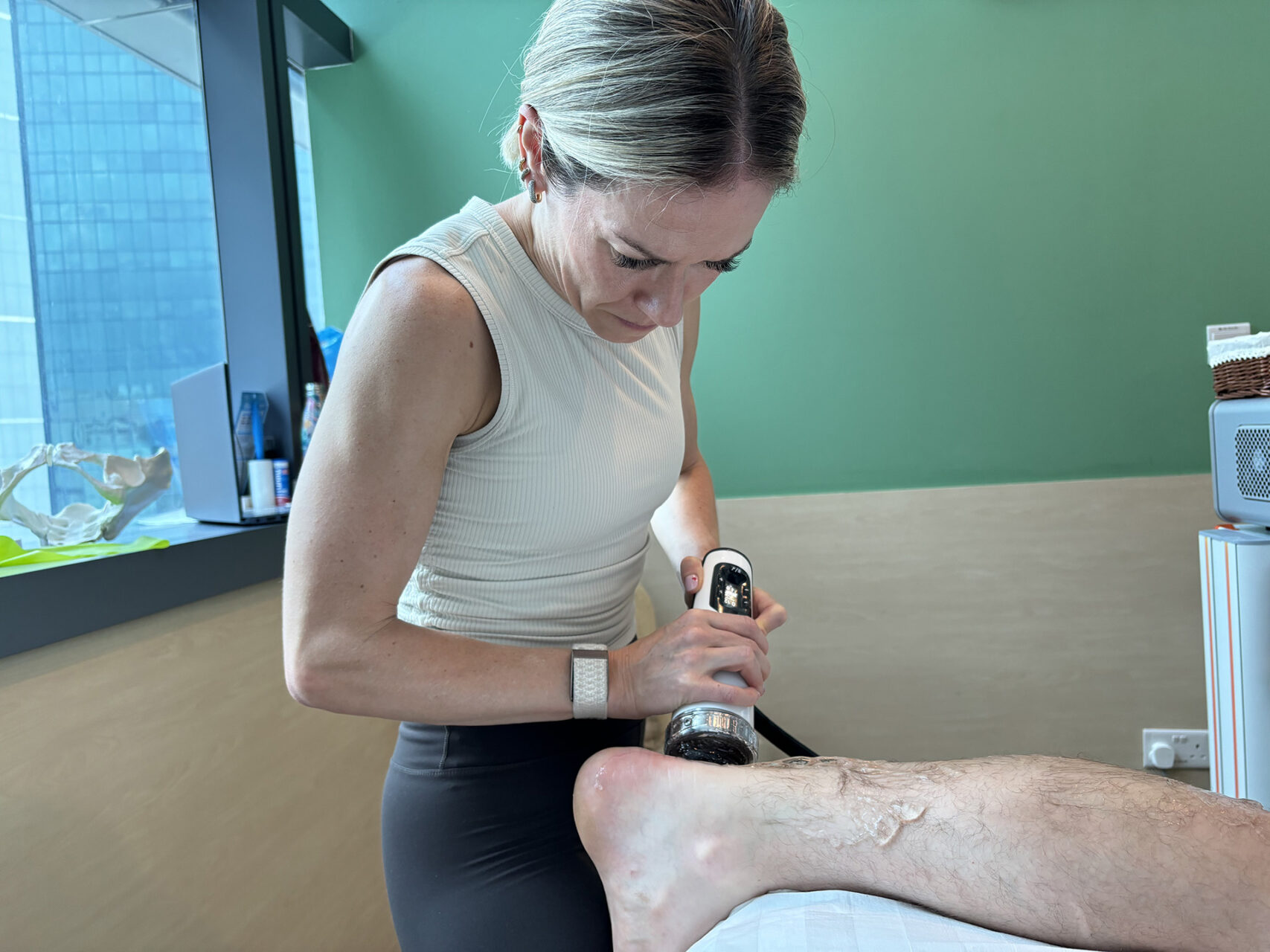
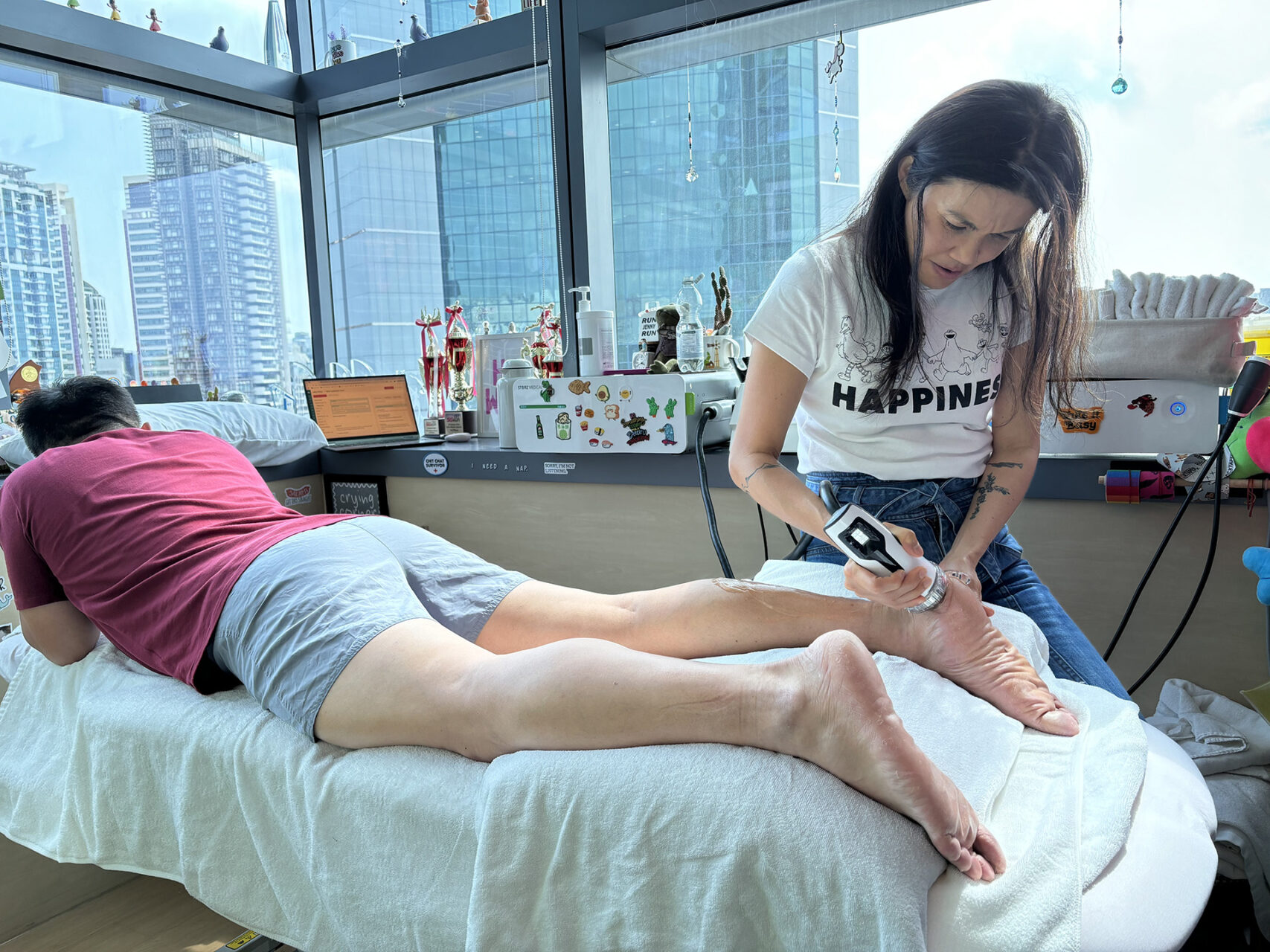
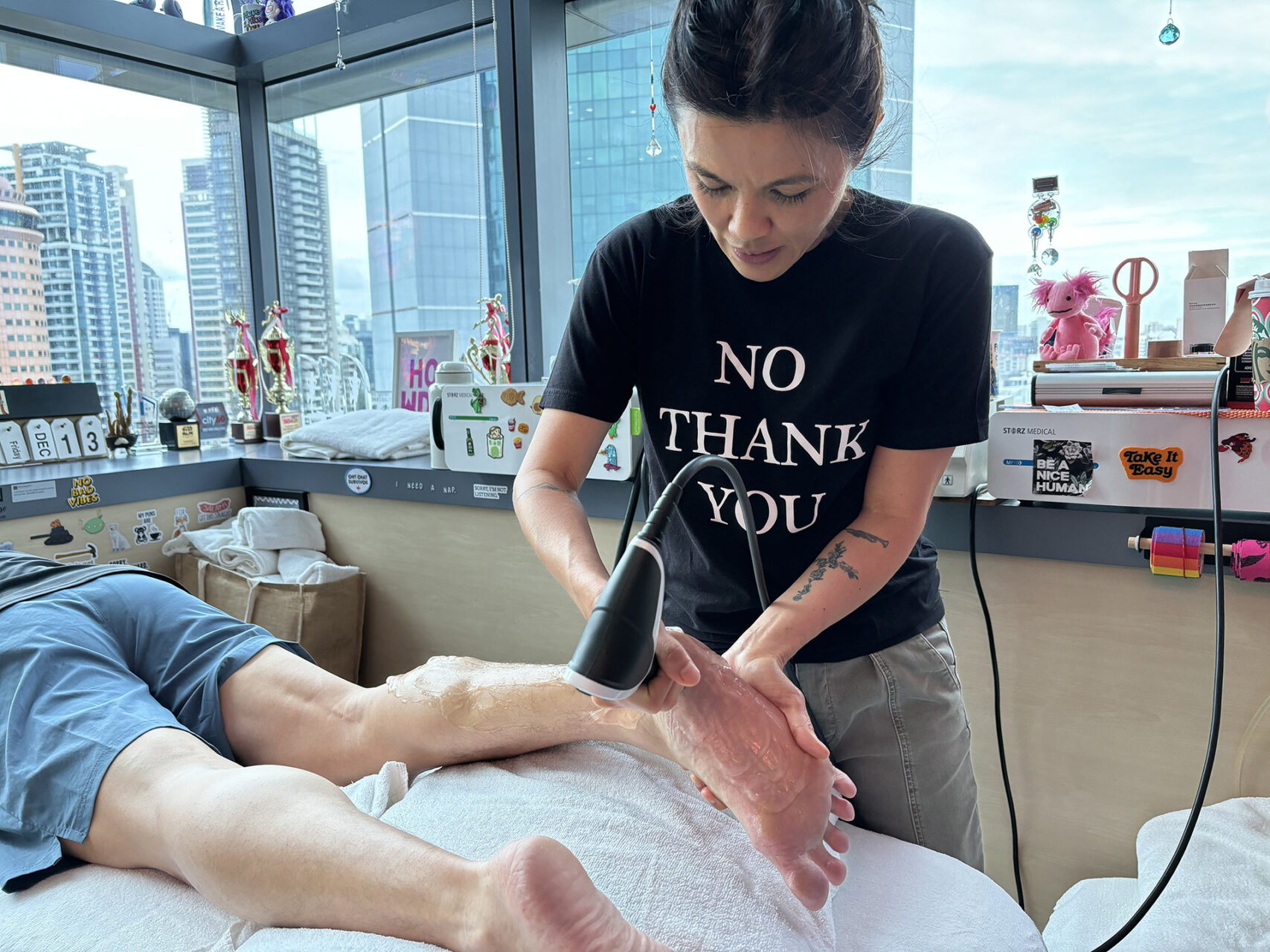
More severe cases of heel bursitis sometimes require additional medical treatment. In selected cases, Shockwave Therapy may be considered when heel bursitis symptoms persist despite conservative treatment. Corticosteroid injections may also be considered in selected cases, although they are used with caution around the Achilles region.
Surgery to remove the bursa is uncommon and is generally reserved for cases that do not improve after many months of appropriate conservative treatment.
How Does Physiotherapy Help?
Physiotherapy is one of the most effective ways to treat heel bursitis by reducing forces that continue to irritate the heel and by improving how the ankle and lower limb handle loads. This is important because cases of heel bursitis are often not caused by a single issue and require a multifaceted intervention strategy.
A stiff calf, limited ankle dorsiflexion, weak calf endurance, altered walking mechanics, and poor shoe choices can all combine to increase pressure at the back of the heel. When tight muscles around the heel are contributing to the problem, manual therapy and stretching can help improve flexibility.
Prescribed Exercises
A good heel bursitis rehabilitation plan usually begins with gentle movement and symptom control. Prescribed exercises often include calf stretching exercises, toe-to-wall mobility work, ankle range-of-motion drills, and gentle strengthening exercises, all of which do not directly aggravate the calcaneal bursa. As the heel settles, rehabilitation can progress to calf raises, balance work, and a gradual return to walking, running, or sport-specific loading. The goal is not just to quiet the calcaneal bursa, but to make the heel more tolerant of daily life again.
Manual Therapy
Soft-tissue treatment for the calf muscles and the surrounding lower-leg muscles may reduce excessive pull and stiffness in the Achilles tendon region. When calf muscle tightness and painful trigger points contribute to the problem, Dry Needling may be used as an adjunct to reduce muscle guarding and facilitate exercise progression.
Adjunct Modalities
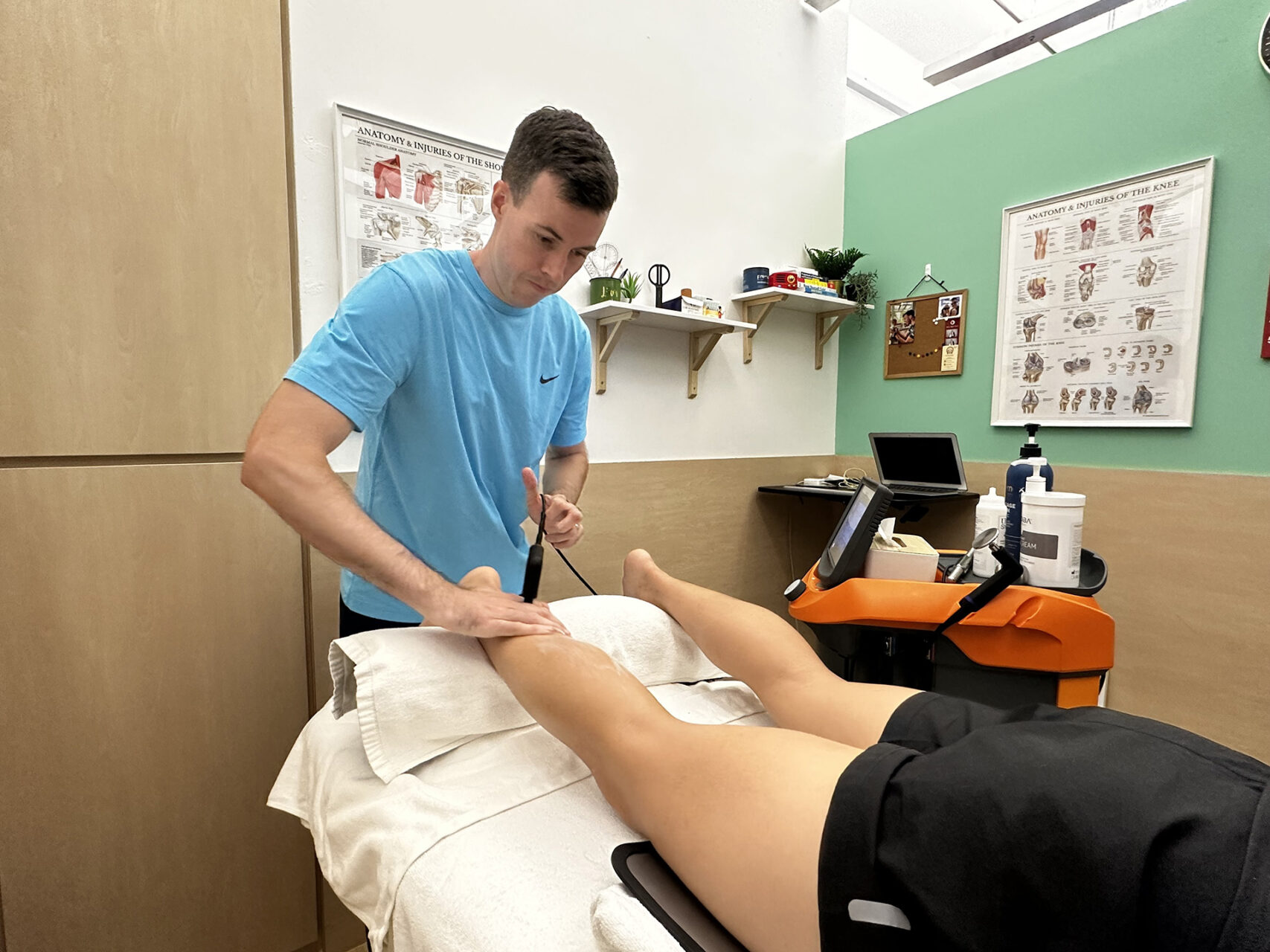
INDIBA® may also be used in selected cases as part of a broader rehabilitation plan. Its role is usually supportive rather than standalone, aimed at reducing pain and swelling and promoting tissue recovery so that movement and exercise can progress more comfortably.
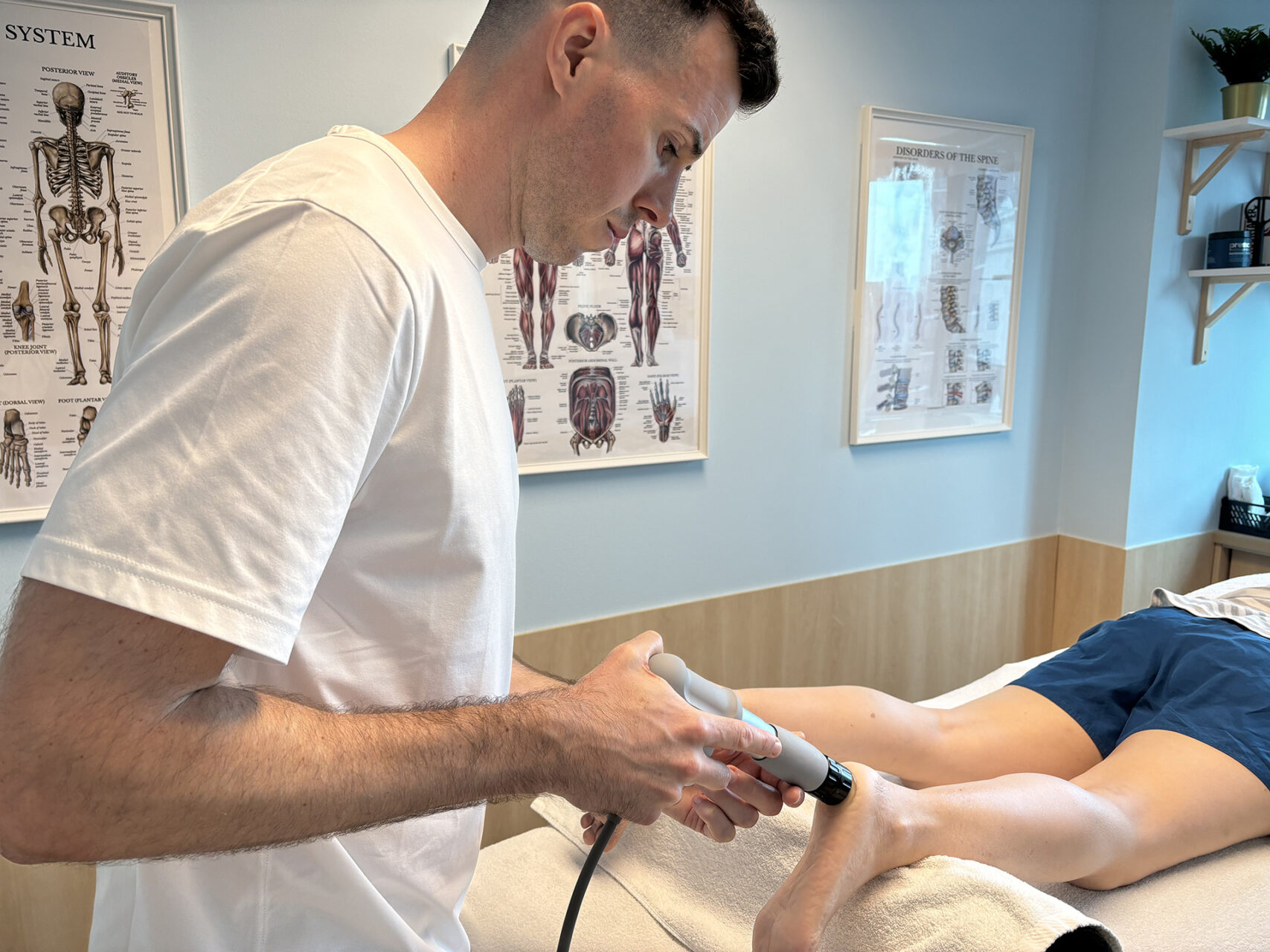
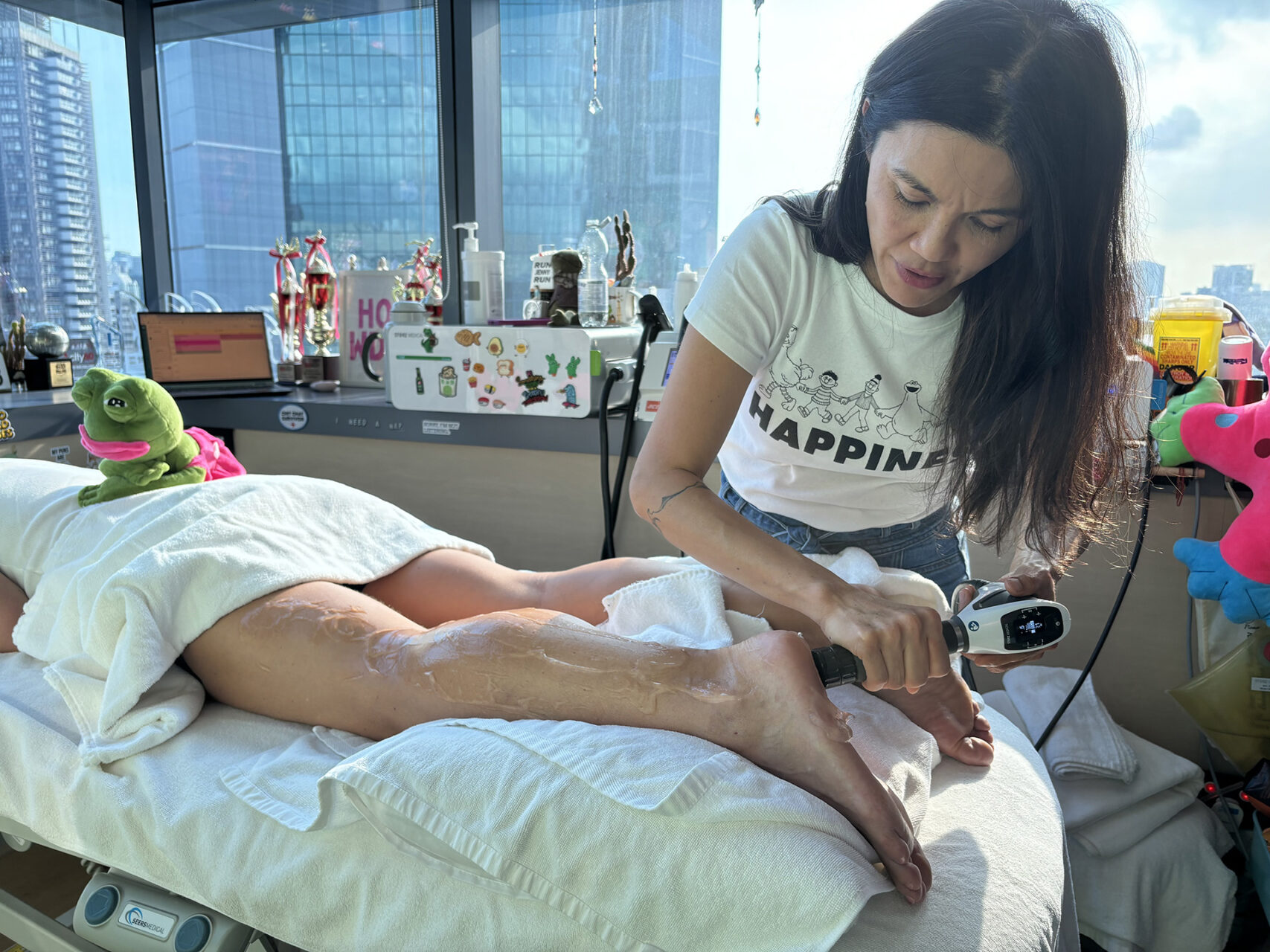
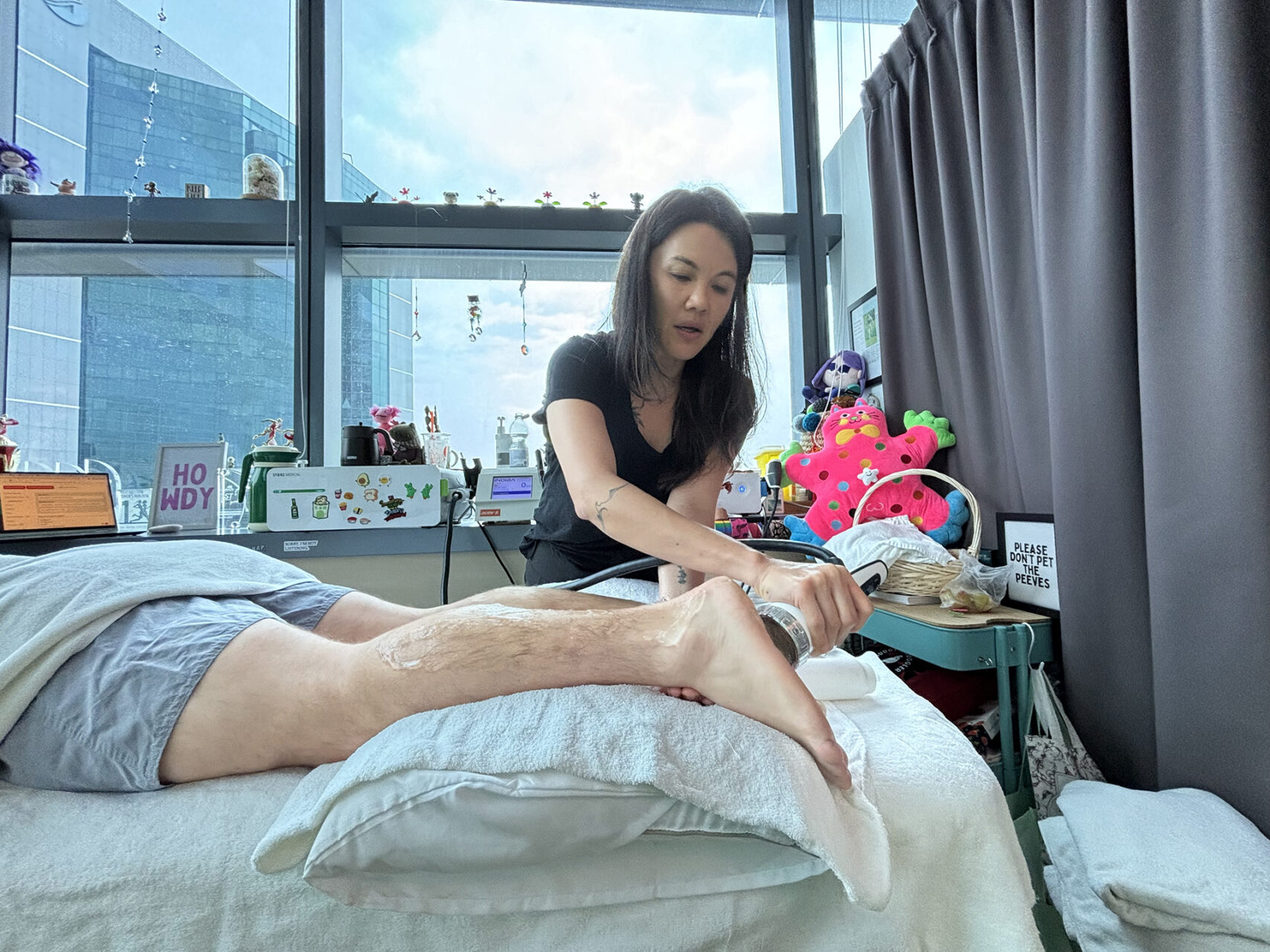
Shockwave Therapy, when combined with load management and strengthening exercises, can help reduce heel bursitis pain in persistent cases that do not improve after other treatments have been tried. In patients whose heel bursitis symptoms persist despite initial care, some clinics also use Focused Shockwave Therapy or EMTT as adjunct treatments to help reduce the pain sensitivity and support tissue recovery while footwear changes and strengthening exercises continue.
How Long Does Recovery Take?
Many patients with heel bursitis start to feel better within a few weeks if the main source of friction is removed and the heel is protected. Importantly, the healing process is often gradual rather than linear, and more stubborn heel bursitis cases can take longer to heal, especially when the condition has been present for months, the footwear issue has not been corrected, or there is a deeper contributing problem such as Achilles tendinopathy or a Haglund deformity. In more severe or persistent cases, recovery can stretch into several months. This is why early diagnosis and treatment are necessary.
As inflammation settles and bursitis symptoms improve, activity can gradually increase. A calcaneal bursa that is inflamed from rubbing will usually not heal if you keep compressing it with the same shoes or loading it with the same activity. In practice, many patients do better once they understand that heel pain relief and heel load management need to go hand in hand.
Warming up before exercise, avoiding sudden spikes in training loads, and paying attention to early heel pain can help prevent a minor issue from becoming prolonged. If heel bursitis keeps flaring up in the same area, it is usually a sign that something in the loading pattern, footwear, or body mechanics still needs attention. Reducing running distance when heel bursitis symptoms first appear is often the most effective way to prevent a minor problem from becoming chronic.
What Happens if Subcutaneous Calcaneal Bursitis Is Ignored?
Untreated heel bursitis can become more persistent and interfere with walking, exercise, and even a tolerance of footwear. As pain changes the way you walk, it can also place extra strain on the calf muscles, Achilles tendon, knee, hip, or lower back. Heel bursitis that goes unaddressed may begin as a minor irritation but can gradually become a broader issue if it continues long enough.
It is also important not to neglect an infection. Fever, chills, worsening redness, increasing warmth, or rapidly escalating pain are warning signs that need medical review rather than routine self-care. That is especially true if the skin is broken or if symptoms are worsening rather than improving. See a medical specialist as soon as possible if these apply to you.
How HelloPhysio Can Help
If a painful heel is making walking, exercise, or even wearing shoes uncomfortable, HelloPhysio can help. A clear assessment can determine whether heel bursitis or another structure is the main source of heel pain, what is keeping it irritated, and which type of intervention strategy is most likely to help it heal. With the right plan, most patients can relieve heel bursitis pain, restore function, and return to daily activities.