
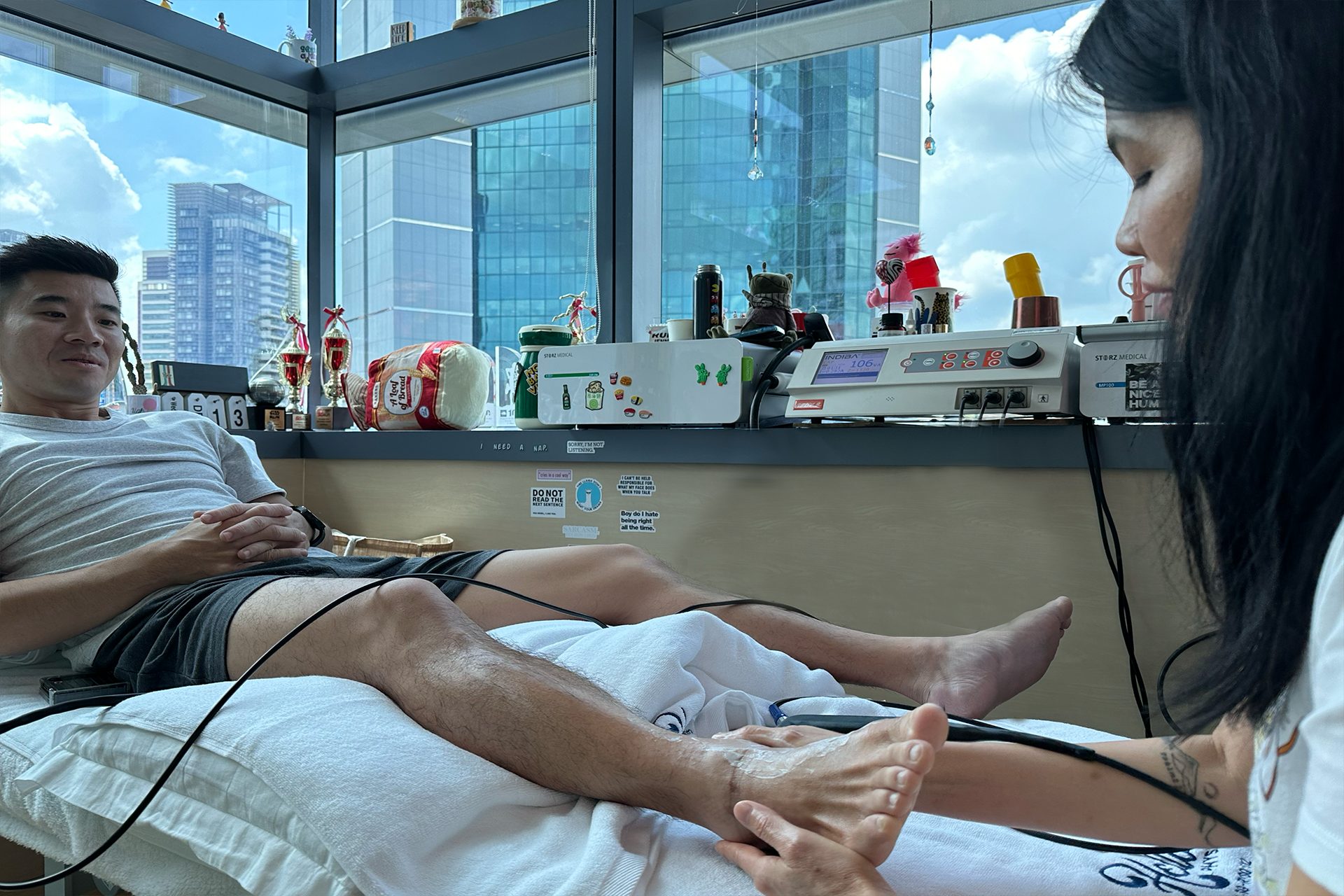
Step into the world of ankle health, where every athlete and active individual encounters a pivotal moment. More than just a joint, your ankle is a marvel of engineering where the shin, calf, and talus bones unite. It’s the central hub of your movement, equipped with a complex network of cartilage, muscles, nerves, blood vessels, and crucial ligaments.
For athletes and active individuals alike, understanding the ankle’s vulnerabilities and strengths is key to peak performance and resilience. In sports and daily activities, the ankle is frequently put to the test, making it susceptible to sprains.
This article delves into the different types of ankle sprains, each with its own story and recovery journey. We’re not just talking about injuries here; we’re uncovering the path to overcoming them. Discover the secrets to treating ankle sprains and fortifying this essential joint against future challenges.
Whether you’re an athlete aiming for the next big game or someone enjoying an active lifestyle, this guide is your ally in understanding, protecting, and enhancing the health of your ankles. Get ready to explore effective strategies to keep you moving forward, stronger and more confident in your every step.
1. High Ankle Sprain (Syndesmotic Sprain)
A high ankle sprain, or syndesmotic sprain, is a specific type of ankle injury affecting the ligaments above the ankle joint, particularly the syndesmotic ligaments that connect the tibia and fibula. Unlike typical ankle sprains, which involve the ligaments lower in the ankle, a high ankle sprain occurs higher up and can range from a simple stretch to a complete tear of these ligaments.

This injury is commonly caused by a sudden, forceful twisting or rotational movement of the foot, often seen in activities with quick direction changes or impacts, such as in football. The primary symptom of a high ankle sprain is pain in the region above the ankle, especially during weight-bearing activities such as walking or climbing stairs. Accompanying symptoms may include swelling and bruising.
In treating high ankle sprains at our clinic, we recognize the unique challenges this injury presents. It’s a more complex condition than typical ankle sprains, affecting the ligaments above the ankle and often stemming from intense sports involving sudden foot twists.
Recovery from a high ankle sprain usually takes 6-8 weeks, depending on the severity of the injury. Our treatment approach involves immobilization through methods like casts or walking boots and a tailored physiotherapy program. This program is crucial for restoring mobility and strength, gradually easing you back into regular activities and preventing future recurrences.
2. Inversion Ankle Sprain
Anterior talofibular ligament (ATFL) or inversion ankle sprain is common among athletes and active individuals. This ligament in your ankle plays a crucial role in maintaining stability. It’s particularly vulnerable to injury, often when the ankle twists unexpectedly – a common occurrence in sports or on uneven terrain.

If you’ve had such a mishap, the first thing you’ll likely notice is a pain in your ankle, a tell-tale sign of a sprain. Our approach begins with the PEACE and LOVE method: protecting your ankle from further injury, elevating it to reduce swelling, and performing gentle movements once ready. This immediate care is critical in setting the stage for a successful recovery.
As symptoms improve, we encourage a gradual return to activity – this is where our expertise shines. We guide you in applying the right load to stimulate healing without overdoing it. Usually, gentle exercises within a week or so can help rebuild and strengthen the affected area.
In some cases, to fully understand your injury, we may recommend scans. This ensures a comprehensive understanding of your ankle’s condition, allowing us to tailor your recovery plan perfectly.
The treatment for inversion ankle sprains varies from simple, supportive measures to more structured support, depending on your ankle’s needs. And remember, after recovery, strengthening and maintaining your foot’s flexibility are key to preventing reinjury. Our team is committed to helping you heal and empowering you with the knowledge and skills to keep your ankles strong and healthy.
3. Eversion Ankle Sprain
An eversion ankle sprain, though less common than its counterpart, the inversion sprain, occurs when the foot twists outward. This movement strains the deltoid ligament on the inner side of the ankle. As a robust ligament, the deltoid is less prone to injury, which makes this type of sprain rare.

When such a sprain occurs, often due to missteps in dynamic sports or on uneven terrain, the inner ankle can experience pain, swelling, or bruising. Immediate care with the classic RICE (rest, ice, compression, and elevation) approach is vital for initiating the healing process.
In cases of severe pain or concern beyond a sprain, visiting a physiotherapist is wise to rule out additional injuries, such as fractures. Recovery from an eversion sprain varies, and it’s important not to rush back into full activity until you can move and bear weight without pain.
4. Recurrent/Chronic Ankle Sprain
Recurrent or chronic ankle sprains are a common challenge that affects athletes and anyone leading an active lifestyle. Given how much we rely on our feet daily, it’s understandable that they face a higher risk of injury. Particularly after an initial sprain, ankle ligaments can weaken, making them more susceptible to further injury. This risk escalates if the ligament has previously been torn.
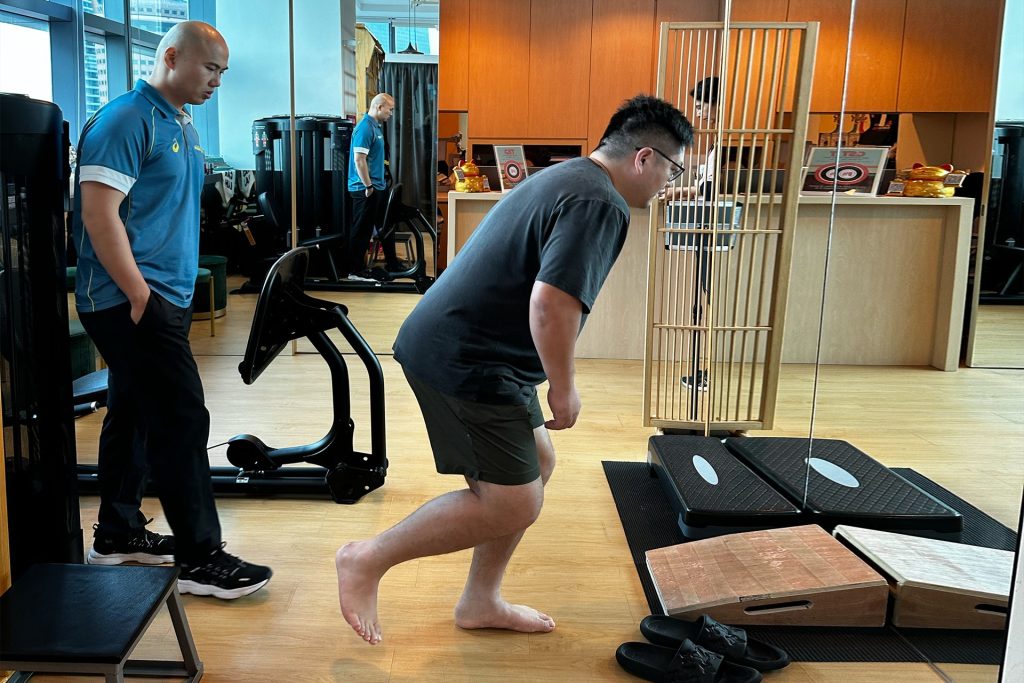
A well-crafted treatment and recovery plan is essential to combat the recurrence of ankle sprains. Such a plan should include targeted exercises to increase strength and enhance mobility, tailored to your injury. Under the guidance of our physiotherapists, these exercises are designed to gradually and effectively fortify your ankle, helping to prevent future injuries.
Rehabilitation is a journey that requires patience and commitment. Rushing through this process impedes proper healing and could lead to more significant setbacks. Our clinic focuses on providing you with a comprehensive, personalized recovery plan, ensuring a sustainable return to full mobility and strength.
Beyond an Ankle Sprain, Physiotherapy for Proper Healing
At HelloPhysio, we recognize the unique nature of each ankle injury and the importance of a tailored approach to treatment and recovery. Ankle sprains, while common, vary significantly, necessitating personalized care. Our experienced physiotherapists are adept at accurately assessing the severity of your injury and developing a treatment plan tailored to you. This plan is not static; it’s continuously adapted to meet your recovery needs and ensure optimal healing.
Our commitment extends beyond treating your current injury. We focus on a carefully guided recovery process, working closely with you at every step. This approach ensures that your ankle not only heals properly but is also prepared to meet the demands of your sport or daily activities. The goal is to facilitate a safe and effective return to your regular activities and empower you with the knowledge and exercises to prevent future ankle pain and injuries.
We aim to help you achieve long-term ankle health and performance. We strive to provide a comprehensive recovery process that addresses your immediate injury and equips you with the tools and understanding needed to maintain your ankle’s health and resilience in the long run.