
What Is Post-Traumatic Ankle Arthritis?
The ankle joint is formed by three bones, the tibia, fibula, and talus, and is covered with smooth cartilage that reduces friction as they move. When trauma damages this cartilage, changes the joint’s shape, or leaves it unstable, the joint may no longer load evenly. Over time, this can lead to pain, inflammation, and gradual joint wear.
Post-traumatic ankle arthritis develops after an ankle injury, such as a fracture, dislocation, or repeated ligament damage. It is the most common type of traumatic arthritis affecting the foot and ankle.
Post-traumatic arthritis can affect younger people and more active adults. It may develop months after a serious injury, or develop years later when the joint becomes less tolerant of walking, running, stairs, or uneven ground. Unlike primary ankle osteoarthritis, which develops with age in older people, or inflammatory arthritis such as rheumatoid arthritis, post-traumatic osteoarthritis begins after a specific injury to the bone and cartilage.
Ankle Injuries Lead to Arthritis
An ankle injury can lead to ankle arthritis when it disrupts alignment or creates instability, increasing stress on the joint.
A healthy joint distributes the load across its surface. After a trauma, that balance can change.
- A fracture involving the joint surface, including the heel bone or talus, may leave small irregularities.
- A severe sprain may damage stabilizing ligaments.
- A dislocation can injure surrounding soft tissue.
Even when an injury appears healed, it may move differently and place more pressure on one part of the joint. This uneven loading is a key reason post-traumatic arthritis develops. The joint may stay inflamed, cartilage may thin, and the bone beneath it may become less able to absorb shock.

Symptoms
Post-traumatic arthritis usually causes pain, inflammation, reduced range of motion, and difficulty bearing weight. Patients who experience symptoms such as joint difficulty with stairs or prolonged standing may be in the early stages of post-traumatic arthritis.
Pain often starts during activity and improves with rest. As the condition progresses, symptoms may appear during shorter walks, on stairs or slopes, or during prolonged standing. Some notice a fluid build-up after activity. Others feel a deep ache, a catching or grinding sensation, or a sense that the joint no longer moves smoothly.
Symptoms can fluctuate. They may feel manageable one day, then stiff and sore after more walking, training, or standing. This pattern is common when the joint is being asked to tolerate more load than it can handle.
Who Is at Risk?
People with a history of ankle fracture, dislocation, recurrent sprains, ligament tears, previous surgery, or chronic instability have a higher risk of post-traumatic arthritis. The condition is common in active adults, runners, dancers, athletes, and those whose work requires long periods on their feet. It can also affect anyone who had an ankle injury years earlier, even if the injury appeared to heal at the time.
In Singapore, post-traumatic arthritis is often seen after fractures, neglected sprains, or instability that are not fully rehabilitated. Flat feet, high arches, repeated ankle rolling, and poor rehabilitation can also increase stress on the joint over time. A physiotherapist can assess patients who continue to experience joint pain, stiffness, swelling, or difficulty walking and performing activities beyond the expected recovery period after an injury.

Diagnosis
Post-traumatic arthritis is diagnosed through medical history, physical examination, and imaging. Your clinician will ask about previous fractures, sprains, surgery, sports history, work demands, and when your symptoms began. The examination usually assesses inflammation, tenderness, range of motion, strength, gait, alignment, and joint stability.
Weight-bearing X-rays are commonly used because they show how the joint looks under load. They may reveal joint-space narrowing, bone spurs, deformity, or changes in alignment. MRI scanning can help assess cartilage, bone and soft tissue. CT scans may be useful when the old fracture position or surgical planning needs more detail.
A good diagnosis does more than confirm arthritis. It identifies what is driving the symptoms, such as limitations, weakness, instability, poor balance, altered walking mechanics, or cartilage loss.
Post-Traumatic Arthritis Ankle Treatment
Post-traumatic arthritis ankle treatment usually begins with conservative measures, including anti-inflammatory medications such as ibuprofen to relieve the pain, and may progress to surgical treatment in severe cases, to reduce the pain, improve movement, and lower the stress through the joint.
Your treatment may include activity modification, supportive footwear, bracing, physiotherapy, pain-relieving medication when appropriate, and fluid control. Orthoses may help improve your foot position and distribute the load more evenly. A brace can reduce painful motion and help your ankle feel more stable during walking or longer days on the feet.
This approach is often the first step when the joint still has usable motion, and the symptoms are linked to limitations, weakness, inflammation, or instability. A structured post-traumatic arthritis ankle treatment plan can often improve function without rushing to injections or surgery.
Physiotherapy
Physiotherapy helps post-traumatic arthritis by improving joint mobility, strength, balance, walking mechanics, and load tolerance. After an ankle injury, many people lose calf strength, joint mobility and proprioception. Proprioception is the body’s ability to sense joint position. When this is reduced, the ankle may feel unsteady on uneven ground or during sport.
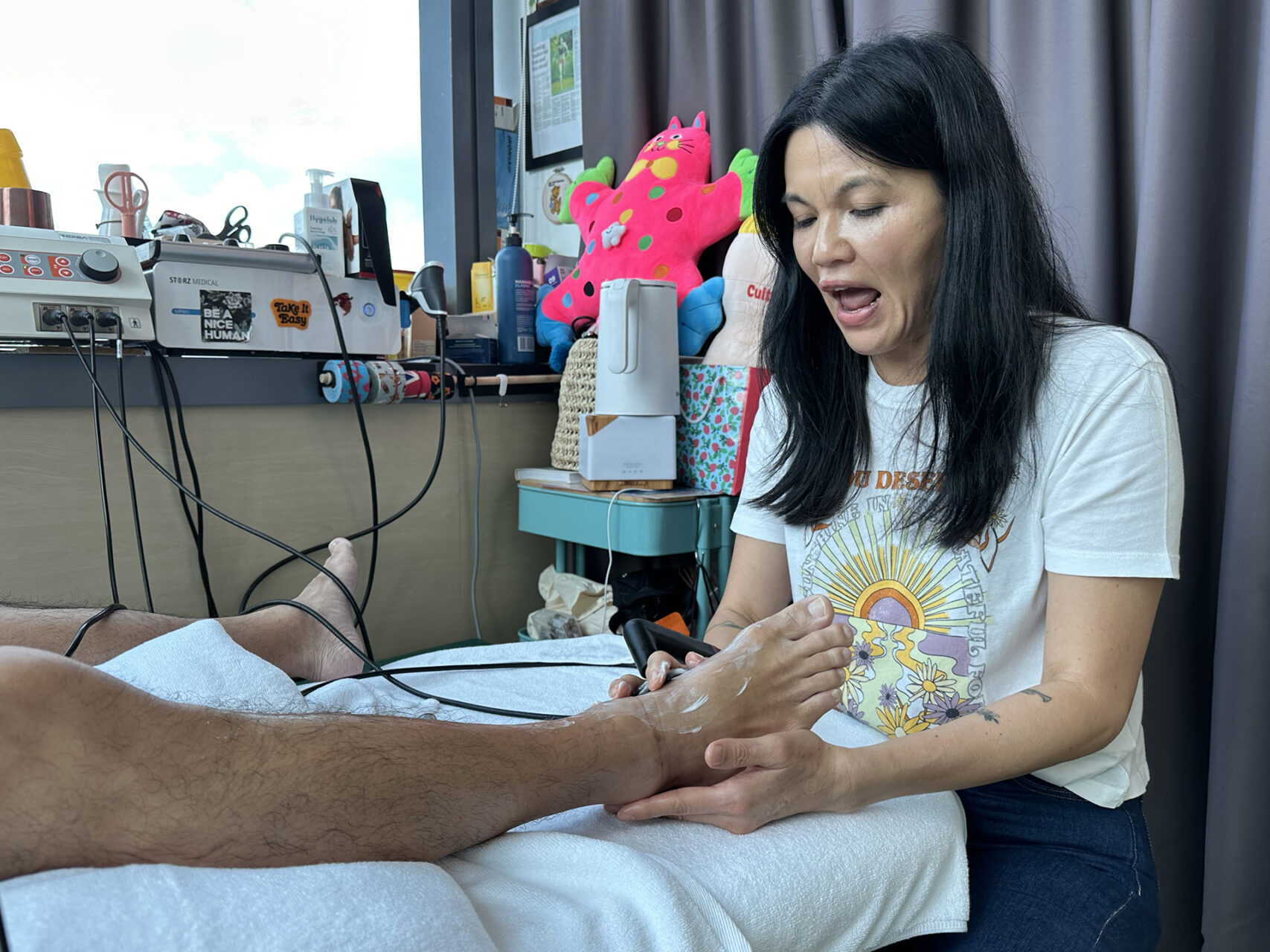
Foot and ankle rehabilitation exercises focus on improving bone strength, reducing joint stress, and building tolerance for daily activities. Physiotherapy may include manual therapy to improve joint and soft-tissue mobility, gait retraining, strengthening, balance work, and education on pacing activity. If recurrent sprains or instability contributed to the arthritis, treatment will also focus on restoring control around the joint.
Exercises for Post-Traumatic Ankle Arthritis
Prescribed at-home exercises are central to progress. Exercises for post-traumatic ankle arthritis should improve mobility, strength, balance, and walking tolerance without repeatedly aggravating the joint.
Early exercises often focus on gentle movement, such as pumps, circles, calf stretching, and controlled weight shifts. As symptoms settle, strengthening becomes more important. Calf raises, seated heel raises, band-resisted movements, step work, and hip strengthening can all help reduce stress on the ankle joint.
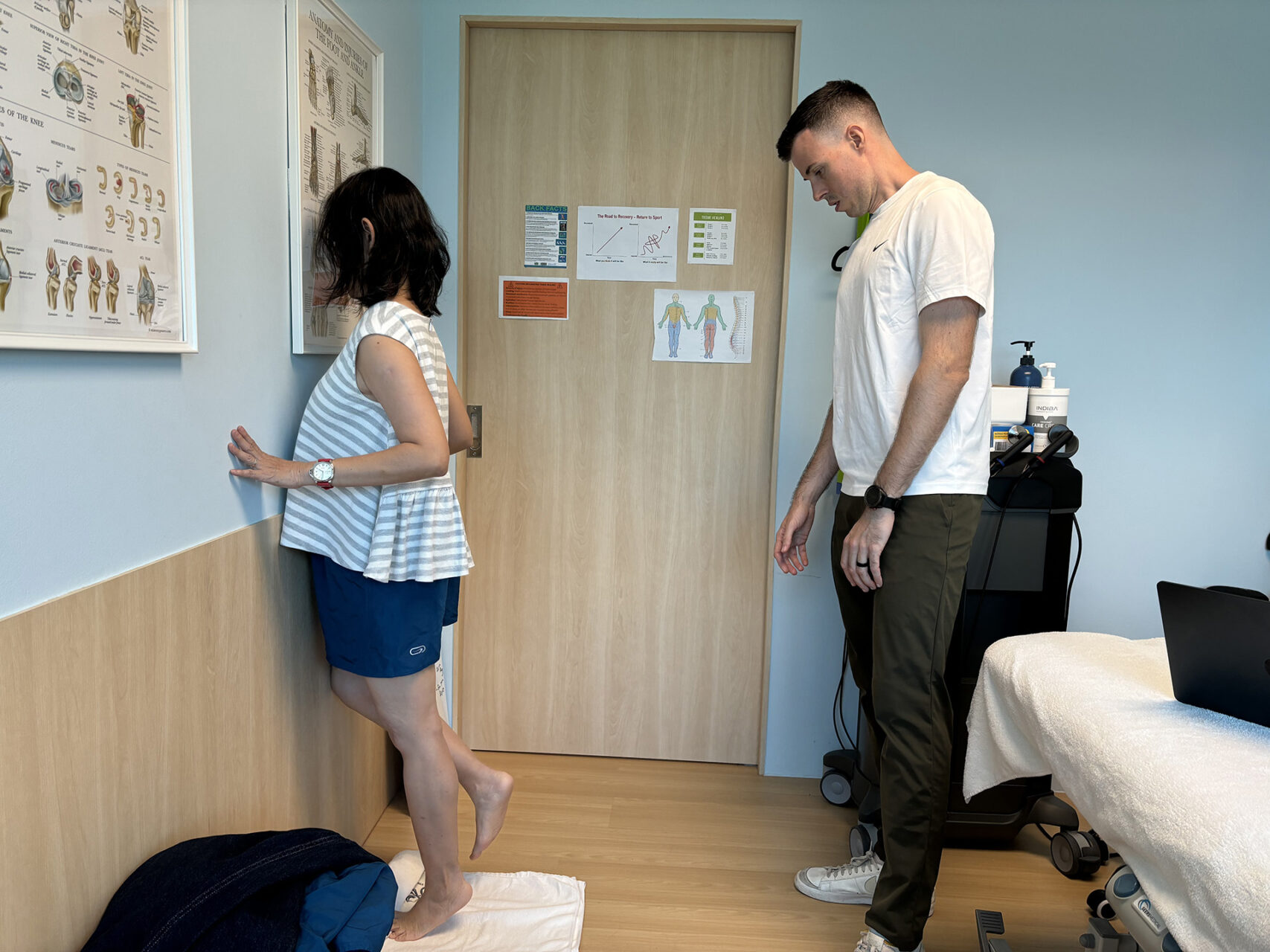
Balance work is also important, especially if arthritis follows ligament injury. Simple single-leg balance, tandem standing, and controlled stepping drills can help improve stability. For runners and athletes, later rehabilitation may include graded impact, hopping, landing, and return-to-running drills when appropriate.
Exercises are progressed gradually so the body builds tolerance without repeated activity flare-ups.
Adjunctive Treatments
Adjunctive treatments may help manage pain and mobility limitations, but they do not reverse joint changes or replace rehabilitation.
INDIBA® may be used when pain or stiffness limits movement and exercise tolerance. Its role is supportive, helping some patients move more comfortably while they work on strength, mobility and load control.
Dry Needling may be considered if the calf, shin, or peroneal muscle guarding is adding to pain or movement restriction. It does not treat the arthritic joint surface itself, but it may help reduce muscle tension in the surrounding area.
Injections
Injections or surgery may be considered when pain, swelling and loss of function continue despite appropriate conservative care. Cortisone injections may help temporarily reduce inflammation, especially when it is preventing progress in walking or rehabilitation. They are not a cure, but they may create a window for better movement and exercise.
Surgery
Surgery is usually reserved for more severe cases. Patients with severe post-traumatic arthritis may benefit from surgical treatment when other treatments have not provided adequate relief. Options to treat post-traumatic arthritis include an arthroscopy to remove loose tissue, realignment procedures, ankle fusion, or total ankle replacement. Surgical outcomes depend on disease severity, bone quality, and the patient’s overall health.

Prevention
Post-traumatic ankle arthritis cannot always be prevented, but the risk can be reduced by treating injuries properly and restoring strength and stability.
A severe ankle sprain or fracture should not be considered fully recovered just because pain has improved. It needs to regain mobility, calf strength, balance and confidence. If it remains restricted or unstable, it may continue to load unevenly.
For those already living with post-traumatic arthritis, prevention means reducing flare-ups and avoiding any unnecessary overload. Supportive shoes, appropriate orthoses, gradual training changes, low-impact conditioning, strengthening, and healthy body weight can all help manage daily stress more effectively.
How HelloPhysio Can Help
If ankle pain, swelling, or stiffness is affecting how you walk, train, work, or move through daily life, HelloPhysio can help. Our physiotherapists can assess the joint, identify what is driving your symptoms, and develop a clear post-traumatic arthritis ankle treatment plan. Contact HelloPhysio to book a consultation and move with better control.