
What Is Ankle Osteoarthritis?
Ankle osteoarthritis is a wear-and-tear of the ankle joint cartilage that leads to ankle pain, stiffness, swelling and loss of smooth movement. The main ankle joint involved is the talocrural joint (also called the tibiotalar joint or upper ankle joint), where the shin bone meets the talus. The subtalar joint, just below the talocrural joint, can also be involved in ankle osteoarthritis, sometimes referred to as ankle OA.
The ankle joint contains synovial fluid, which lubricates the ankle cartilage. As joint degeneration progresses, this protective system breaks down. When ankle cartilage becomes thinner or more damaged, the joint no longer glides as easily, and everyday weight-bearing movements such as walking, squatting, climbing stairs, or running can feel restricted and painful. Unlike the knee or hip, the ankle is less commonly affected by primary osteoarthritis, but when it is affected, it can cause pain just as limiting as in other major joints.
Ankle OA also tends to affect people at a younger age than osteoarthritis in many other joints. That is because a large share of ankle OA cases are classified as post-traumatic ankle arthritis, meaning they develop after old ankle fractures or severe ankle injuries, and not necessarily due to age. In broad terms, ankle OA is less often a simple age-related process and more often the long-term result of an ankle joint that has been injured and never quite loaded normally again.
Causes
The most common cause of ankle OA is a prior ankle injury, such as an ankle fracture that involves the joint surface, severe ankle sprains, ligament injuries, and long-standing ligament damage, which can change how force is transmitted through the ankle joint. This causes an uneven load across the ankle joint, accelerating cartilage wear. This, in turn, causes joint deterioration, cartilage loss and bone spurs. The joint capsule and surrounding soft tissues are also affected by this process.
This is one reason ankle OA causes are often traced back to an ankle injury that occurred years earlier, which in Singapore is sometimes due to sports, military training, or everyday office life on the city’s hard pavements.
Ankle OA is not just a problem for older people. It can affect anyone who has had an ankle injury, and, importantly, it can also affect other joints in the foot over time. Other ankle OA causes include secondary osteoarthritis from inflammatory arthritis, gout, infection, osteonecrosis, joint malalignment, and the repeated overload from poor mechanics. Excess weight and high-impact activity can also add stress to the ankle. A tight Achilles tendon can contribute to abnormal ankle loading and, subsequently, to cartilage wear. Neglected ankle fractures, severe ankle sprains and other ankle injuries, flat feet, valgus deformities, varus alignments, and high arches can all contribute to the abnormal loading and joint wear, which is why early injury management matters more than many people realize.
What Does Ankle Osteoarthritis Feel Like?
Ankle arthritis usually feels like deep ankle pain, stiffness, swelling and a reduced confidence in the ankle joint. Ankle pain often worsens with weight-bearing activities such as walking, climbing stairs or hills, standing for long periods, or carrying an extra load, such as a heavy backpack. In the early stages of ankle OA, symptoms are often intermittent.
The ankle joint may later feel stiff after rest, ache with activity, and stay sore longer afterwards. Bone spurs can cause additional pain and restricted motion. Some people notice crunching, clicking, or popping in the ankle joint. Others feel that the ankle no longer bends as far as it used to, or that it flares up after tasks that once felt routine.
A swollen ankle arthritis flare-up can be especially limiting. The ankle joint may look puffy, feel tight, and become hard to trust on uneven ground. Morning stiffness is common, though it is often short-lived in osteoarthritis compared with inflammatory arthritis. Over time, weak local muscles, a reduced range of motion, and a more cautious weight-bearing pattern can all develop around the painful ankle joint, affecting your overall confidence in movement.
Diagnosis
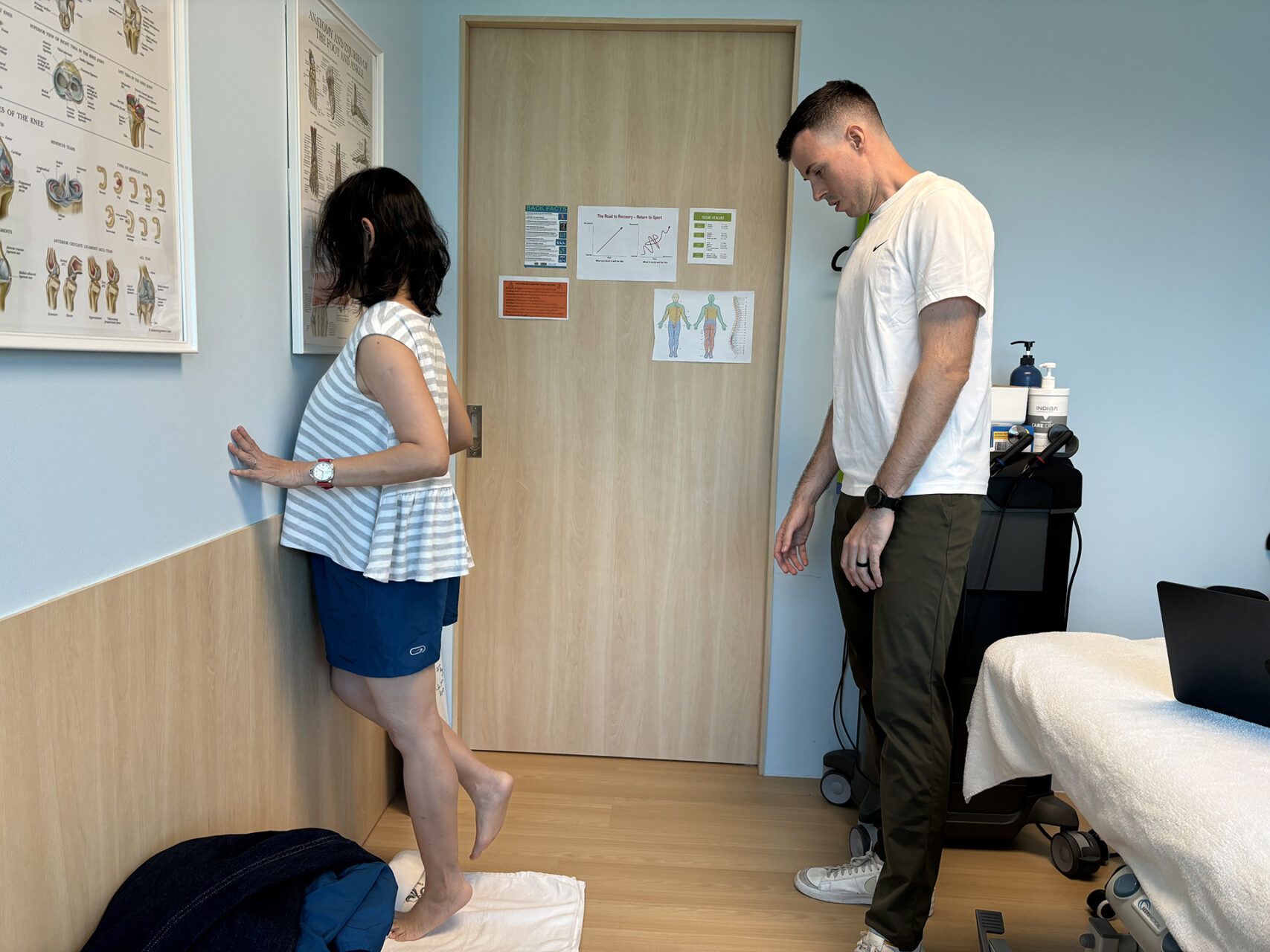
Clinical assessment of ankle OA begins with a detailed medical history and physical examination. A clinician will usually ask about prior sprains, ankle fractures, stiffness after rest, swelling, and which movements are the hardest. On examination, the ankle joint is checked for tenderness, warmth, range of motion, swelling, local weakness, gait changes, and signs of ankle instability or malalignment. They will also check for tenderness around the medial malleolus and lateral ankle. These details help separate ankle OA from tendon problems, gout flares, nerve pain, or lingering ligament injuries.
Imaging is then used to confirm the problem and understand its severity. X-rays often show joint-space narrowing, bone spurs, cysts, sclerosis or deformity, some of which are common findings in those with ankle OA. In the early stages of ankle OA, X-rays may appear near-normal despite significant symptoms. Magnetic Resonance Imaging (MRI) scans can be helpful when assessing cartilage or ligament damage in more detail, especially if symptoms seem worse than plain X-rays suggest. Imaging also helps guide treatment options for ankle OA, including rehabilitation, bracing, injections or even eventual surgical treatment.
Ankle Osteoarthritis Treatment
Ankle osteoarthritis treatment usually begins with conservative care. That means adjusting the load through the ankle joint, improving movement where possible, and reducing the pain response enough for the ankle to function more normally. Supportive footwear, rocker-sole shoes, shoe inserts, weight loss and weight management, low-impact exercise, and a structured physical therapy plan are common starting points towards managing ankle OA. For many, this combination is surprisingly effective, because the ankle is often irritated not just by cartilage loss but also by stiff calves, weak surrounding muscles, poor balance and residual instability. By addressing these other issues, the limiting effects of ankle OA can be greatly reduced.
Ankle Osteoarthritis Exercises
Ankle osteoarthritis exercises are among the most useful parts of treatment because they help maximize the current movement and strength of the ankle joint without invasive procedures. Moderate exercise is considered safe and helpful for ankle OA when done progressively. The aim is to improve the range of motion, build stronger muscles around the ankle joint, enhance balance and coordination, and reduce mechanical overload that causes ankle pain and worsens ankle symptoms.
Many patients are surprised that the right exercises can reduce pain and provide pain relief rather than provoke it. It may seem counterintuitive, but exercise is often a staple of ankle OA treatment.
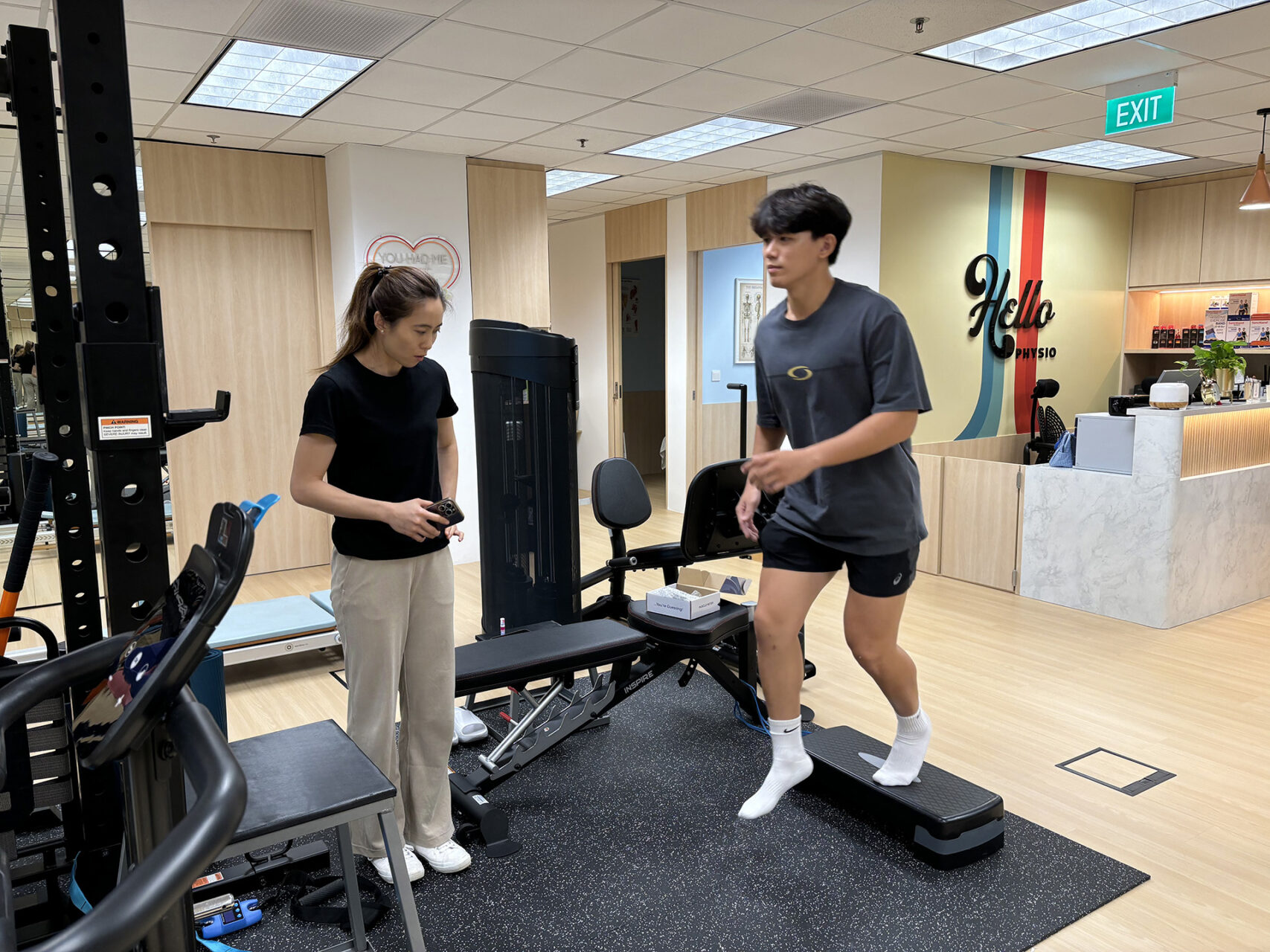
The most effective ankle OA exercises usually combine several elements. Strength work often targets the calf muscles, tibialis anterior, and peroneals, providing better support to the ankle joint during weight-bearing activities such as walking and climbing stairs. Mobility work may include gentle dorsiflexion and plantarflexion drills, as well as ankle inversion and eversion within a comfortable range. Balance and proprioceptive exercises help if the ankle feels unstable or if there is a history of recurrent ankle sprains. Functional work may include sit-to-stand drills, controlled step work with a return to the starting position between repetitions, and graded walking progressions.
At-home exercise matters because steady progress usually depends on repetition. A physiotherapist may prescribe calf stretching, supported heel raises, ankle circles, band-resisted ankle work, and balance drills on a stable surface. The upper ankle joint and the subtalar joint both benefit from this kind of structured mobility work. These ankle OA exercises will be tailored to each individual’s suitability rather than blindly copied from general fitness programs.
Following an online routine can cause more damage to your ankle if it is not appropriate for your ankle OA. This is why a physiotherapist is needed. The goal is not to force the ankle joint through sharp pain. It is to make the ankle stronger, less stiff, and better able to handle normal life. Another option is to do lower-impact sports such as cycling and swimming, to manage arthritis symptoms and reduce the stress on the ankle joint while remaining active.
Physical therapy also focuses on the area above and below the ankle joint, examining hip, calf and foot posture through walking patterns. Sometimes pain improves when the ankle moves a little better, but more often, lasting change comes when the whole lower leg and lower limb work better around a stiff ankle joint. This is why a good physical therapy and rehabilitation plan by a physiotherapist is not just about the ankle itself. It is also about how the person stands, walks, bears weight on one leg, climbs stairs, and returns to activity.
Ankle Support and Bracing
The right ankle support for osteoarthritis can make daily activities more comfortable, especially when the ankle joint feels weak, painful or unpredictable. Bracing does not reverse cartilage loss, but it can reduce motion that aggravates the ankle joint and provide stability. An ankle osteoarthritis brace is often most useful during longer walks, higher-load days, travel, or the early phase of rehab when symptoms are still irritable. It is not a permanent solution, but it can offer temporary relief on days which require more movement.
The best choice of an ankle osteoarthritis brace depends on the person. A lighter support may be enough for mild symptoms. A firmer brace may be better when the ankle pain and instability are more obvious. In either case, an ankle OA brace works best when combined with exercise, footwear advice and pacing, rather than used as an isolated fix. Good ankle support for osteoarthritis should make your movement easier, not become a permanent substitute for regaining strength and control in your ankle.
Injections
Ankle osteoarthritis injections are commonly used when pain remains limiting despite good conservative care. Corticosteroid injections may temporarily reduce inflammation and ankle pain, which can be especially helpful if swelling and irritability are preventing progress in walking or physical therapy.
The important point to note is that ankle OA injections are not a cure. They are best viewed as an adjunct that may create a window for better movement, better sleep, or more effective rehabilitation. They do not restore cartilage, but they can ease discomfort, making exercises and non-invasive care more effective. They are usually considered only after simpler conservative measures and treatments, such as exercise, footwear changes, and bracing, have proven insufficient.
Ankle Osteoarthritis Surgery
Ankle osteoarthritis surgery is usually considered only after good conservative care has failed to control the ankle pain or preserve joint function. Surgical treatment is considered when the ankle is causing significant limitations in walking, standing, sleep, or the quality of life, and imaging shows advanced joint damage consistent with the symptoms. The two main surgical interventions for end-stage disease are ankle fusion and total ankle replacement.
Ankle fusion removes motion at the ankle joint to relieve arthritis pain, while total ankle replacement aims to preserve motion while replacing the damaged joint surfaces. Ankle replacement surgery, which uses an ankle prosthesis to resurface the ankle joint, is considered for patients who want to maintain their range of motion. Other surgical interventions include ligament reconstruction for residual instability and keyhole surgery (an arthroscopy) for joint-preserving procedures in earlier-stage disease. Surgical techniques vary based on the extent of joint deterioration.
Both ankle fusion and ankle replacement can provide good outcomes when correctly indicated, but they suit different patients and goals. In Singapore, total ankle replacement is also available and has been used as a surgical treatment for end-stage ankle OA when nonsurgical treatment no longer works. Ankle osteoarthritis surgery is therefore not a single decision but a tailored one, based on the patient’s age, activity level, alignment, bone quality, goals, and the condition of nearby joints.
How HelloPhysio Can Help
If you are active, the goal of ankle OA management is not necessarily to stop everything you enjoy. It is about finding the level of movement your ankle can handle, and then building from there. That may mean more recovery between runs, flatter routes, better shoes, or more strength work around your preferred sport.
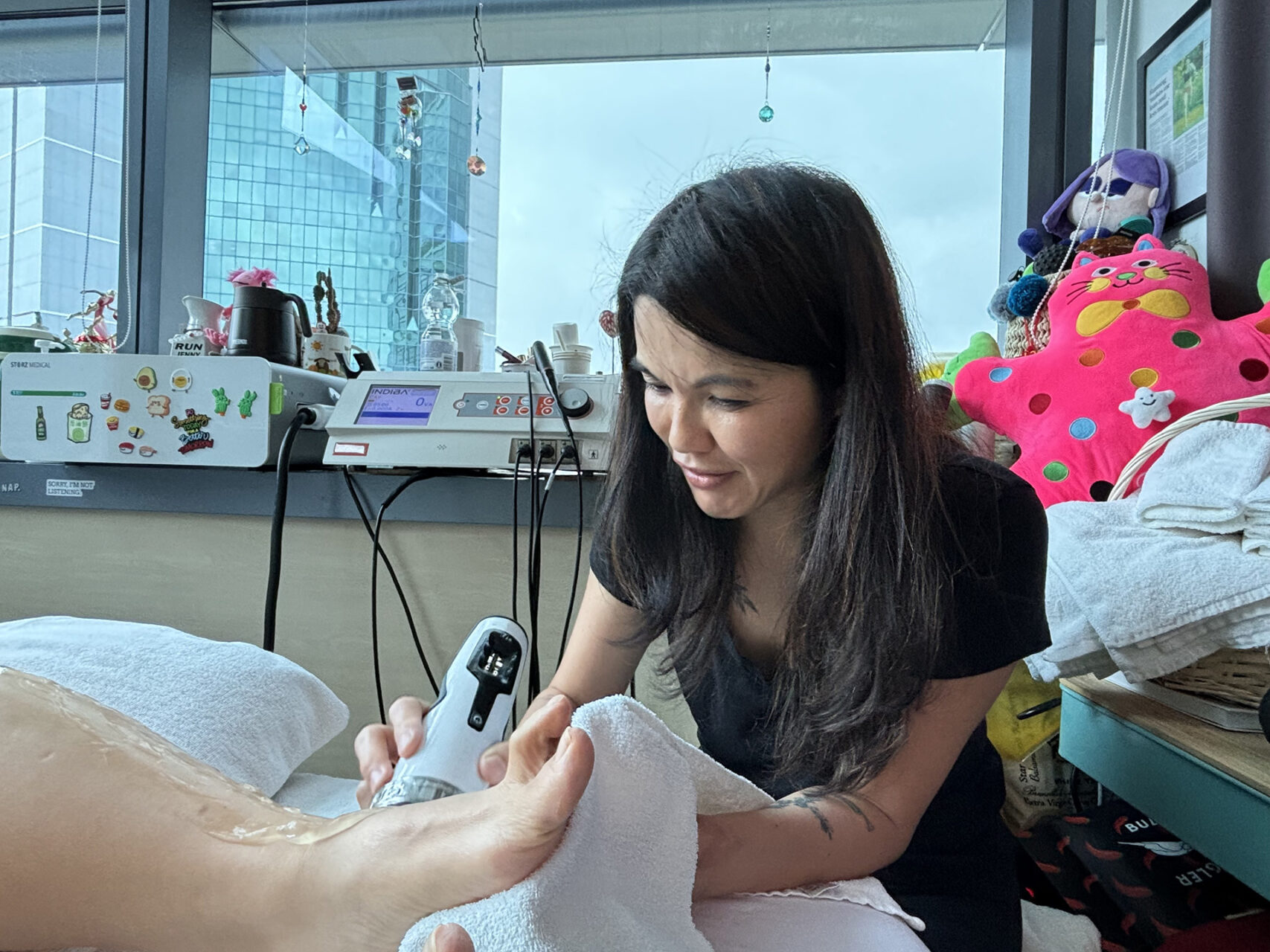
If your ankle problems are getting in the way of walking, training or daily life, HelloPhysio can help. A clear assessment, the right ankle OA exercises, appropriate bracing, and a plan that fits your stage of joint change can make living with arthritis and managing the condition feel much more manageable. Contact HelloPhysio to book a consultation and start moving with more comfort and control.