

|
Getting your Trinity Audio player ready...
|
About Lower Back Pain from Running
Lower back pain from running is discomfort in the lumbar spine or surrounding muscles that develops during or after a run. Pain may develop when training demands exceed the body’s current strength or endurance.
The lower back and its surrounding muscles stabilize the trunk and pelvis and transfer force between the upper body and legs. When the abdominal, core, back, gluteal, and hip muscles work together effectively, the spine can usually tolerate the repeated load from running.
Reduced hip mobility, muscle fatigue, muscle imbalances, previous injuries, poor recoveries, and changes in running form can increase extra strain on certain muscles. Some runners notice a dull ache after longer distances, while others feel stiffness or sharper pain during a run.
Lower back pain when running does not always mean that the spine is damaged. It often reflects an overload, fatigue, or a problem with how force is being managed through the back, pelvis and the legs.
Does Running Cause Lower Back Pain?
Running may trigger pain without being the underlying problem. Running does not usually cause lower back pain on its own, but it can expose underlying weaknesses, stiffness, or reduced load tolerances.
Running places repeated force through the spine, pelvis, hips and legs. This load can be beneficial when there is time to adapt. Problems are more likely after sudden increases in mileage, speed, hills or training frequency.
Repetitive impact on hard surfaces may also strain the lower back, particularly when a runner is fatigued, overstrides, or lacks adequate hip and trunk control. The surface is rarely the only cause, but it can add to the overall training load.
What Causes Lower Back Pain during Running?
Lower back pain during running is commonly linked to muscle fatigues, training errors, poor trunk control, limited hip mobility, or an irritation within the spine or sacroiliac joint.
- The back muscles beside the spine help hold the trunk steady during each step. If they fatigue, the lower back may become stiff or painful. This often happens after increasing mileage, adding hill sessions, returning after a break, or running faster than usual.
- Weak glutes, core weakness, and reduced core endurance may affect your pelvic and spinal stability. The lower back and its core muscles may then work harder to keep the body upright and stable. Excessive pelvic drops, trunk rotations, or arching may become more noticeable as the runner tires.
- Tight hip flexors can pull the pelvis forward into an anterior pelvic tilt. This position increases the curve of the lower back in some runners and may place greater load on the lumbar muscles and facet joints, leading to pain. Prolonged sitting can contribute to tight muscles and stiffness before a run.
- Other underlying causes include muscle strain, disc irritation, a herniated disc, sciatica affecting the sciatic nerve, facet joint irritation, lumbar joint pain, and age-related changes. Sacroiliac joint pain and facet joint pain may account for 15% to 30% of cases of chronic low back pain.

Why Does Lower Back Pain Happen after Running?
A runner may feel comfortable early in the run but develop pain as the lumbar muscles, glutes, and core abdominal muscles become tired. Lower back pain after running often develops when the muscles and joints become overloaded during the session and tighten afterwards. Symptoms may become more noticeable when sitting, bending, or getting up from a chair later in the day.
Lower back pain after running can also happen when the stride is too long. Overstriding places the foot farther in front of the body and can increase braking forces with each landing. Shorter strides generally allow the legs to absorb impact more effectively and may reduce stress through the hips and lower back.
Changes in terrain, pace, or footwear can also contribute to lower back pain. Hills increase the demand on the hips and trunk, while uneven ground requires more pelvic control. Pain that settles within a day may reflect temporary overload. Recurrent pain or symptoms that spread into the leg should be assessed.
Why Does Long-Distance Running Affect the Lower Back?
Lower back pain after long-distance running often develops because fatigue alters posture, stride length and pelvic control. As distances increase, runners may:
- Arch their lower back
- Rotate their trunk more
- Lose control of the pelvis
- Land the foot farther ahead of the body
Long runs can reveal endurance deficits that are not obvious over shorter distances. A runner may have enough strength for five kilometers but lose spinal and pelvic control after fifteen. Hydration, fueling, sleep and recovery also influence how well the body maintains form.
Lower back pain after long-distance running is usually managed by temporarily reducing the distance that provokes it, improving trunk and hip endurance, and gradually rebuilding mileage.

How Is Running-Related Lower Back Pain Diagnosed?
Running-related lower back pain is diagnosed by examining symptoms, spinal movement, strength, mobility, training history and running mechanics.
The physical assessment may examine spinal and hip movement, glute strength, the paraspinal muscles, core endurance, single-leg control, balance, flexibility, and nerve sensitivity. A running assessment or gait analysis may look at cadence, stride length, running posture, trunk position, pelvic position, pelvic stability, and foot placement.
Seek urgent medical care from a medical professional for loss of bladder or bowel control, numbness around the groin, progressive weakness, fever, unexplained weight loss, major trauma, or severe pain that does not settle.
Lower Back Pain Treatment
Physiotherapists treat running-related lower back pain by reducing the irritation and improving strength, mobility, technique, and load tolerance for running.
Treatment for lower back pain depends on the main cause:
- A runner with weak glutes may need progressive hip and single-leg strengthening. Someone with stiff hip flexors and anterior pelvic tilt may benefit from mobility work, trunk control exercises, and changes to running technique.
- Training may also be adjusted while symptoms settle.
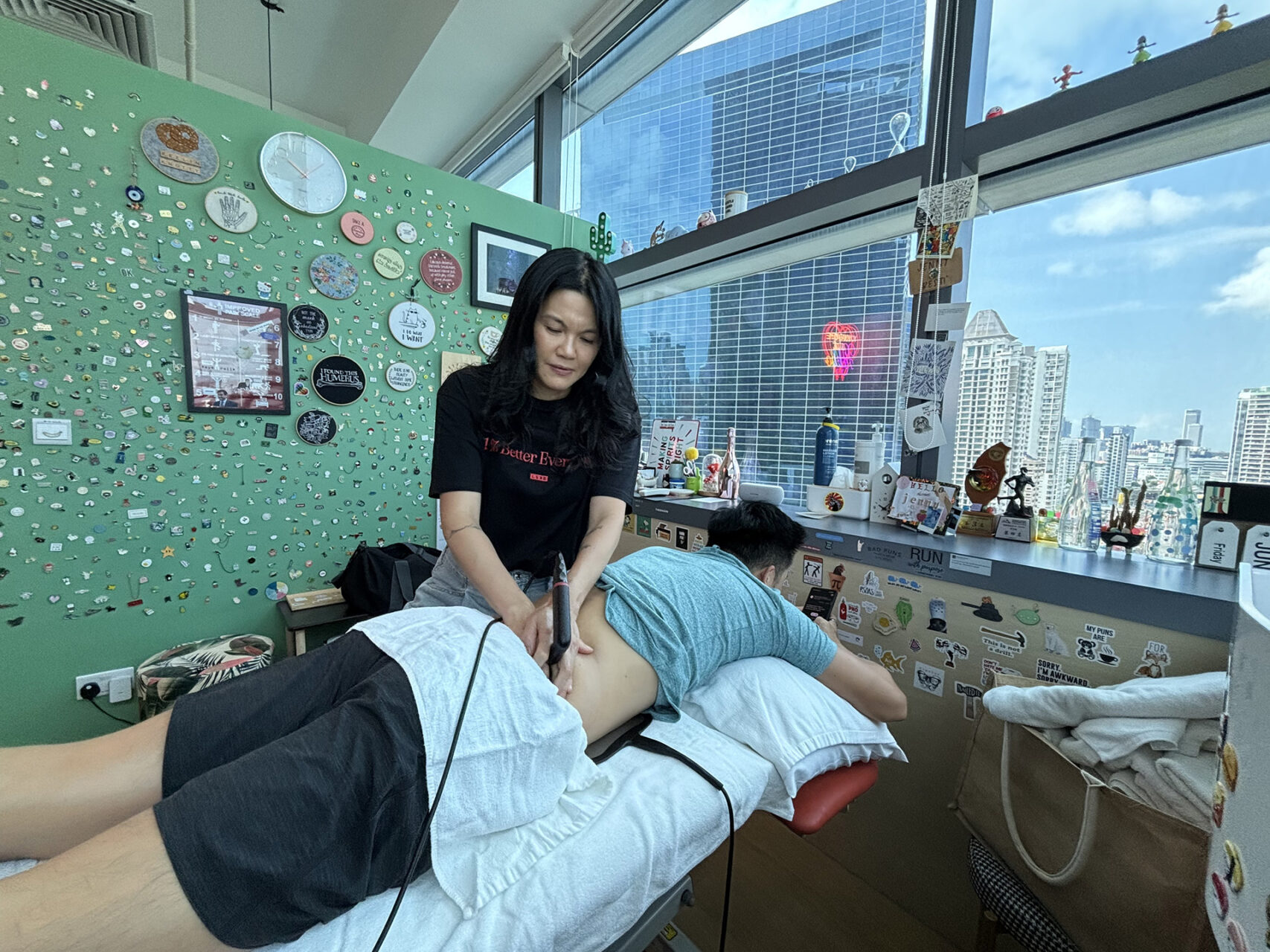
- Manual therapy and soft tissue treatment may help reduce stiffness and muscle guarding.
- Dry Needling may be considered when tight muscles in the lumbar, gluteal, or hip regions contribute to pain.
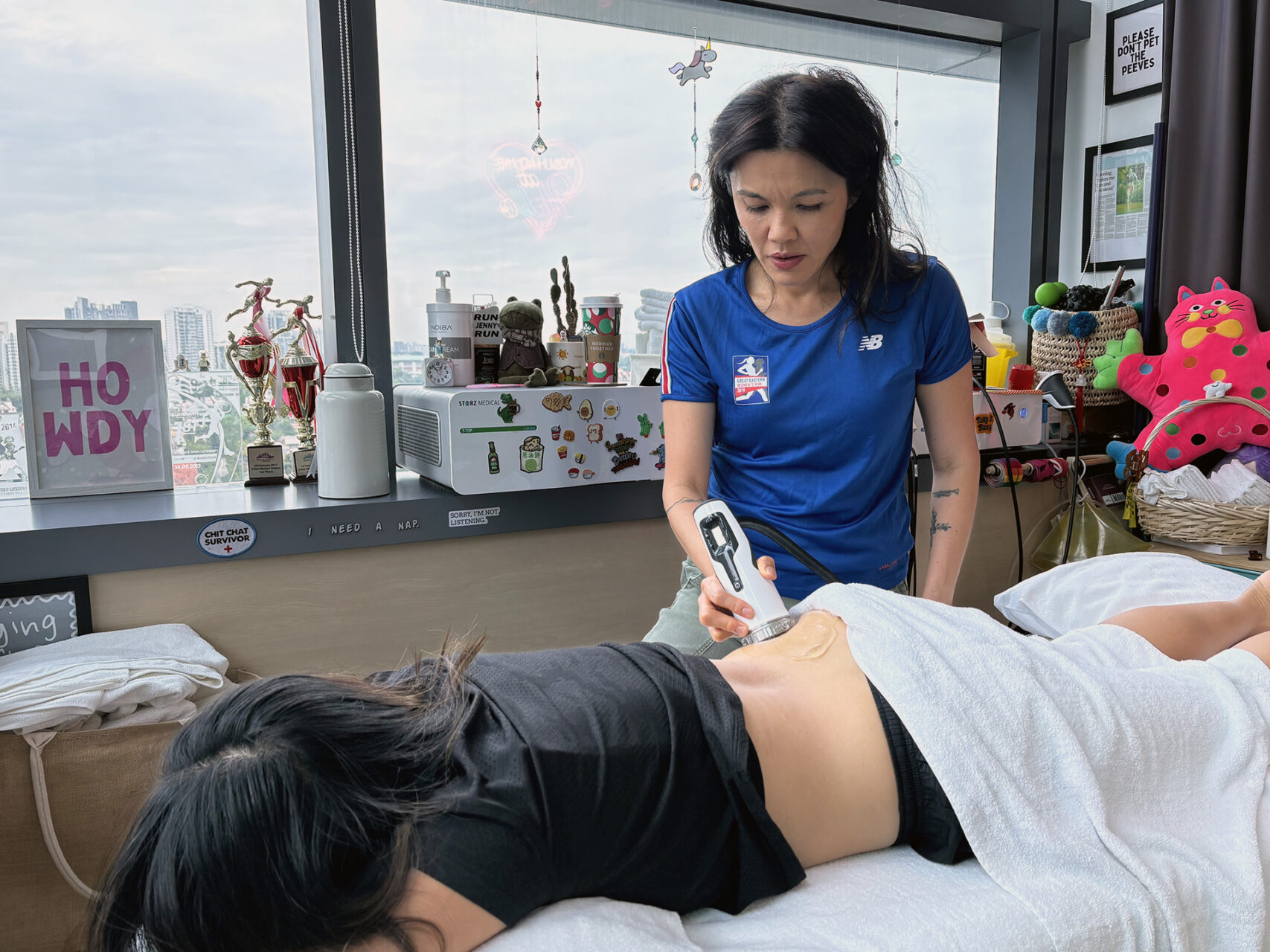
- INDIBA® may be used to help ease the pain, provide relief and reduce stiffness, making exercise and movement more comfortable.
- EMTT may be considered for selected musculoskeletal pain presentations as part of a broader rehabilitation plan.
- Focused or radial Shockwave Therapy may be appropriate only when a separate tendon condition, such as gluteal or proximal hamstring tendinopathy, is contributing to symptoms.
These treatments support rehabilitation. They do not replace progressive exercise, training changes and prescribed at-home exercises.
Lower Back Pain Exercises
Exercises for runners with lower back pain should focus on improving core stability, hip strength, movement control and muscular endurance.
- Early exercises may include walking, gentle stretches, pelvic tilts, gentle spinal mobility, hip flexor stretches, and basic glute activations.
- As pain improves, core exercises may progress to glute bridges, squats, hip hinges, step-ups, bird dogs, dead bugs, and controlled single-leg exercises to strengthen the core.
- A full plank strengthens the abdominal and trunk muscles that help stabilize the spine and build core strength.
- Side planks can also improve lateral trunk, upper back and hip control, which is important during single-leg loading in running.
- Core stabilization for the core muscles, resistance training, and strengthening exercises can meaningfully reduce chronic lower back pain.
- A balanced program with strength exercises should also strengthen the glutes, hamstrings, calves and other muscle groups, including the back.
Prescribed at-home exercises are progressed as strength and running tolerances improve. The goal is to maintain control throughout the full planned distance, not only at the beginning of a run.
Can You Keep Running with Lower Back Pain?
You may be able to continue running if symptoms are mild, stable, do not alter your gait, and do not worsen after a run.
Reducing the distance, pace, or frequency may be enough. Flat, easy runs are often better tolerated than hills, intervals, or long-distance sessions. Shorter runs separated by recovery days can help maintain fitness while reducing the irritation that causes your lower back pain.
Stop running and seek a medical assessment if your pain becomes sharp, causes limping, spreads farther down the leg, or is associated with numbness or weakness. Cross-training with cycling, swimming, pool running, or walking may help maintain fitness if comfortable.
Return to running once you can jog comfortably at a manageable distance and pace.
How Can Lower Back Pain after Running Be Relieved?
Lower back pain after running may improve with:
- Light activities, such as a short walk or comfortable mobility exercises, may reduce stiffness.
- Heat, such as a warm compress or hot water bottle, may help tight or guarded muscles and provide some rest and relief.
- Ice may feel more comfortable during an acute flare, although it should be wrapped and applied for short periods.
- Avoid aggressive stretching if it causes sharp pain or symptoms in the leg. Gentle stretches such as a lumbar rotation stretch with knees bent, feet flat, or legs straight can be gentler on the lower body.
- A few days away from running may be appropriate if normal walking, sitting, or bending is painful. Rest supports recovery.
Recurring symptoms should be assessed rather than managed through repeated cycles of complete rest and rapid return.
How Can Lower Back Pain when Running Be Prevented?
Learning how to prevent lower back pain when running involves warm-ups, progressing training gradually, strengthening the body, and maintaining efficient running mechanics.
- Proper warm-ups before running increase circulation and prepare the hips, spine and legs for repeated loading. A practical warm-up may include brisk walking, easy jogging, leg swings, hip movements and controlled bodyweight exercises.
- Increase running distances and intensity gradually over a few weeks. A conservative guide is to increase total distance by no more than about 10% every 2 weeks, and more slowly after injury or a long training break. Avoid increasing distance, speed, hills and frequency simultaneously.
- Strength-train regularly, with an emphasis on the core, glutes, hamstrings, calves and single-leg control.
- Maintaining correct running form with good running posture, relaxed arms, shoulders relaxed, shoulder blades down, and eyes straight ahead helps overall. Let the arms swing naturally and keep the arms relaxed.
- Shorter strides and a slightly higher cadence may reduce overstriding and help the legs absorb impact more effectively, but technique changes should be individualized.
- Wear comfortable running shoes that suit the surface and your usual training. Good running shoes support your feet. Running shoes are commonly replaced after about 350 to 500 miles, or 560 to 800 kilometres.
- In Singapore’s heat and humidity, staying hydrated, pacing, and recovery are particularly important. Stay hydrated on long runs. Fatigue can alter running form and worsen poor posture, increasing strain through the lower back. Poor posture increases the load on the upper back and lower spine.
Returning to Running without Pain
Most cases of running-related lower back pain, or general back pain, improve when the cause is identified, and training is rebuilt at an appropriate pace.
Mild muscular pain may settle within days, while persistent joint, disc, nerve, or sacroiliac symptoms may require a longer rehabilitation period. Recovery from back pain should restore both comfort and the strength needed for the runner’s preferred distance, speed, and terrain.
If lower back pain while running is limiting your training or your ability to return after each run, contact HelloPhysio today for a consultation.