
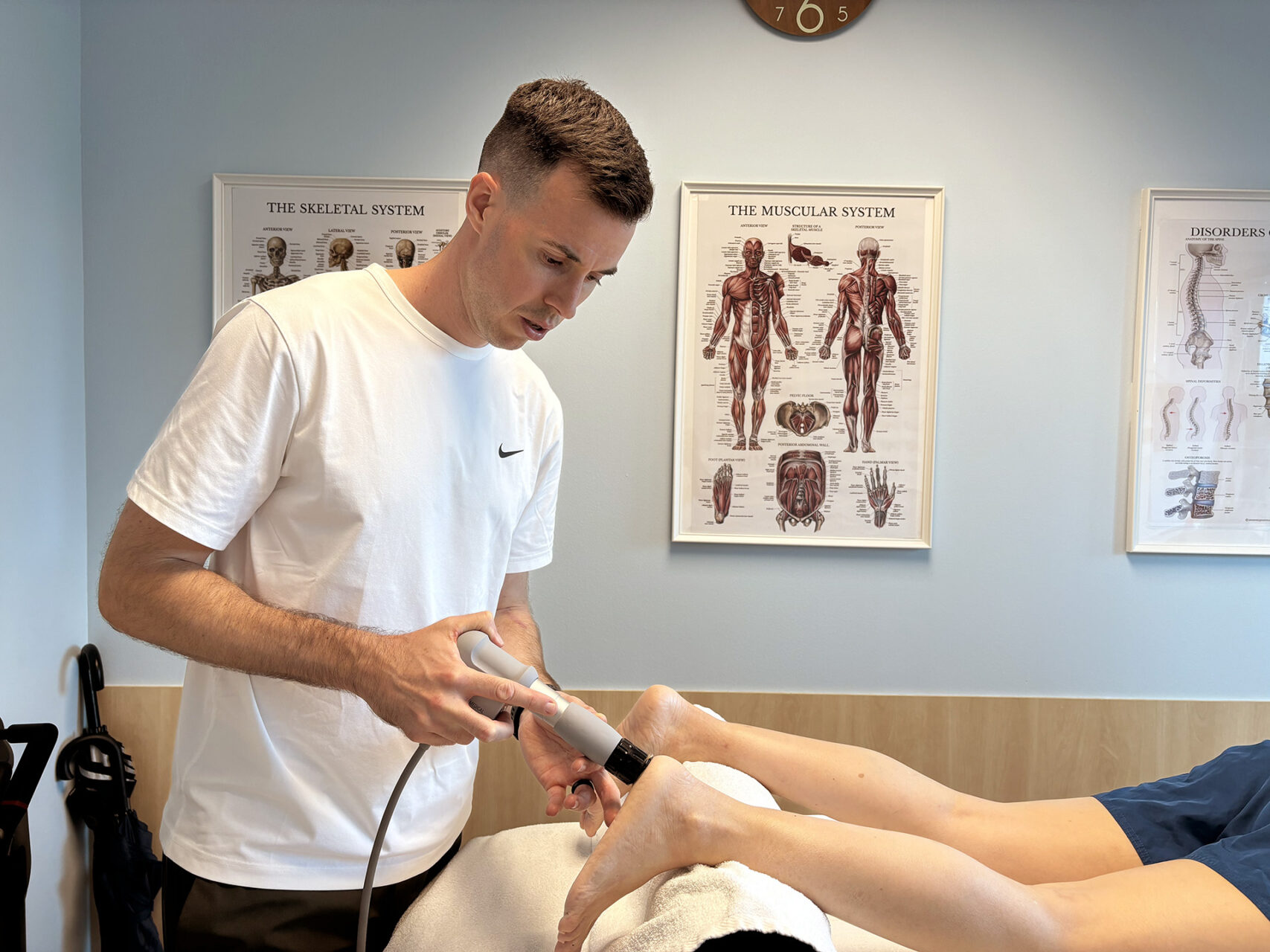
What Is Achilles Tendinitis?
Achilles tendinitis, a common cause of heel pain in active individuals, often results from a tendon overload. It is manageable with nonsurgical treatments, including physiotherapy, Shockwave Therapy and radiofrequency therapy.
The Achilles tendon is a thick, strong tissue that connects calf muscles to the heel bone, enabling walking, running, and jumping. Irritation causes throbbing pain or sharp pain in the Achilles tendon, disrupting daily routines and training. Since it drives push-off, even mild tendon irritation quickly affects comfort, performance, and confidence in movement.
The Achilles tendon is vital for movement, transferring force from the calf to the heel to power walking, running, and jumping through energy storage and release, while also supporting balance and push-off. Irritation or weakness in the Achilles can reduce propulsion and affect the entire kinetic chain.
Achilles issues often indicate the need to address related factors, such as calf muscle tightness, ankle mobility, foot mechanics, or training load, to prevent the recurrence of Achilles tendinitis. Most individuals improve over weeks to months with proper load management, strengthening exercises, and a progressive return to activity under the careful guidance of an experienced physiotherapist.
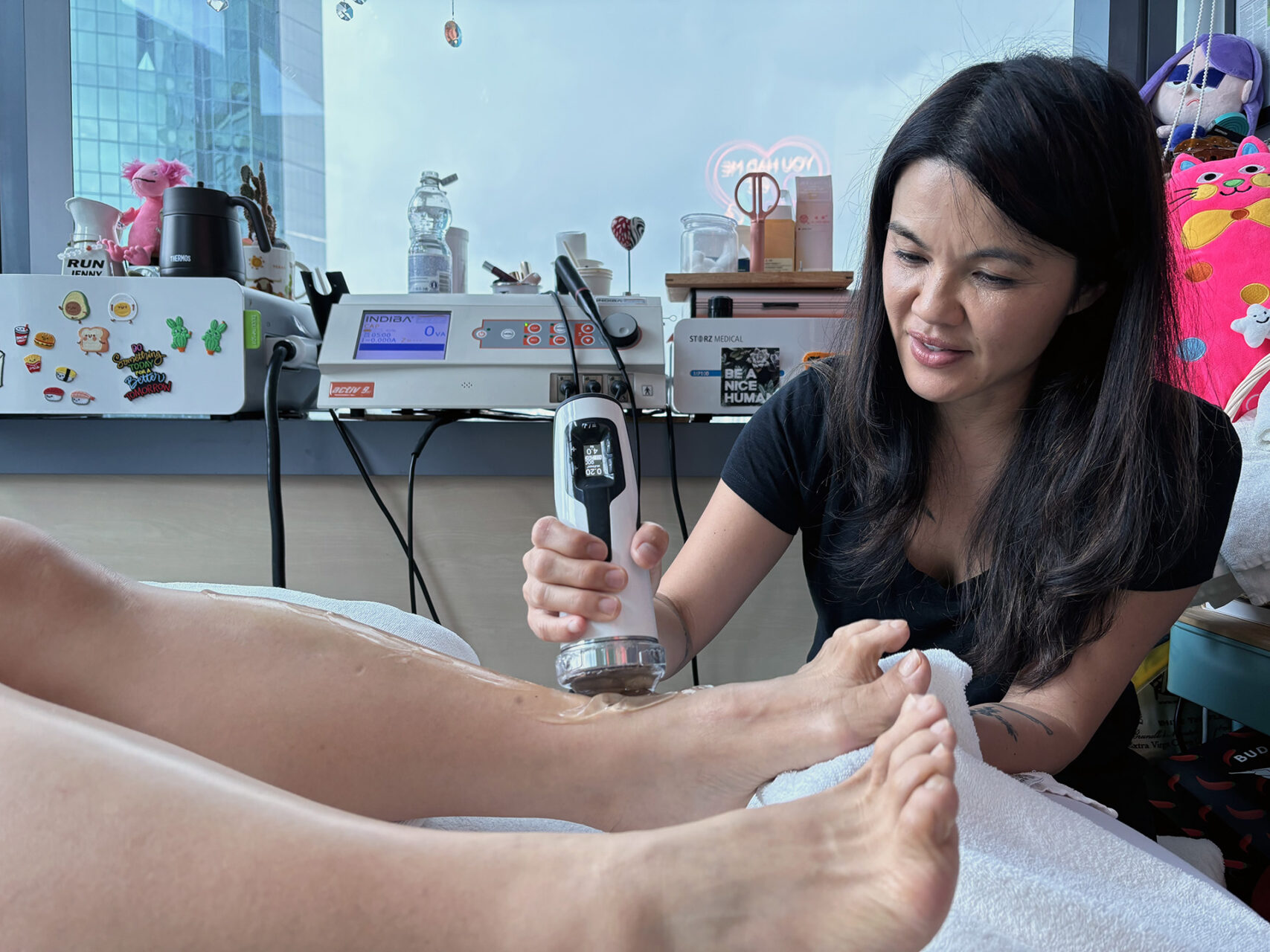
Types of Achilles Tendinitis
Achilles tendinitis typically falls into two types: insertional or noninsertional. Which type is relevant to the prescribed treatment?
- Insertional Achilles tendinitis involves the portion of the tendon’s attachment to the heel bone and is commonly characterised by increased sensitivity to shoe pressure, uphill walking or deep ankle flexion.
- Noninsertional Achilles tendinitis is usually felt a few centimeters above the heel and commonly flares after running, climbing stairs or sprinting.
A proper assessment clarifies which type of Achilles tendinitis you have and helps your physiotherapist select the right exercises, loading progression, and supportive strategies to manage your symptoms while you rebuild strength.
Achilles Tendon Pain with Every Step
Every step depends on your muscles, tendons, and joints working together. The Achilles tendon sits at the center of that system. When it’s irritated, even the simplest steps can feel like a struggle.
Achilles tendinitis after walking often presents as a sharp pain or lingering ache, turning what should be a pleasant walk into a pain marathon. Walking down stairs can be particularly challenging, as the descent places additional strain on the tendon, which can exacerbate symptoms when it is irritated.
Sometimes symptoms come out of nowhere mid-stride, whether you’re heading to the park or getting coffee. That sudden twinge is more common than many realize. Early detection of Achilles tendinitis symptoms and understanding the causes can help you remain active and avoid a prolonged recovery. A sudden increase in training load, especially hills, speed work, or a switch to harder surfaces, is a common trigger.
Poor foot mechanics, limited ankle range of motion, and age-related tendon degeneration can increase stress on the Achilles tendon and impose excessive strain. Certain medications, such as some antibiotics, can increase the risk of tendon damage. Noting your medication and exercise history is important during your physical assessment.
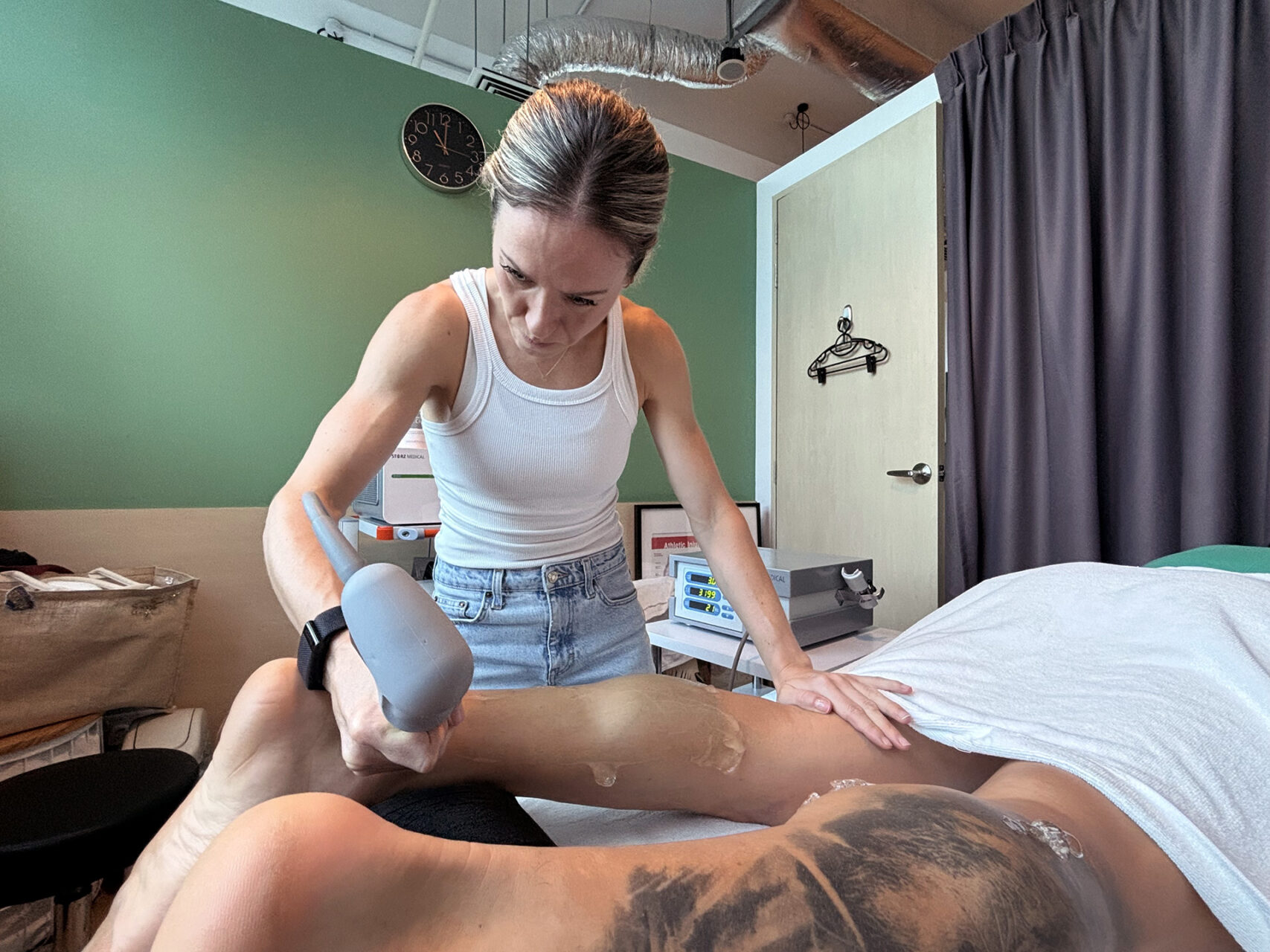
Achilles Tendinitis Symptoms
Symptoms of Achilles tendinitis include:
- Sharp or aching Achilles tendon ache
- Morning stiffness that improves with movement
- Tendon swelling/thickening and tenderness
- Redness, warmth, or difficulty flexing the foot suggests increasing Achilles tendon inflammation or rupture risk
Severe cases involve pain spiking with activity or a sudden “pop,” indicating a tendon rupture or complete tear. If you feel a “pop” along with a sudden weakness, trouble pushing off, or you cannot rise onto your tiptoes, seek an urgent assessment to rule out an Achilles tendon rupture. Severe tendon swelling, deformity, or inability to bear weight also needs prompt evaluation.
An Achilles tendinitis diagnosis often reveals multiple dysfunctions, some subtle and others more obvious. Interestingly, some individuals may experience a “popping” sensation in the affected tendon without pain. Not all heel pain is Achilles tendinitis. Conditions such as retrocalcaneal bursitis, Haglund’s deformity-related irritation, calf muscle strain, or plantar fasciitis can also mimic it. If your symptoms do not align with the typical pattern or stall despite rehab, reassessment and imaging may be appropriate to accurately diagnose Achilles tendinitis.
Achilles Tendon Pain in the Morning or Throbbing Achilles at Night
Waking up with Achilles tendon pain in the morning is a common sign of Achilles tendinitis. This sharp, aching morning discomfort, which can also persist at night and disrupt sleep, is a common complaint. Relief starts with understanding why this condition most often causes pain upon waking or during the night.
Morning Pain
Morning Achilles pain is common because the tendon stiffens overnight. After hours of rest, the first steps out of bed can suddenly stretch the tendon, triggering sharp pain. Fluid and inflammatory byproducts can also accumulate around the area while you sleep, contributing to morning soreness. Symptoms often feel strongest at the tendon’s attachment to the heel bone, since this region can be more sensitive after inactivity. It is an early sign that the tendon requires attention and a more thoughtful approach to loading.
Night Pain
Nighttime Achilles pain often reflects the day’s total load. After prolonged walking, running, or standing, the tendon may feel more irritated and sensitive, so symptoms may worsen when you finally sit or lie down. This does not always indicate that the tendon is worsening. Fluctuations are common during recovery, especially when you begin rebuilding the tendon’s strength. We expect steady improvement in your tolerance for walking, stair climbing and running over time.
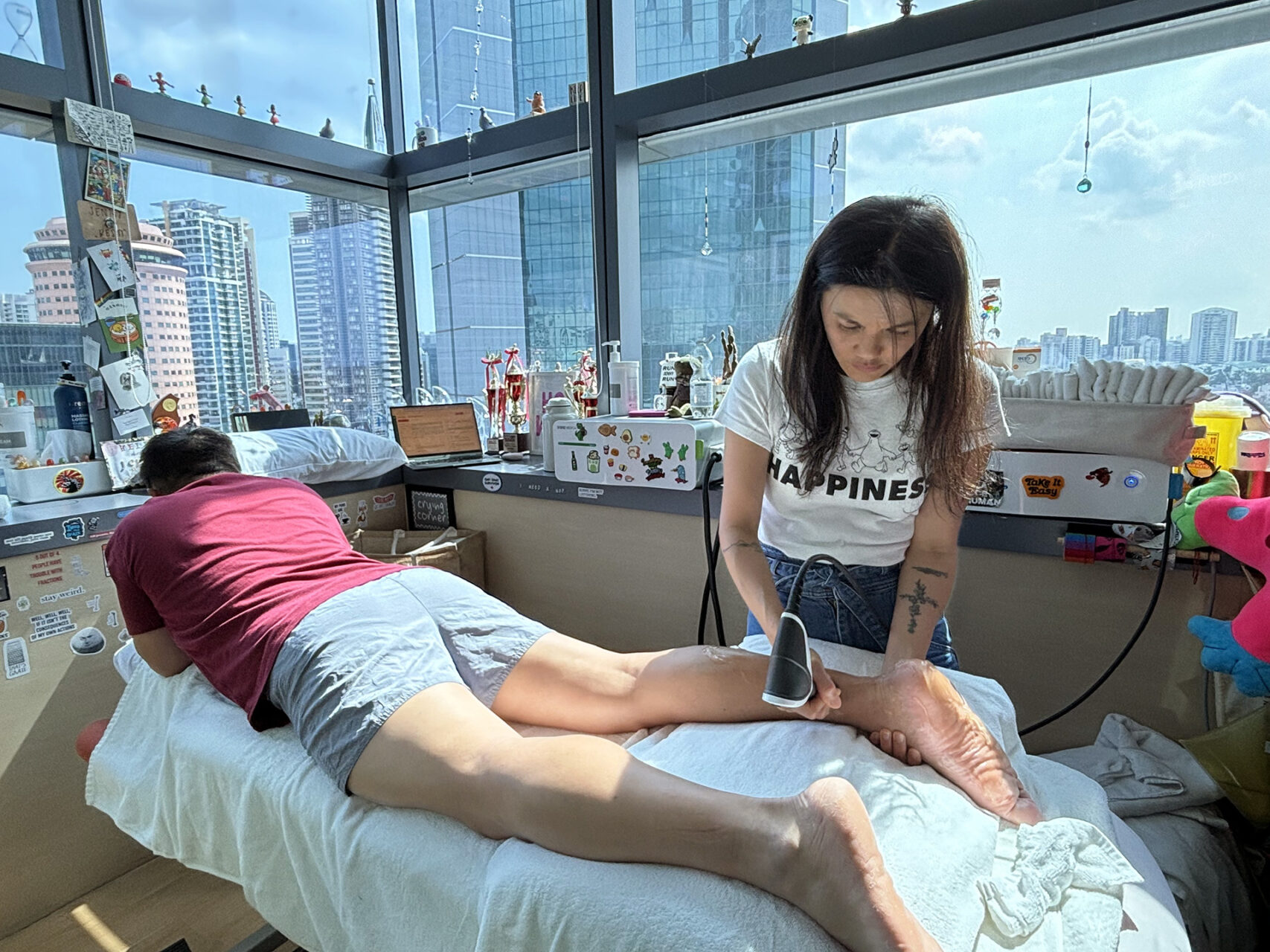
The Achilles Is Key to Whole Body Movement
The Achilles tendon is crucial for movement, transferring calf force to the heel for walking, running, and jumping, enabling energy storage/release, balance, and push-off. Achilles irritation or weakness reduces propulsion, affecting the entire kinetic chain. Preventing a recurrence of Achilles tendinitis requires addressing related factors, including calf tightness, ankle mobility, foot mechanics, and training load.
Achilles Tendon Insertion and Heel Pain
Insertional Achilles tendinitis affects the point where the Achilles tendon attaches to the heel bone, so discomfort often feels like it sits deep in the back of the heel. As the tendon and heel work together with every step, irritation at the insertion can quickly make walking, running and climbing stairs uncomfortable.
A proper assessment helps confirm whether your tendon pain originates at the insertion and guides the right plan to relieve symptoms while you rebuild strength. Insertional tendinitis cases are often more sensitive to compression; therefore, we may adjust footwear, avoid steep hills for a period, and modify calf stretches or ankle positions that aggravate the attachment site.
Ankle Pain Near the Achilles Tendon
The Achilles tendon is crucial for ankle mobility and stability, is situated just above the heel, and directly affects ankle joint function. When the tendon becomes irritated, the strain often extends to the ankle. This close biomechanical link explains why Achilles tendonitis is often accompanied by ankle pain near the tendon. Irritation or weakness of the Achilles tendon results in ankle compensation, leading to discomfort and reduced movement efficiency. In some cases, orthopaedic surgeons may perform surgical or medical interventions to treat Achilles tendinitis and a damaged Achilles tendon, such as debridement or tendon repair.
A Ripple Effect: From Heel to Back
The foot’s alignment has a cascading effect up the body’s kinetic chain. Think of your foot as the foundation of a building, the ‘building’ being your body. A slight issue with the Achilles tendon, and it’s a wobble in the foundation, which can travel up the lower leg and body. Achilles tendonitis can cause an individual to adjust their gait, misaligning the knees, hips, and spine and leading to heel, calf, or back discomfort. Maintaining foot and ankle health is crucial in preventing these issues and supporting the entire kinetic chain. It’s a testament to the interconnectedness of the body’s systems.
Compensatory Mechanisms and Overcompensation Pain
When the Achilles tendon is under stress, the body compensates by shifting the load to other muscles and joints. While this helps in the short term, it often leads to overuse and causes pain in areas that weren’t originally affected. People with Achilles tendinitis often unconsciously alter their gait or posture, which can lead to pain in the knees, hips or lower back over time.
The Knee’s Connection
The knee sits between the foot and the hip, making it highly sensitive to changes in either area. When the Achilles tendon is compromised, altered foot mechanics can disrupt knee alignment and function, often leading to knee pain associated with Achilles tendonitis. Caring for both your knees and Achilles tendons is key to walking and running without discomfort. Although small, the Achilles tendon plays a significant role in maintaining biomechanical balance and overall musculoskeletal health.
Imaging Tests for Achilles Tendinitis
Imaging tests, such as ultrasound, MRI, and X-ray, help diagnose Achilles tendinitis by showing tendon irritation, thickening, tendon fibres, or bone spur changes. They guide treatment decisions, monitor progress and are especially useful when symptoms persist. Ultrasounds can also assess tendon thickening or small tears in real time and are often a practical first step when symptoms persist or when the physical examination diagnosis is uncertain.
Achilles Tendinitis Treatments
Rest and elevation are important, but Achilles tendinitis in Singapore now offers cutting-edge solutions that accelerate recovery. For early self-care, follow the PEACE & LOVE principles: protect the tendon from sharp pain, elevate and apply compression to manage swelling, then gradually return to strength as tolerated. Avoid aggressive stretching exercises that cause sharp pain, and consider supportive shoes or a temporary heel lift if the insertion site is highly sensitive.
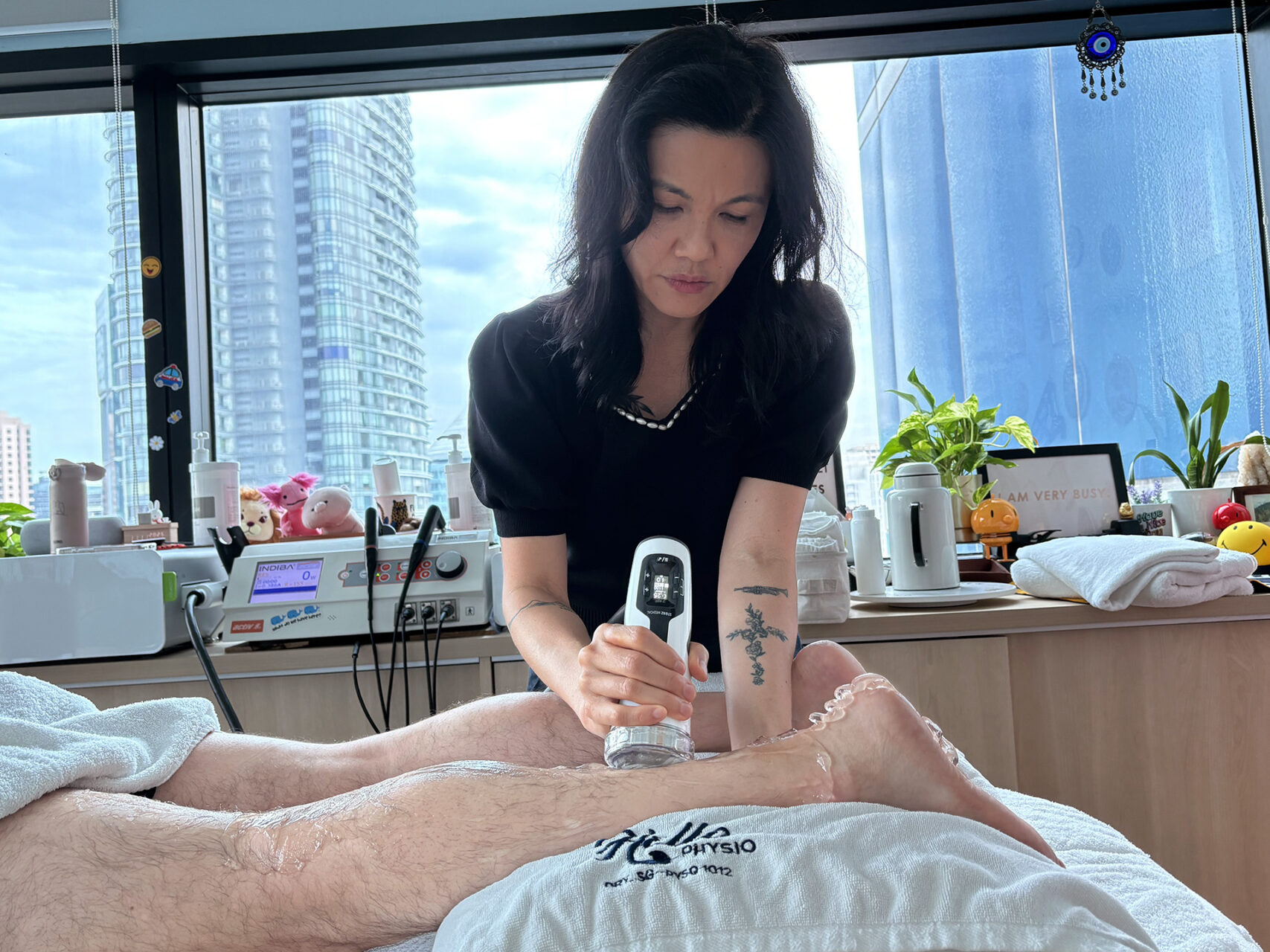
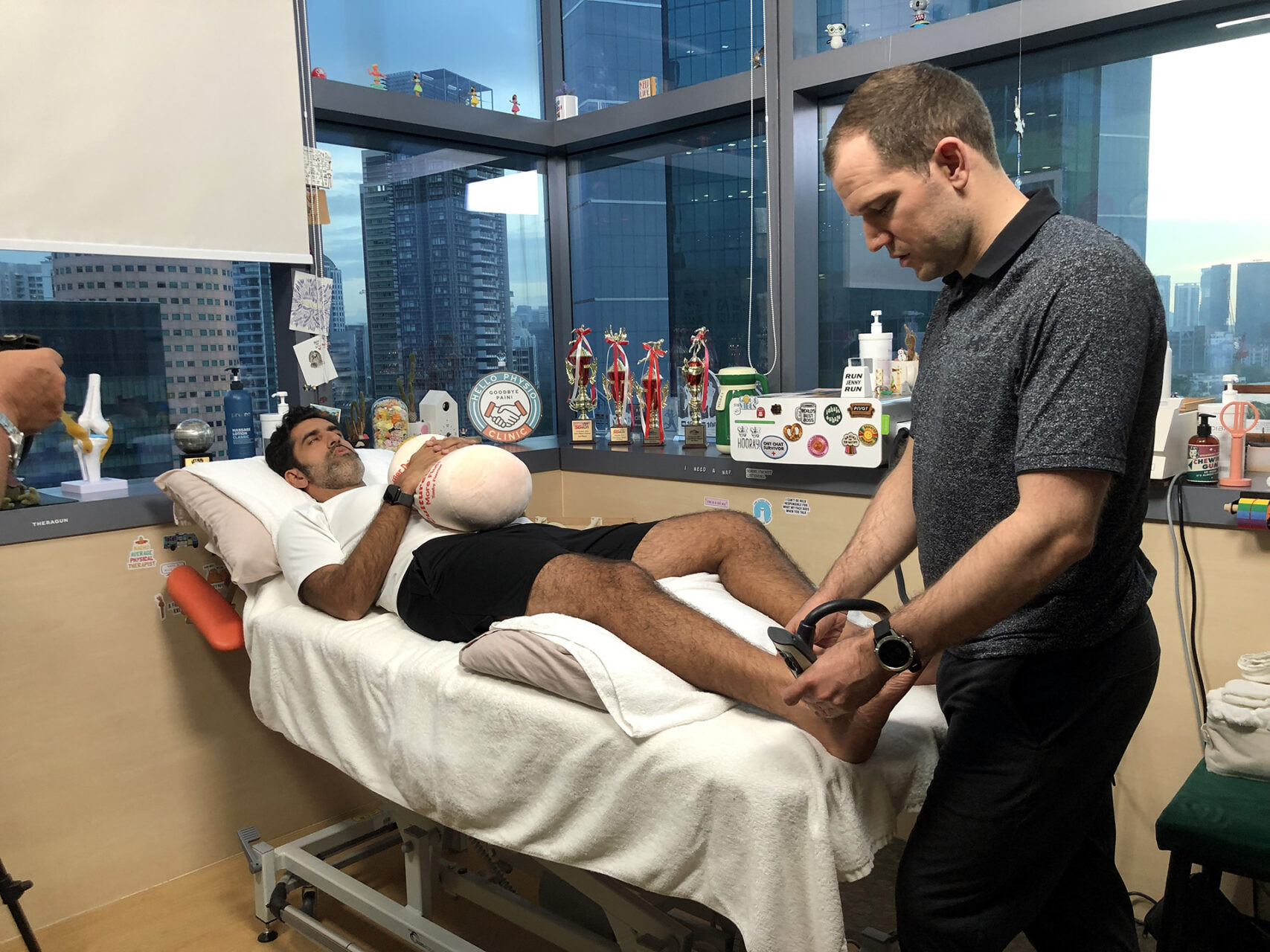
Shockwave Therapy for Achilles tendonitis stimulates the tendon to trigger reparative healing, while INDIBA® enhances oxygen and nutrient delivery to speed tissue repair. Clinical Pilates restores range of motion and strength, supporting long-term rehabilitation for those experiencing persistent symptoms, even after surgery.
EMTT® harnesses electromagnetic fields to enhance cellular repair, while Red Light Therapy promotes collagen production and circulation to support tendon healing. LightSpeed Lift’s antigravity training enables safe, weight-reduced movement during early rehabilitation, preventing a strain on the Achilles while reintroducing mobility.
Post-Achilles Tendon Surgery
Achilles tendon surgery is a significant step toward improved mobility and an active lifestyle. As with any major procedure, some postoperative discomfort is expected, particularly in the heel, where patients often report pain due to inflammation and the tendon’s proximity to the bone.
How painful is Achilles tendon surgery? Consider it like a rigorous workout. Discomfort is a natural part of the process, but its intensity varies from person to person. For some, Achilles tendon lengthening surgery or gastrocnemius recession may feel more demanding, so proper post-operative care is crucial.
Rest, ice, physical therapy for Achilles tendonitis and advanced therapies, such as INDIBA radiofrequency therapy and Shockwave Therapy, can help reduce Achilles tendon inflammation, manage scar tissue, and support healing.
While concerns are natural, the key takeaway is that this pain is temporary. With structured physical therapy, mobility improves, strength returns, and patients regain confidence in their stride. In some complex cases, tendon transfer procedures may be considered for the remaining tendon health.
Running and Achilles Tendinitis
For many elite athletes and weekend warriors, Achilles tendinitis during running is often due to repetitive stress. When we run, our heart beats in sync with our strides, and we push ourselves to go one more mile, one more trail. However, every runner will hit a wall at some point or another.
Imagine being in the zone during a 10k run and suddenly feeling Achilles tendon pain. It’s not just the pain but the questions that follow: Can I run with Achilles tendinitis? Should I stop or push through? The pressure intensifies when that fleeting pain becomes Achilles tenderness after running, reminding you that your body needs attention.
As runners, we’re wired to find solutions and adapt. Fortunately, there are exercises specifically designed for runners to help regain their stride and alleviate Achilles symptoms. These targeted workouts can provide much-needed relief from Achilles tendon pain, especially when focused on the tendon itself. However, for some, the journey may be more complex.
Recurring Achilles tendinitis is not just a physical challenge. It’s an emotional one, posing questions about your training, form, and sometimes even your love for the sport. Achilles tendinitis symptoms can significantly affect your ability to return to sports, with factors such as injury severity, adherence to rehabilitation and treatment effectiveness influencing how quickly and safely you can resume your chosen activities. Most cases improve with progressive eccentric strengthening exercises and sensible load adjustments, but recovery typically takes weeks to months rather than days.
For a more holistic approach, Achilles tendon pain treatments are personalized at HelloPhysio. Each athlete gets a recovery plan. These treatments aim not just to relieve Achilles tendon pain but also to improve performance, so that every runner’s journey can continue.
How HelloPhysio Can Help
If your symptoms are related to Achilles tendon tendinitis, early assessment and an appropriate loading plan can strengthen your calf muscles, reduce stress on the tendon, manage pain, and help you return to running and other sports with greater confidence.
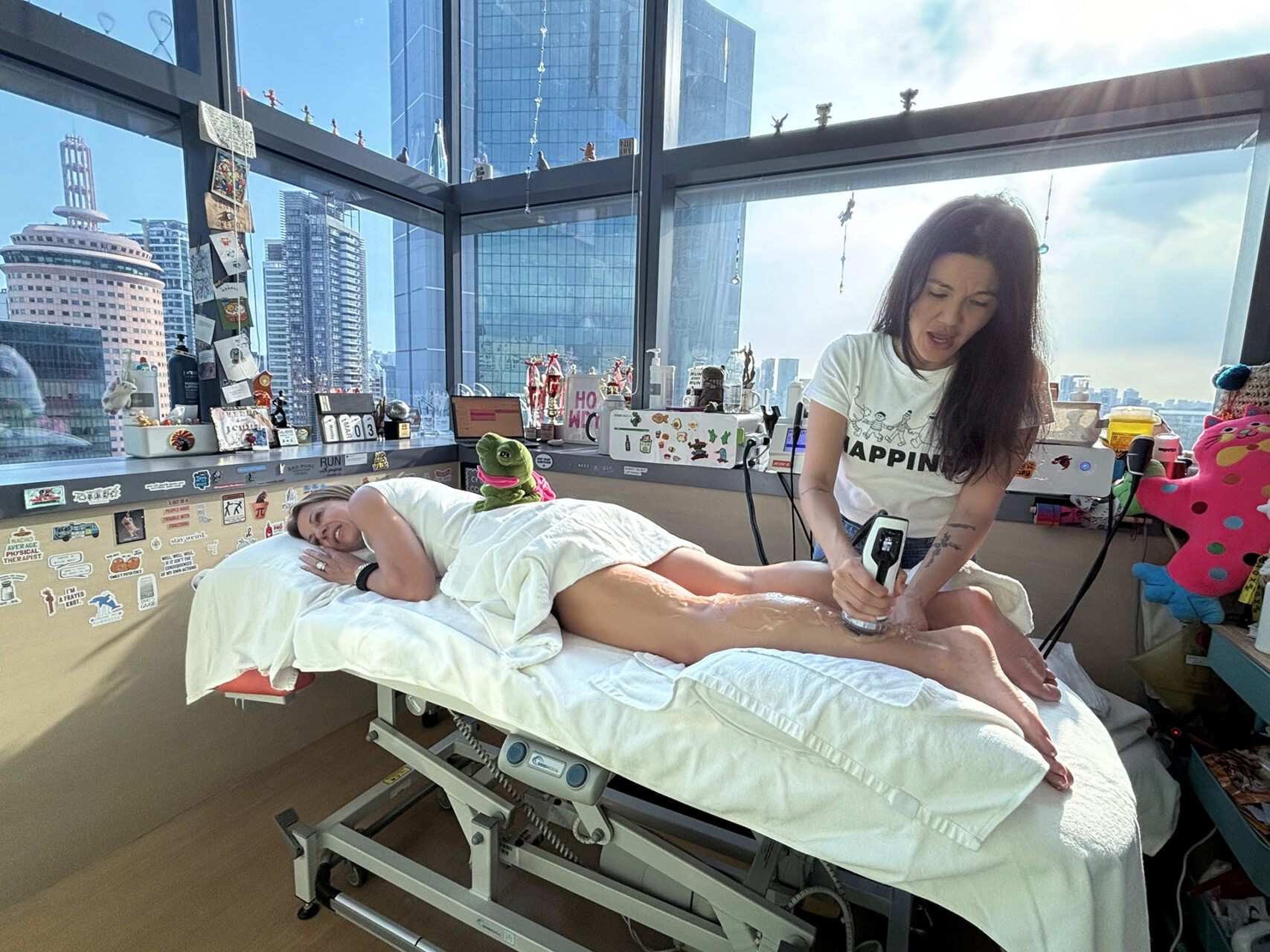
At HelloPhysio, Achilles tendinitis treatment in Singapore combines therapies with expert manual care, progressive exercises, and evidence-based protocols to create a comprehensive path to recovery and lasting tendon health. If you’re seeking how to cure Achilles tendinitis fast, schedule a consultation with us today.